
- WEB DESK
- October 25, 2026
Dolly Parton, queen of country music, dies at 80
-

- Reuters
- August 25, 2026
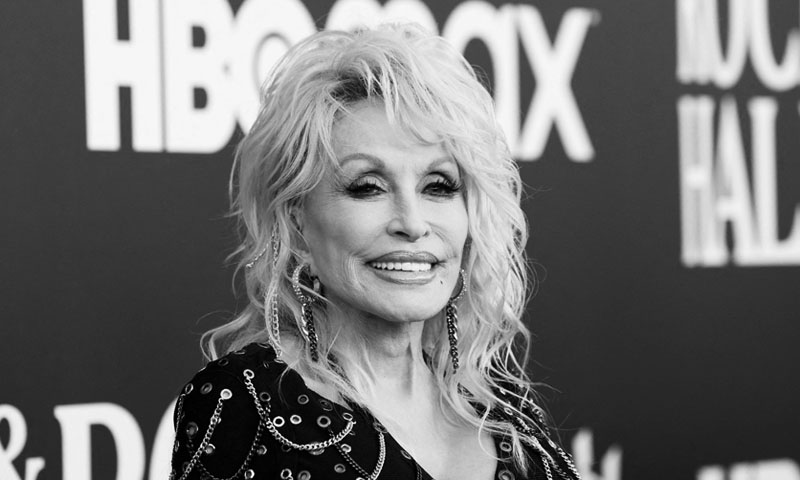
WEB DESK: Dolly Parton was around six when she wrote her first song: “Little Tiny Tasseltop,” an ode to her corncob doll with corn-silk hair. Her mother stored it preciously in a shoebox.
“I loved that little doll,” Parton wrote decades later. “I expressed myself and my feelings through writing – I’m sure what I was thinking was, ‘Well, Tasseltop has to have a song about her.'”
Parton never stopped making music after that. The irrepressible country music singer, songwriter and actress whose charisma, heartfelt lyrics and business acumen captured the public’s imagination for nearly six decades, died on Tuesday aged 80, her family said in a statement.
She won 11 Grammy awards, including a Lifetime Achievement Award.
With classic songs including “Coat of Many Colors,” “Jolene” and “I Will Always Love You,” she became one of the best-selling female artists of all time, with over 100 million records sold.
Parton’s wholesome personality, combined with her towering blond hairdos, flamboyant costumes and giddy delight at holding center stage, endeared her to Americans of all backgrounds and helped introduce country music to international audiences.
Over the years Parton hosted a TV variety show, starred in movies, and even created a theme park, Dollywood, a popular tourist spot in her home state of Tennessee – all in addition to her lauded work as a songwriter.
But the quality that gave her enduring star power was her ability to connect with people. Coming from a self-described “dirt-poor” family, Parton often stood in as a symbol of the working-class American and regularly threw her name and money behind causes she believed in.
In response to the COVID-19 pandemic, Parton donated $1 million to vaccine research at Vanderbilt University in 2020, making her an early sponsor of Moderna’s vaccine development.
She conducted a literacy program for preschool children across the United States, as well as in Canada, the United Kingdom, Australia and Ireland, and provided scholarships to high school students in the Tennessee county where she was born.
The county erected a life-size statue of her in front of the courthouse in thanks, though she declined another proposed statue of her in Nashville in 2021, saying, “Given all that’s going on in the world, I don’t think putting me on a pedestal is appropriate at this time.”
It was this ability to stay true to her roots, combined with her drive to work hard and her nonpartisanship, that fueled her appeal among conservatives and liberals in a politically polarized America.
Mama had this haunting voice
Dolly Rebecca Parton was born on January 19, 1946, in Pittman Center, Tennessee, and grew up in a one-room cabin in nearby Locust Ridge. One of 12 children of tobacco farmer Robert Lee Parton, her difficult childhood gave credibility to her often personal songs trilled in a distinctive soprano.
Her mother, Avie Lee, would sing constantly – songs from England, Ireland and Wales that told a story. “Mama had this haunting voice, and Lord you would feel it,” Parton wrote in her 2020 book “Dolly Parton, Songteller” co-authored with Robert K. Oermann.
Parton got her first real guitar when she was eight. Her mother would say, whenever she had guests: “I want you to hear this song this little thing has made up. It’s really good.” Parton loved the attention.
She was singing on a local radio station by age 11, and at age 13 was appearing on the Grand Ole Opry, a weekly country music concert in Nashville, Tennessee.
After graduating from high school, she moved to Nashville to pursue a music career and began a famous partnership with country music singer Porter Wagoner, which would include a years-long stint on his TV show and 14 top-ten duets. She penned her hit song “I Will Always Love You” as a farewell to Wagoner when she decided to pursue a solo career.
On the first day Parton arrived in country music’s capital, she met Carl Dean, an asphalt paver. They would marry two years later, in 1966. Throughout their long marriage, Dean shunned the spotlight and did not tour with her, though he would be a muse for many of her greatest hits, including “Jolene,” which was inspired by a red-haired bank teller’s crush on Dean.
The Dolly image
Her own appearance was the object of intense interest. Initially embarrassed, she eventually found the humor in frequent questions about her extravagant dress sense and generous figure.
She dismissed rumors that her breasts were insured and laughed off periodic rumors that she was bedridden due to their weight, telling People magazine: “Well, they are heavy, but they haven’t crippled me yet.”
Parton patterned her signature look on a woman she would see walking around her Tennessee hometown in tight skirts and high heels, with red nails, red lipstick and peroxided hair. “I thought she was beautiful. But everybody said, ‘She’s trash!’ Parton wrote in her 2023 book “Behind the Seams: My Life in Rhinestones.” “I laughed and said, ‘Well, if that’s trash, that’s what I want to be when I grow up!'”
But as much as she embraced her signature look, she also viewed it as distinct from herself. “I look one way and am another,” she told Ladies’ Home Journal in 1982. “It makes for a good combination. I always think of ‘her,’ the Dolly image, like a ventriloquist does his dummy. I have fun with it. I think, what will I do with her this year to surprise people? What’ll she wear? What’ll she say?”
She also expressed the wish that her appearance would serve to sell, rather than overshadow, her talent.
‘I want to paint a picture’
Her music gained a following not only among the public but also with fellow singers who widely covered her songs – perhaps most famously Whitney Houston’s rendition of “I Will Always Love You.” Some of Parton’s most beloved covers and duets were with her goddaughter, American pop star Miley Cyrus, and Cyrus’ father, country music star Billy Ray Cyrus.
“Jolene” was covered by artists as varied as Beyoncé and The White Stripes.
While Parton was a force on stage and an accomplished vocalist, what set her apart from her peers was her talent with words. Parton wrote every one of her hit songs. All told, she penned an estimated 3,000 throughout her life, though she recorded only about 450 of them.
“I love to write poetic songs and sing flowery words,” she wrote in “Dolly Parton, Songteller.” “I like to make you see something visually, so I want to paint a picture. And I love to come up with clever lines, not just like a songwriter, but like a poet.”
‘The songs are my legacy’
Parton made her movie debut in 1980’s “9 to 5,” starring alongside Jane Fonda and Lily Tomlin, with the title tune earning Parton an Oscar nomination for songwriting. She got another Oscar songwriting nomination in 2006 for “Travelin’ Thru,” written for the film “Transamerica.”
Her other movie acting roles included “The Best Little Whorehouse in Texas,” “Steel Magnolias,” “Rhinestone” and “Straight Talk.”
Twenty-five of her songs reached No. 1 on the Billboard Country charts and she was a member of the Songwriters Hall of Fame, receiving its highest honor, the Johnny Mercer Award, in 2007. She was inducted into the Rock and Roll Hall of Fame in 2022.
Parton received her first Grammy award in 1978 for her song “Here You Come Again.” In 1988, she won the People’s Choice Award for favorite all-around female entertainer.
But despite all her accolades and achievements, Parton found the greatest meaning in her art.
“I feel like I’m closest to God when I write,” she wrote in “Dolly Parton, Songteller.” “A great line will just come to me, and I’ll go, ‘Hey, thank You, Lord. I know I didn’t think of that.'”
“At the end of the day, I hope that I will be remembered as a good songwriter. The songs are my legacy.”
You May Also Like



- WEB DESK
- October 24, 2026
Malaysia beat Pakistan in shootout to win Sultan of Johor Cup

- Reuters
- October 24, 2026