
- Web
- 8 Hours ago
Dubai Airport gradually restarts flights after drone strike sparks fuel tank fire
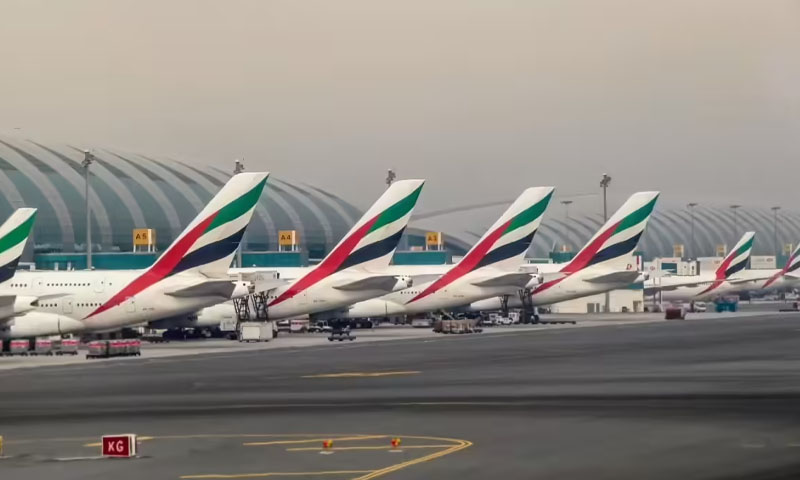
Dubai’s main international airport began restoring flight operations on Monday after a drone strike triggered a fire in one of its fuel storage tanks, briefly forcing authorities to halt air traffic. Officials confirmed that the incident caused no injuries but added further pressure on the region’s aviation sector as the ongoing conflict involving the United States, Israel and Iran continues to disrupt global travel routes.
The blaze, which broke out early in the day, was quickly brought under control. However, the disruption led to several flight diversions and cancellations as safety teams assessed the situation. The attack marks the third incident affecting Dubai’s airport since Tehran launched strikes across Gulf nations on February 28, targeting what it says are American-linked interests in the region.
Dubai’s main international airport began restoring flight operations on Monday after a drone strike triggered a fire in one of its fuel storage tanks, briefly forcing authorities to halt air traffic. Officials confirmed that the incident caused no injuries but added further pressure on the region’s aviation sector as the ongoing conflict involving the United States, Israel and Iran continues to disrupt global travel routes.
The blaze, which broke out early in the day, was quickly brought under control. However, the disruption led to several flight diversions and cancellations as safety teams assessed the situation. The attack marks the third incident affecting Dubai’s airport since Tehran launched strikes across Gulf nations on February 28, targeting what it says are American-linked interests in the region.
The conflict has already created major turbulence in international aviation. With large parts of Middle Eastern airspace considered unsafe due to missile and drone threats, airlines have been forced to cancel flights, reroute aircraft and adjust schedules. As a major global aviation hub connecting Europe, Asia and Africa, Dubai has felt the impact sharply, with travel delays, rising ticket prices and disruptions to cargo shipments including critical medical supplies.
Flights Diverted as Airlines Scramble to Adjust
Several aircraft were redirected to the smaller Al Maktoum International Airport while authorities temporarily restricted operations at Dubai International Airport. Aviation officials later confirmed that selected routes were gradually restarting once safety checks were completed.
Emirates said it expected to resume part of its schedule after the disruption, though some flights planned for Monday were cancelled. Budget carrier flydubai also paused operations for several hours.
The disruption was felt mid-flight by many passengers. One aircraft travelling from Rome to Dubai was forced to divert as it approached landing and instead headed inland to Al Ain due to security concerns. Airline staff later informed passengers that they would be transported back to Dubai once the airspace reopened, with ground transport considered for the 130-kilometre journey.
Meanwhile, both Air India and Air India Express cancelled their Dubai flights for the day.
Ongoing Conflict Continues to Shake Global Aviation
The latest attack highlights the growing pressure on Gulf aviation as the war involving Iran, Israel and the United States enters its third week. Since late February, Gulf states have faced more than 2,000 missile and drone launches targeting military installations, diplomatic missions and strategic infrastructure.
However, several strikes have also affected civilian areas including airports, hotels and ports. The United Arab Emirates—which established diplomatic ties with Israel in 2020—has been among the hardest hit.
Aviation analysts say traffic through Middle Eastern skies has dropped to roughly half its normal level since the conflict began. Tourism in the region, an industry worth hundreds of billions of dollars annually, has also taken a major hit, while air cargo costs have surged dramatically on several routes.
Earlier this month, two drones were reported to have fallen near Dubai’s airport perimeter, causing minor damage. Monday’s strike adds to growing concerns about the vulnerability of major transport hubs as the regional conflict shows no immediate sign of easing.
The conflict has already created major turbulence in international aviation. With large parts of Middle Eastern airspace considered unsafe due to missile and drone threats, airlines have been forced to cancel flights, reroute aircraft and adjust schedules. As a major global aviation hub connecting Europe, Asia and Africa, Dubai has felt the impact sharply, with travel delays, rising ticket prices and disruptions to cargo shipments including critical medical supplies.
Flights Diverted as Airlines Scramble to Adjust
Several aircraft were redirected to the smaller Al Maktoum International Airport while authorities temporarily restricted operations at Dubai International Airport. Aviation officials later confirmed that selected routes were gradually restarting once safety checks were completed.
Emirates said it expected to resume part of its schedule after the disruption, though some flights planned for Monday were cancelled. Budget carrier flydubai also paused operations for several hours.
The disruption was felt mid-flight by many passengers. One aircraft travelling from Rome to Dubai was forced to divert as it approached landing and instead headed inland to Al Ain due to security concerns. Airline staff later informed passengers that they would be transported back to Dubai once the airspace reopened, with ground transport considered for the 130-kilometre journey.
Meanwhile, both Air India and Air India Express cancelled their Dubai flights for the day.
Ongoing Conflict Continues to Shake Global Aviation
The latest attack highlights the growing pressure on Gulf aviation as the war involving Iran, Israel and the United States enters its third week. Since late February, Gulf states have faced more than 2,000 missile and drone launches targeting military installations, diplomatic missions and strategic infrastructure.
However, several strikes have also affected civilian areas including airports, hotels and ports. The United Arab Emirates—which established diplomatic ties with Israel in 2020—has been among the hardest hit.
Aviation analysts say traffic through Middle Eastern skies has dropped to roughly half its normal level since the conflict began. Tourism in the region, an industry worth hundreds of billions of dollars annually, has also taken a major hit, while air cargo costs have surged dramatically on several routes.
Earlier this month, two drones were reported to have fallen near Dubai’s airport perimeter, causing minor damage. Monday’s strike adds to growing concerns about the vulnerability of major transport hubs as the regional conflict shows no immediate sign of easing.
You May Also Like