- Web Desk
- Mar 24, 2026
E-waste crisis: Lawmakers tell ‘inept’ EPA to get ChatGPT to ‘write your policy’
-

- Web Desk
- Oct 22, 2025
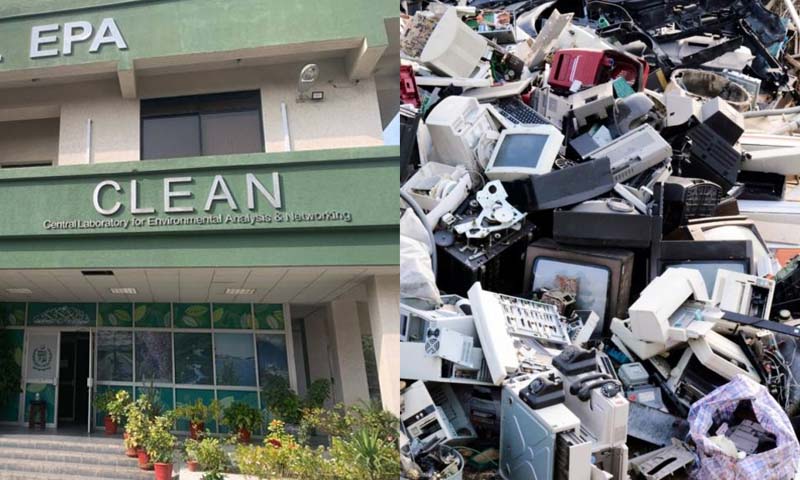
ISLAMABAD: The National Assembly’s Standing Committee on Climate Change has expressed concern over the rapid piling up of electronic waste (e-waste) in Pakistan, saying the Environmental Protection Agency (EPA) has failed to formulate place policy for its proper disposal.
Chairperson of the committee, Munaza Hassan, came down hard on EPA Director General Islamabad Nazia Zaeeb, calling the agency’s officials “completely incompetent.”
In a sarcastic remark, Hassan said, “If the EPA can’t do its job, it should take help from ChatGPT — it can make and provide the entire policy itself.”
The committee meeting, chaired by Munaza Hassan at the Parliament House, discussed the Pakistan Environmental Protection (Amendment) Bill 2025 and matters related to e-waste management.
Committee member Shahida Rehmani said that e-waste is increasing rapidly in Pakistan but there is no clear policy for its disposal. “We are moving towards electric cars and bikes, yet ignoring the harmful health impacts of growing e-waste,” she added.
The Ministry of Climate Change secretary informed the committee that the ministry is working with the telecom sector to regulate e-waste, strengthen existing regulations, and draft a dedicated e-waste policy.
He admitted that most e-waste enters Pakistan through smuggling — a problem that border forces are responsible for tackling.
He also acknowledged that the practice of dumping all waste in one place without proper segregation remains a major issue.
During the meeting, the performance of EPA Islamabad came under severe criticism. The Islamabad deputy commissioner said that vehicles’ smoke emission testing machines have been borrowed from the Punjab government, while Capital Development Authority has procured its own equipment.
He admitted that the EPA lacks an effective system, saying, “The world has moved forward — now everything operates through mobile technology.”
Concluding the discussion, the committee recommended launching a public awareness campaign about e-waste, enhancing EPA’s capacity, and tightening controls to curb smuggling routes.
Researchers are predicting a 1000-fold increase in e-waste from AI computer servers by 2030, calling for recycling strategies to reduce the environmental impact.
According to a study published in Nature Computational Science, the increasing popularity of generative AI is projected to result in the rapid growth of e-waste, electronic waste.
Researchers have predicted that e-waste could reach a total of 1.2-5.0 million metric tons between by 2030, which is around 1000 times more e-waste than was produced in 2023.
You May Also Like