
- Web Desk
- 4 Hours ago
End of net metering: NEPRA overhaul hits solar users, transfers costs to consumers
-

- Web Desk
- Feb 10, 2026
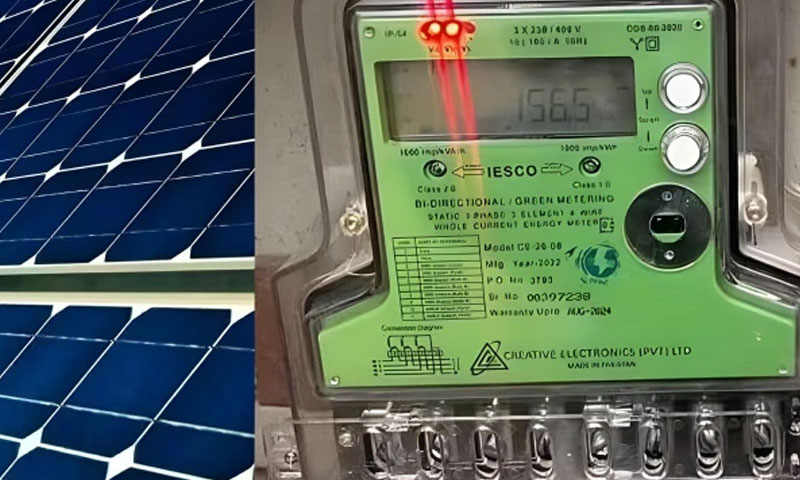
ISLAMABAD: Pakistan’s rooftop solar boom faces a major setback after the National Electric Power Regulatory Authority (NEPRA) effectively dismantled the long-standing net metering system, a move that could trigger political blowback for the government of Prime Minister Shehbaz Sharif.
Under the revised framework, the exchange of electricity units between consumers and utilities has been scrapped, sharply altering the economics for households and businesses that invested in renewable energy. The existing buyback rate of Rs 25.9 per unit for surplus solar electricity is expected to fall to around Rs 11 per unit, while the standard contract duration has been reduced from seven years to five.
In a significant shift, the cost burden of capacity payments made to Independent Power Producers (IPPs) will now be passed on to solar consumers. Distribution companies (Discos) will continue selling electricity to consumers at prevailing tariffs – which can reach up to Rs 50 per unit – while purchasing excess daytime solar power at much lower rates. Consumers will be required to pay the net difference once the unit-exchange mechanism formally ends.
Although the revised buyback rate has yet to be officially notified, it was discussed during stakeholder consultations. Existing net metering customers will remain protected until their contracts expire, after which Discos may either terminate agreements or migrate users to the new policy regime.
NEPRA has formally replaced the decade-old net metering rules with the NEPRA (Prosumer) Regulations, 2026, introducing a net billing model that fundamentally changes how small-scale power producers are compensated. Under the new rules, utilities will buy surplus electricity from prosumers – households, commercial entities and industries generating up to one megawatt – at the national average energy purchase price, while selling power back at the applicable consumer tariff. This effectively ends the one-to-one offset that defined net metering.
The regulations, which apply to solar, wind and biogas systems, took immediate effect upon notification on Monday, repealing the Alternative and Renewable Energy Distributed Generation and Net Metering Regulations, 2015. While current prosumers will continue under existing contracts until expiry, all renewals and new connections will fall under the new billing structure.
NEPRA has capped distributed generation capacity at one megawatt and restricted system size to the consumer’s sanctioned load. New connections will not be allowed if generation on a transformer exceeds 80 per cent of its rated capacity. Installations of 250 kilowatts or more will require a mandatory load flow study.
Utilities have been directed to follow strict timelines: applications must be acknowledged within five working days, technical reviews completed within 15 days, and interconnection facilities installed within 15 days after payment. Prosumers will also need formal concurrence from NEPRA, which the regulator says will be issued within seven working days.
All interconnection costs – including meters and grid upgrades – will be borne by consumers. NEPRA has also introduced a non-refundable concurrence fee of Rs 1,000 per kilowatt. Metering systems must support two-way measurement, either through a single bidirectional meter or dual meters.
The standard agreement term has been shortened to five years, renewable only by mutual consent. Utilities retain the authority to disconnect systems in cases of faults, non-compliance or maintenance needs, with or without prior notice. Prosumers are prohibited from selling electricity to third parties using the utility network.
NEPRA has also granted itself wide-ranging powers to revise purchase rates during the life of contracts, issue binding directives, demand operational data, impose penalties, and relax or amend provisions where deemed necessary.
The transition to net billing represents one of the most far-reaching reversals in Pakistan’s renewable energy policy, reshaping the financial viability of rooftop solar as distributed generation continues to grow rapidly.
Officials say the power division made two unsuccessful attempts to secure cabinet and prime ministerial approval for the changes but faced strong political resistance, leading to the decision to route the reforms through NEPRA to avoid public backlash.
Consumers are already paying more than Rs 2 trillion annually in capacity payments to idle power plants. Under the new regime, critics argue, this burden is being transferred to solar users to sustain payments to plants that remain largely non-operational.
Industry sources warn that agriculture, which has largely shifted to off-grid solar solutions, may further accelerate its move away from the grid. They also estimate that Pakistan could end up paying nearly $1 billion annually for imported solar equipment under the revised policy.
While global trends encourage a rapid transition to renewable energy, critics say the new framework effectively forces solar consumers back into the grid to underwrite losses in the conventional power sector, undermining confidence in clean energy investments.
You May Also Like