- Web Desk
- 3 Minutes ago
Trump criticises NATO, pledges closer ties with Turkey during talks with Erdogan
-

- Web Desk
- 1 Hour ago
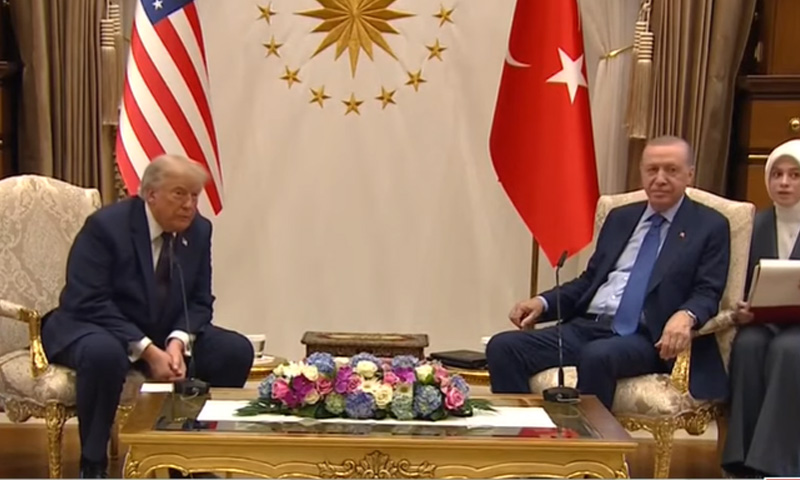
ANKARA: United States President Donald Trump and Turkish President Recep Tayyip Erdoğan on Tuesday pledged to strengthen bilateral ties as they held talks in Ankara ahead of the key NATO summit, with discussions focusing on trade, defence cooperation, Iran, and regional security.
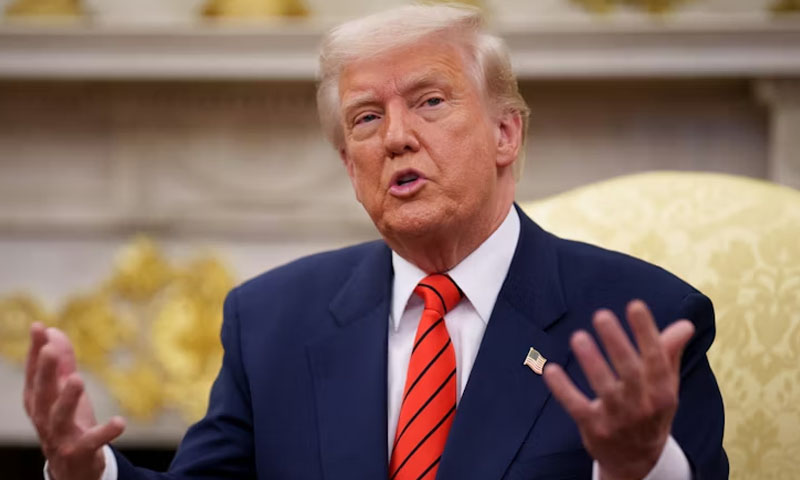
Thanking Erdoğan for the warm welcome extended to him, Trump said it was an honour to be in Turkey alongside the Turkish leader. “We will discuss trade, the military and many other issues today,” Trump told reporters before the NATO meeting.
Earlier, Trump received a ceremonial welcome in Ankara on Tuesday ahead of a NATO summit, where alliance leaders are expected to grapple with defence spending, Europe’s security, the war in Ukraine, tensions over Iran, and the future of the transatlantic alliance.
Erdoğan personally welcomed Trump on the tarmac at Etimesgut Air Base, reflecting the close relationship between the two leaders at a time when Turkey is seeking to strengthen its strategic position within NATO.
The visit marks Trump’s first trip to Turkey during his two presidential terms. The visit marks the first official trip to Turkey by a US president in 11 years.
Barack Obama was the last US president to visit the country officially in 2015. Before Trump’s visit, US presidents had made only five official visits to Turkey since the establishment of diplomatic relations between the two countries.
A ceremonial guard of honour greeted the US president on a distinctive turquoise – blue carpet — a nod to Turkish tradition — before Trump headed for talks with Erdoğan ahead of the alliance’s leaders’ dinner that formally opens the summit.
Calling Erdoğan “a good friend” and a “strong leader,” Trump said the two countries enjoyed excellent relations, adding that Turkey had remained “more loyal than many other countries.”
“This is an honour to be here with President Erdoğan,” he said. “Turkey has been a very loyal ally.”
Trump said the two leaders would also discuss Iran, claiming that Tehran’s nuclear capability had been eliminated.
“We will also talk about Iran,” he said, adding that the United States had destroyed Iran’s nuclear capability, a move he argued had helped protect European countries.
He also said a decision would be made regarding Turkey’s participation in the F-35 fighter jet programme, one of the most contentious issues in US-Turkey defence relations.
Despite attending the alliance summit, Trump criticised NATO, saying he remained disappointed with the military alliance.
He also singled out Italy, France and Germany, saying they had let Washington down.
“NATO offered assistance after the war ended,” he added, without elaborating.
Erdoğan expressed confidence that Trump’s visit would further strengthen relations between Turkey and the United States.
“This visit by President Trump will add new strength to our bilateral relationship,” Erdoğan said.
The Turkish president said the two leaders would discuss efforts to promote peace and stability, including developments related to Iran and the war in Gaza.
“We will do whatever we can to help establish peace regarding Iran and the United States,” Erdoğan said.
He added that Turkey was working closely with its international partners to reduce regional tensions and promote peace, stressing that securing a ceasefire in Gaza would be among the key issues discussed during the meeting.
“A ceasefire in Gaza is of utmost importance,” Erdoğan said.
F-35 talks
Trump confirmed that the two leaders had discussed Turkey’s long-standing request to rejoin the F-35 stealth fighter programme.
“We will also make important decisions regarding the F-35 aircraft,” he said.
Erdoğan said he expected progress on the issue, revealing that Turkey planned to purchase five F-35 fighter jets.
“We discussed the F-35 programme with President Trump. We hope he will fulfil his promise during this meeting,” the Turkish president said.
Turkey was removed from the US-led F-35 programme in 2019 after acquiring Russia’s S-400 air defence system, a move that triggered US sanctions and strained defence ties between the NATO allies.
Iran and regional conflicts
Trump said Iran would be among the key issues discussed during his talks with Erdoğan, reiterating his claim that the United States had destroyed Iran’s nuclear capability.
He argued that the move had helped protect European countries and credited Turkey with helping secure a ceasefire during the Iran conflict.
“Turkey helped in achieving a ceasefire regarding Iran,” Trump said.
He also claimed his administration had helped end eight wars and said Russia and Ukraine were interested in reaching a peace agreement.
According to Trump, around 35,000 soldiers were killed in the Russia-Ukraine war last month, although he did not provide evidence for the figure.
He added that he would discuss the Ukraine conflict with Erdoğan during the summit.
Referring to the Middle East, Trump said Turkey had not become directly involved in the Israel conflict despite tensions between Ankara and Tel Aviv, suggesting his relationship with Erdoğan had helped prevent further escalation.
While Trump maintained a close relationship and frequent telephone contact with Erdoğan during his first presidential term, he did not travel to the country during that tenure.
All of their high-profile face-to-face meetings during those years took place either at the White House or on the sidelines of international summits in other countries (such as the G20).
The summit marks one of the most consequential NATO gatherings in years, with Turkey hosting the alliance’s 32 member states amid growing geopolitical tensions stretching from Russia’s war in Ukraine to instability in the Middle East.
Turkey seeks bigger NATO role
Hosting the summit offers Ankara an opportunity to reinforce its strategic importance within the alliance despite years of friction with Western partners over defence procurement, regional security policies and democratic concerns.
Turkey remains NATO’s second-largest military power after the United States and occupies a critical geopolitical position linking Europe, the Middle East and the Black Sea region.
One of the closely watched issues is whether Trump signals support for Turkey’s return to the F-35 stealth fighter programme.
According to Reuters, Trump is expected to tell Erdoğan that he is prepared to allow Ankara to rejoin the programme after years of exclusion following Turkey’s purchase of the Russian S-400 missile defence system in 2019.
Washington had removed Turkey from the programme and imposed sanctions under the Countering America’s Adversaries Through Sanctions Act (CAATSA), creating one of the biggest disputes between the NATO allies.
A breakthrough on the issue would represent a significant reset in US-Turkey defence ties.
Defence spending dominates agenda
The summit is expected to be dominated by NATO’s efforts to dramatically strengthen Europe’s military capabilities.
Alliance members last year agreed to increase defence and security spending to five per cent of gross domestic product by 2035, more than doubling NATO’s long-standing target of two per cent agreed in 2014.
The increase reflects growing concern over Russia following its invasion of Ukraine, as well as broader security threats posed by terrorism and rising global instability.
However, several European governments continue to struggle to meet even existing spending targets, setting the stage for difficult discussions as Trump renews pressure on allies to contribute more.
Trump has repeatedly accused European members of relying excessively on US military protection and has warned that Washington should no longer shoulder a disproportionate share of NATO’s defence burden.
NATO unveils major arms initiatives
Ahead of the leaders’ meeting, NATO Secretary General Mark Rutte announced a series of defence initiatives worth tens of billions of dollars during a defence industry forum in Ankara.
Calling for a defence industry “revolution,” Rutte urged member states and defence manufacturers to rapidly expand production to meet growing security challenges.
“We don’t have the luxury of time. We need capabilities now to ensure we remain ready,” he said.
Among the major announcements, European countries agreed to purchase surveillance drones from US defence contractor Northrop Grumman, while NATO signed agreements to acquire aircraft from Sweden’s Saab.
US defence giant Lockheed Martin and Germany’s Rheinmetall also signed a draft agreement to jointly manufacture ATACMS short-range ballistic missiles in Germany, marking the first planned production of the weapon outside the United States.
Rutte also announced that NATO allies would invest more than $40 billion over the next five years to strengthen anti-drone capabilities.
The announcements are intended to demonstrate that European allies are responding to Washington’s long-standing demands for greater military investment while reducing dependence on US defence production.
Uncertainty over US military presence
Another key issue will be the future of the American military presence in Europe.
Trump has previously threatened to reduce US troop deployments across the continent, while the Pentagon has already cancelled planned deployments and begun reviewing America’s military footprint in Europe.
European leaders are expected to press Trump for clarity over future US commitments, arguing that the American military presence remains central to NATO’s collective deterrence against Russia.
Ukraine and Iran remain divisive
The alliance is also expected to reaffirm support for Ukraine, with members preparing to pledge around €70 billion in military assistance for 2026 as Kyiv faces intensified Russian missile and drone attacks.
European governments are struggling to compensate for reduced US military assistance while Ukraine faces growing shortages of advanced air-defence systems.
Meanwhile, divisions over the conflict involving Iran are also expected to surface during the summit.
Trump has criticised several NATO allies for refusing to become more directly involved alongside the United States and Israel, publicly rebuking leaders including British Prime Minister Keir Starmer, German Chancellor Friedrich Merz and Italian Prime Minister Giorgia Meloni.
The disagreements have exposed broader strains within the alliance over Middle East policy, adding to existing disputes over defence spending and burden-sharing.
Despite persistent differences, NATO leaders are expected to present a united front at the conclusion of the Ankara summit by reaffirming collective defence commitments while announcing new investments aimed at strengthening the alliance’s military readiness.
For Turkey, the summit represents an opportunity to demonstrate its central role in European security and potentially secure renewed defence cooperation with Washington.
For Trump, it provides another platform to push European allies towards greater military spending while reshaping America’s role within the alliance he has repeatedly criticised.
You May Also Like