
- Web
- Feb 15, 2026
Experts, lawmakers urge stronger tobacco taxes to curb smoking
-

- Web Desk
- May 30, 2025
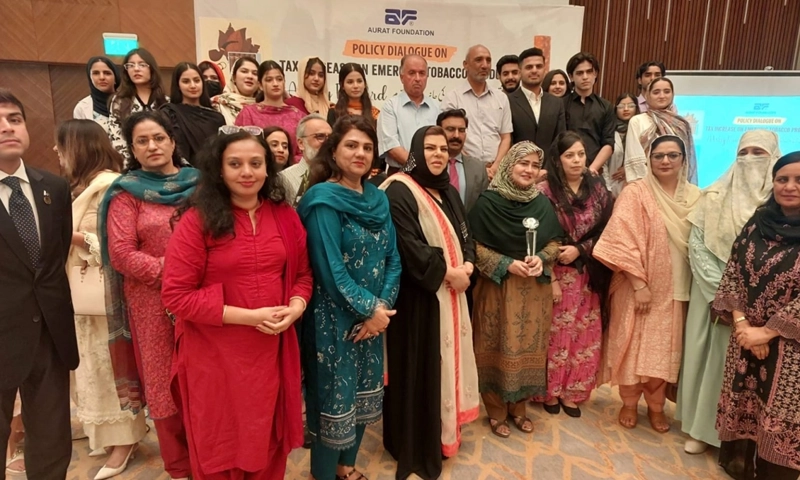
ISLAMABAD: Public health experts, parliamentarians, and civil society leaders have called for urgent increases in tobacco taxes and stricter enforcement of tobacco control laws to combat the growing use of nicotine, especially among young people in Pakistan.
The appeal came during a high-level policy dialogue on tobacco control held on Friday, according to a press release.
MNA Saher Kamran emphasized the important role of educational institutions in protecting youth. She noted that she has introduced several bills in both the Senate and National Assembly over the past 15 years aimed at tobacco control.
Asif Iqbal, Managing Director of the Social Policy and Development Centre (SPDC), presented data showing that the freeze on Federal Excise Duty (FED) since February 2023, combined with relatively low inflation, has made cigarettes more affordable.
He warned that without tax reforms in the upcoming fiscal year, over 490,000 young people could start smoking. Iqbal stressed that significant tax increases would both reduce tobacco consumption and generate much-needed public health revenue.
Zaheer Qureshi, Director of the Federal Board of Revenue’s Track and Trace System, outlined efforts to fight illicit tobacco trade using digital monitoring. He said tobacco, sugar, and cement products are now electronically tracked throughout the supply chain to improve transparency and revenue collection.
Dr. Arsalan Haider, Director of the Tobacco Control Cell at the Ministry of National Health Services, described the Tobacco Control Cell as a comprehensive framework supporting Pakistan’s obligations under the WHO Framework Convention on Tobacco Control (FCTC).
Punjab MPA Tahira Mushtaq shared her success in passing a resolution in the Punjab Assembly for a provincial tobacco levy and legal regulation of emerging products such as vapes and e-cigarettes. She warned that these newer nicotine products are increasingly targeting youth and urged immediate action.
Also read: Hike in Tobacco Taxes for FY-2024-25 demanded
MNA Sabeen Ghauri echoed calls for updating and strengthening Pakistan’s tobacco laws. She pointed out enforcement challenges despite two existing federal laws and expressed commitment to amending legislation to cover all nicotine products, including vapes and nicotine gums. Ghauri also expressed hope that tobacco taxes will rise in the federal budget.
Support for tobacco tax hikes was also voiced by MNAs Dr Shazia Sobia and Naeema Kishwar Khan.
Safdar Raza of the Aurat Foundation criticised the current two-tier cigarette tax system, arguing it allows the tobacco industry to manipulate the market. Referencing a recent WHO policy brief, he noted that while the industry claims revenue losses from illicit trade, official data shows a 30% increase in economy-brand cigarette production and a 22 per cent overall rise in output, challenging these claims.
He called for the abolition of the tiered system in favor of uniform high taxes on all tobacco products.
MNA Naeema Kishwar Khan also highlighted concerns about tobacco farmers, particularly in Khyber Pakhtunkhwa. She urged the government to introduce alternative cash crops and ensure fair economic returns for growers alongside raising tobacco taxes.
Mumtaz Mughal, Director of Programmes at Aurat Foundation, stressed that tobacco use poses specific challenges for women, especially when male family members are addicted. She urged empowerment of women as key agents in tobacco control efforts.
The dialogue concluded with a unified call for decisive policy actions, including comprehensive tax reforms, stronger legal frameworks, and nationwide enforcement, to protect public health and safeguard the future of Pakistan’s youth.
You May Also Like