- Web Desk
- Mar 24, 2026
Experts warn of economic fallout from Pak-Afghan rift
-

- Web Desk
- Oct 22, 2025
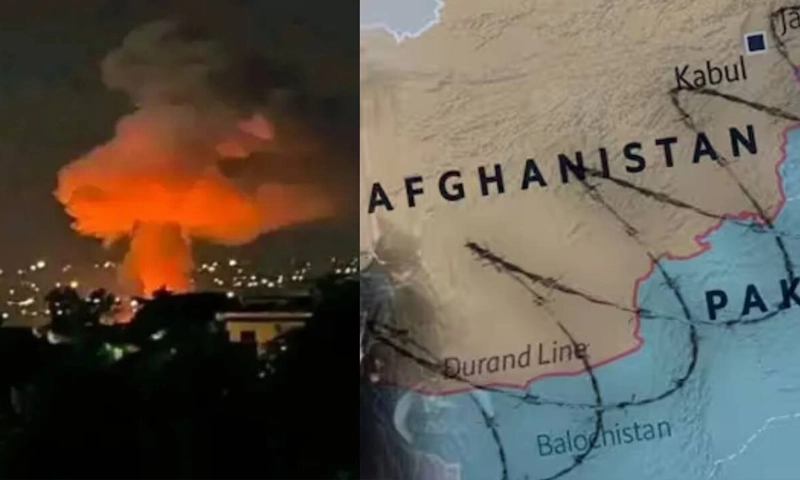
LAHORE: Experts at a policy roundtable have called for renewed dialogue and confidence-building measures between Pakistan and Afghanistan to prevent further escalation, warning that deteriorating ties could deepen regional instability and economic hardship.
The discussion, hosted by the Beaconhouse National University (BNU) Center for Policy Research (BCPR), focused on the causes and consequences of recent cross-border tensions following Pakistan’s military strikes against terrorist sanctuaries in Afghanistan.
According to participants, the recent strikes were viewed as a demonstration of Pakistan’s resolve not to tolerate terrorism emanating from Afghan soil. However, experts cautioned that while such actions may signal strategic clarity, they also risk worsening diplomatic isolation and pushing Afghanistan closer to India.
The dialogue centered on the tensions that have escalated since the Taliban’s return to power in Kabul in August 2021, with a primary focus on the critical issue of cross-border terrorism perpetrated by groups such as the banned Tehreek-e-Taliban Pakistan (TTP), according to a BCPR press release. A central theme of the roundtable was the debate over Pakistan’s recent military actions.
Panelists highlighted the complex internal divisions within the Taliban regime, with splits between the relatively moderate Haqqani Group and the conservative Kandhari faction complicating efforts to rein in the TTP.
Dr Syed Hussain Shaheed Soherwordi noted that the Taliban fears acting against the TTP could push its fighters toward the more ruthless Islamic State Khorasan Province (ISKP). This internal “Catch-22” situation, as described by journalist Hassan Khan, severely limits the Taliban’s capacity or willingness to curb the TTP.
Tahir Khan provided context on the growing India-Taliban engagement, noting that certain statements made by Afghan officials in India had crossed Pakistan’s “red lines.” Dr. Tahir Kamran added a broader regional perspective, pointing out that Pakistan currently struggles with poor relationships with all its neighbors except China.
The discussion was facilitated by Ambassador Mansoor Ahmad Khan, Director of BCPR, and featured contributions from Dr. Kamran, Soherwordi, Tahir Khan, and Hassan Khan.
Panelists agreed that Afghanistan faces disproportionate economic consequences due to its heavy reliance on Pakistan — accounting for nearly 80 per cent of its trade. At the same time, Pakistan faces political risks if Afghanistan deepens ties with India, creating a potential “strategic sandwich” in the region.
The roundtable underscored the need for immediate confidence-building measures, including reopening border crossings to ease economic strain on both sides. Participants cited the Doha Agreement, backed by Qatar and Turkey, as a possible framework for future mediation and dialogue.
Experts further urged Pakistan to adopt a long-term, coherent border management policy and broaden its engagement beyond the Taliban by reaching out to the Afghan diaspora and other segments of Afghan society.
In conclusion, the roundtable underscored the profound challenges and high stakes in the Pakistan-Afghanistan relationship. While Pakistan’s recent actions project strength, sustainable peace will require a blend of diplomacy, regional cooperation — particularly with China — and a deeper understanding of Afghanistan’s internal political realities.
You May Also Like