- Web
- 2 Minutes ago
Explained: Pakistan’s fuel spike, why it happened and what choices did we have?
-

- Syeda Masooma
- Apr 03, 2026
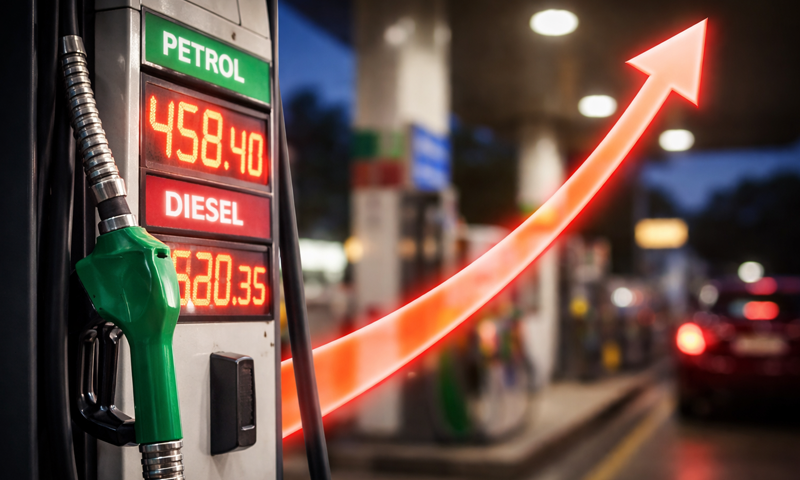
Pakistan’s latest fuel price hike: Rs 137 per litre for petrol and Rs 184 for diesel, marks one of the steepest increases in recent years, pushing retail prices to record highs.
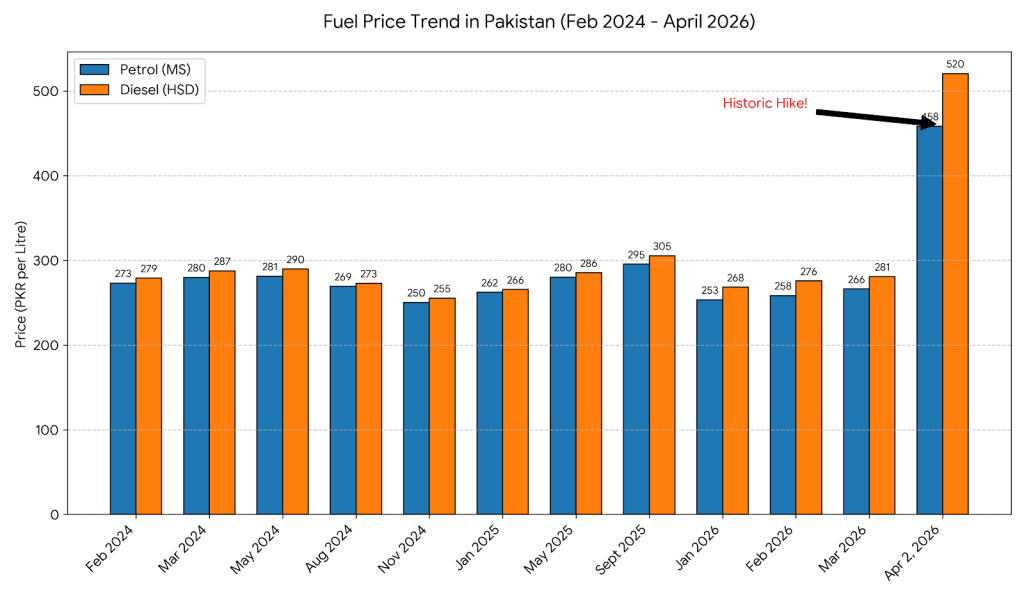
While the jump may appear sudden, it is the result of multiple pressures converging at once, from global oil disruptions to domestic fiscal constraints.
A ‘STACKED SHOCK’: WHY THE INCREASE WAS SO LARGE
At its core, the April 2 revision reflects what analysts describe as a “stacked shock” rather than a routine fortnightly adjustment.
The first trigger was a global supply disruption. Escalating tensions in the Middle East have affected key oil transit routes, particularly the Strait of Hormuz, through which a significant share of global crude passes. This pushed international oil prices sharply higher within a short span.
At the same time, Pakistan had been delaying the impact of these rising costs. In March, the government opted to hold domestic prices steady, effectively absorbing the increase instead of passing it on to consumers. This created a widening gap between actual import costs and retail prices.
That gap became unsustainable as the government’s financial buffer ran out. Roughly Rs 129 billion had already been spent on subsidies to cushion consumers. By early April, those resources were exhausted.
Compounding the problem was the exchange rate effect. Pakistan imports around 85 per cent of its oil, meaning any depreciation in the rupee directly increases the landed cost of fuel.
Taken together, the April 2 hike represents not just current global price pressures, but also a “catch-up adjustment” for costs that had been deferred.
WHY THE PETROLEUM LEVY REMAINS HIGH
Despite the surge in prices, the government has maintained, and in some cases increased, the petroleum levy, a move that has drawn public criticism.
Unlike general sales tax, the levy is a direct federal charge and one of the government’s most important revenue streams, contributing hundreds of billions of rupees annually.
Reducing it is not a viable option for Pakistan, largely due to commitments under the International Monetary Fund’s (IMF) programme. The current arrangement places limits on fuel subsidies and focuses on revenue mobilisation, making the levy effectively non-negotiable.
There is also an element of cross-subsidisation. Petrol, which is more widely used for private transport, carries a higher tax burden. Diesel, which is critical for goods transport and agriculture, is relatively shielded to contain knock-on effects on food prices and inflation.
In effect, the policy shifts part of the burden onto private consumers to protect broader economic activity.
LIMITED AND COSTLY POLICY OPTIONS
The government’s choices were constrained, with each option carrying significant trade-offs.
Continuing subsidies would have provided immediate relief but at a high fiscal cost, risking a breach of agreed limits and widening the deficit.
Reducing the petroleum levy could have lowered prices in the short term but would have undermined revenue targets and jeopardised the IMF programme.
Further delaying the adjustment, as was done in March, risked deepening the price gap, ultimately leading to an even sharper correction later.
Alternative supply options offered limited relief. Importing discounted crude from Russia, for instance, is complicated by Pakistan’s refining capacity, which is not optimised for heavier crude blends. Similarly, rerouting shipments through alternative channels increases costs due to higher insurance and logistical risks.
Given these constraints, the government opted for a full pass-through of international prices, prioritising macroeconomic stability over short-term price relief.
WHO MAKES THE DECISION
Fuel pricing follows a structured process.
The Oil and Gas Regulatory Authority (OGRA) first calculates recommended prices based on international oil trends and the rupee-dollar exchange rate over the previous fortnight.
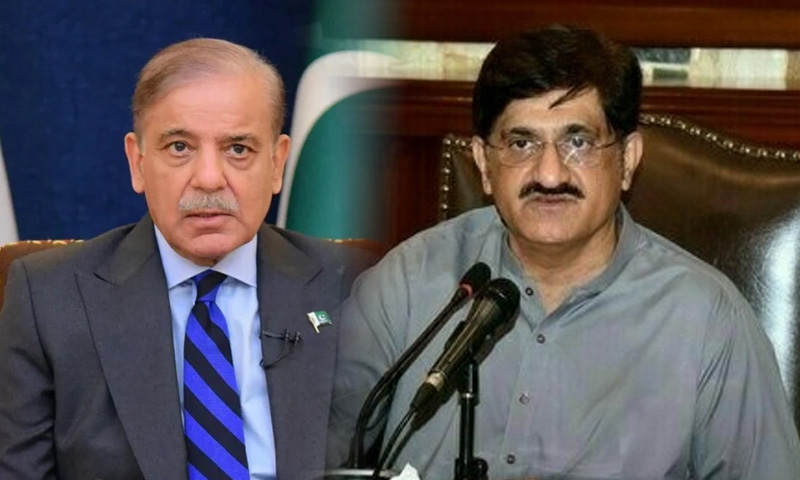
These recommendations are then reviewed by the finance and petroleum ministries before final approval by the federal government, led by Prime Minister Shehbaz Sharif.
Officials indicate that broader consultations, including with provincial leadership, also took place before the final decision.
A BROADER ECONOMIC SIGNAL
Beyond the immediate impact on consumers, the scale of the increase carries wider implications.
Diesel prices, in particular, are critical for transport and agriculture, meaning the hike is likely to feed into food prices and overall inflation in the coming weeks.
More broadly, the episode brings into focus Pakistan’s structural vulnerabilities, including heavy reliance on imported energy, limited fiscal space, and exposure to global shocks.
THE BOTTOM LINE
The April 2 fuel price hike is not simply a policy choice, but the outcome of global disruption, domestic financial constraints, and delayed adjustments colliding at once.
For consumers, it translates into immediate pressure. For policymakers, it highlights the difficult balance between economic stability and public relief – a trade-off that is becoming increasingly hard to manage.
You May Also Like