
- Aasiya Niaz
- 19 Minutes ago
FCC reserves ruling in case linked to ban on imports from India
-

- Web Desk
- Jan 22, 2026
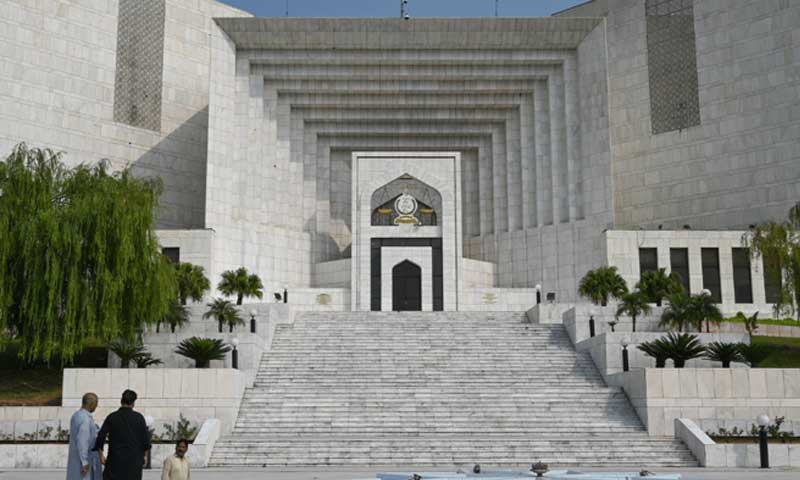
WEB DESK: The Federal Constitutional Court (FCC) on Wednesday reserved its verdict on a petition filed by the federal government contesting certain directions issued by the Lahore High Court (LHC) in a case concerning the ban on imports from India.
As reported by Dawn, A three-member bench led by Justice Aamer Farooq, and comprising Justice Ali Baqar Najafi and Justice Rozi Khan Barrech, heard the appeal submitted by the commerce ministry against the LHC’s January 26, 2024 judgement. The case had initially been filed before the Supreme Court but was transferred to the FCC following the enactment of the 27th Constitutional Amendment.
The dispute centres on statutory regulatory orders (SROs) issued in 2019, through which the federal government suspended imports from and exports to India across all categories of goods, including books and journals. The government maintains that the decision was taken under its constitutional and statutory authority, citing considerations of foreign policy, national security and Pakistan’s position on Kashmir.
The SROs were challenged before the LHC on the grounds that banning the import of books violated constitutional rights. While the high court upheld the legality of the SROs, declaring them consistent with the Constitution and relevant laws, it nonetheless issued directions requiring the federal government to appoint an officer to review the policy and consider any recommendations arising from that exercise.
These directions were subsequently challenged by the federal government before the FCC, which argued that once the policy had been upheld, the court could not lawfully compel the executive to revisit or reconsider it.
Representing the revenue division secretary, Advocate Hafiz Ahsaan Ahmad Khokhar contended that the LHC’s directives amounted to judicial overreach and interfered with matters lying exclusively within the executive’s domain. He argued that decisions related to trade restrictions and relations with adversarial states were policy matters, traditionally treated as non-justiciable, and protected by the principle of separation of powers.
Additional Attorney General Chaudhry Aamir Rehman echoed these arguments, maintaining that the high court had exceeded its jurisdiction by intruding into executive policymaking.
After hearing detailed submissions from both sides, the FCC reserved its judgement.
You May Also Like