- WEB DESK
- October 25, 2026
Budget 2026-27: Federal proposals weigh tax net expansion, exporter relief, and major tariff reforms
-

- Sadia Basharat
- June 6, 2026
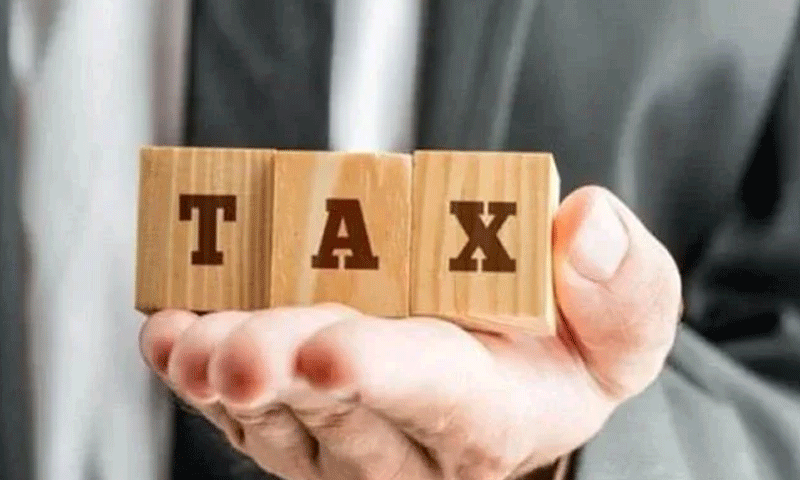
WEB DESK: The federal government is considering a comprehensive layout of fiscal measures for the upcoming budget 2026–27, balancing an aggressive expansion of the domestic tax net with targeted documentation rules and strategic import liberalisation, official sources revealed on Saturday.
The upcoming fiscal plan is expected to place a heavy emphasis on broadening the tax base and boosting overall revenue generation.
Several proposals currently under review could significantly reshape domestic business activity, trade patterns, and consumer pricing across the country.
While the final budgetary framework remains under discussion, official sources indicate a calculated mix of relief measures for key economic sectors alongside stringent revenue-enhancing adjustments.
Export incentives and rationalisation of import duties
Among the primary proposals aimed at reviving industrial momentum is the total abolition of the 1 per cent advance tax currently levied on exporters.
The move is designed to ease persistent liquidity constraints within the export sector and incentivise foreign exchange inflows at a critical juncture for the national economy.
Senior officials are also evaluating broader tax relief mechanisms to strengthen the competitiveness of local industries in international markets.
Concurrently, the government is planning significant tariff rationalisation on the import side. The statutory import duty on cosmetic products may be slashed from 44pc to 40 pc, alongside dedicated tax relief for machinery imported by beauty parlours, clinics, and health and fitness centres.
If approved, these adjustments are expected to reduce the retail prices of essential personal care products, including suns_creens, sunblocks, shaving creams, aftershaves, and various body lotions.
Consumer documentation and adjustment of petroleum levies
To curb tax evasion and ensure better enforcement of sales tax collection at the retail level, authorities are planning to tighten documentation standards for high-volume consumer goods.
It may soon become legally mandatory to print retail prices directly on the packaging of essential items, including baby formula milk, ketchup, ghee, cooking oil, and tea.
This step aims to eliminate grey market discrepancies and bring retail supply chains under rigorous regulatory oversight.
However, the proposed fiscal consolidation measures may introduce fresh inflationary pressures for the public. The government is actively debating a proposal to double the climate levy on petroleum products, raising it from Rs2.5 to Rs5 per litre.
Furthermore, structural adjustments under consideration include the potential withdrawal of long-standing tax exemptions currently available to the merged districts of Khyber Pakhtunkhwa, as the state seeks to rationalise subsidies and reinforce its broader fiscal consolidation strategy.
You May Also Like