- Web Desk
- Feb 24, 2026
Finance minister says corruption causes Rs1 trillion annual losses
-

- Web Desk
- Jan 14, 2026
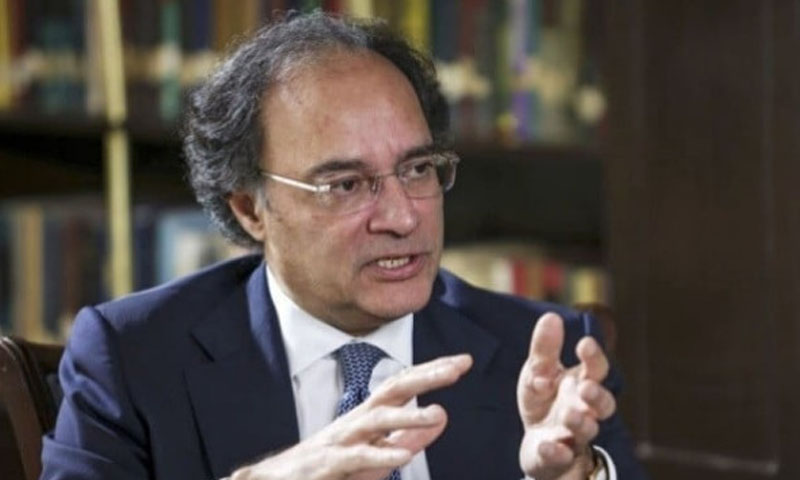
ISLAMABAD: Finance Minister Muhammad Aurangzeb said on Thursday that debt servicing remains the government’s largest expense, while corruption had been causing annual losses of about 1 trillion rupees ($3.6 billion) in state-owned institutions.
Speaking at the Pakistan Policy Dialogue, Aurangzeb said remittances totalled $38 billion in the previous fiscal year and are expected to exceed $41 billion in the current year.
He said that the government was implementing structural reforms, including the transformation of the Federal Board of Revenue (FBR), with a focus on compliance and enforcement to ensure implementation of tax laws. He said that reforms were also under way in the energy sector.
He said local investors had participated in the privatisation process of Pakistan International Airlines (PIA) and that 24 entities had been handed over to the Privatisation Commission.
“Losses of nearly Rs1 trillion a year in state-owned institutions prompted the government to shut down entities such as the Utility Stores Corporation, the Public Works Department and the Pakistan Agricultural Storage and Services Corporation due to corruption in subsidies,” he said.
Aurangzeb said that higher duties damage the economy and stressed the need to rationalise duties and reduce the cost of doing business.
He said interest payments on public debt were the government’s biggest expenditure, but savings of 850 billion rupees had been achieved on debt servicing last year, with further savings expected in the current fiscal year.
The finance minister said that the government would launch Panda Bonds within the next two weeks.
Citing a survey, he said 73 per cent of investors were in favour of investing in Pakistan. While the trade deficit had widened, he said the current account remained within target.
Aurangzeb said large-scale manufacturing posted positive growth in the first quarter of the current fiscal year, while credit to the private sector rose to Rs1.1 trillion. He said 135,000 new investors had entered the Pakistan Stock Market, with overall stock market investment up 41 per cent over the past 18 months.
He said Pakistan has the world’s third-largest freelancer workforce and that it was the government’s responsibility to provide platforms and systems for young people.
Controlling population growth was critical to achieving a $3 trillion economy by 2047, he said, adding that development was not possible with an annual population growth rate of 2.55 per cent.
Aurangzeb said that debt servicing costs had declined due to policy measures rather than automatically, with improved debt planning resulting in significant savings that the government aims to redirect towards priority and development projects.
He said investment was continuing both domestically and internationally, with developments on Panda Bonds expected in the coming weeks.
“Pakistan was also investing in the Chinese market, with currency conversion expected to yield a 2.5 per cent benefit. International rating agencies had expressed confidence in the reform agenda, he said, adding that the International Finance Corporation (IFC) had completed a $3.5 billion investment,” he said.
Highlighting the Reko Diq project, Aurangzeb said that exports were expected to begin in 2028, with $2.8 billion in exports projected in the first year.
He said that the IFC had invested $400 million in a Telenor transaction, while investor confidence was rising, with 73 per cent of investors optimistic, according to a survey.
Privatisation Adviser Muhammad Ali said that past economic policies had discouraged private investment and increased debt, adding that privatisation was not ideological but a tool to correct market failures.
A strong economy required functional institutions, he said, calling for a change in mindset to achieve a modern economic reset.
Minister of State on Climate Change & Environmental Coordination Musadik Malik said that prosperity depended on higher productivity and equal opportunities, arguing that access to power and influence had become the main route to economic advantage in Pakistan.
He urged the government to support small industries and youth rather than favour large capital holders.
Planning Minister Ahsan Iqbal said Pakistan, alongside being a nuclear power, was exporting JF-17 fighter jets, and had made progress in tractor manufacturing, automobiles and engineering, though more needed to be done to compete globally.
He said China’s per capita income was lower than Pakistan’s in 1980 but had since surpassed it, while Vietnam’s exports had reached $408 billion.
Pakistan’s exports, he said, remained around $40 billion, adding that while the expansion of universities and highways was a major achievement, further steps were needed to enhance global competitiveness.
You May Also Like