
- Web
- Mar 18, 2026
Financial stocks slide as Trump’s credit card rate cap plan rattles investors
-

- Web Desk
- Jan 12, 2026
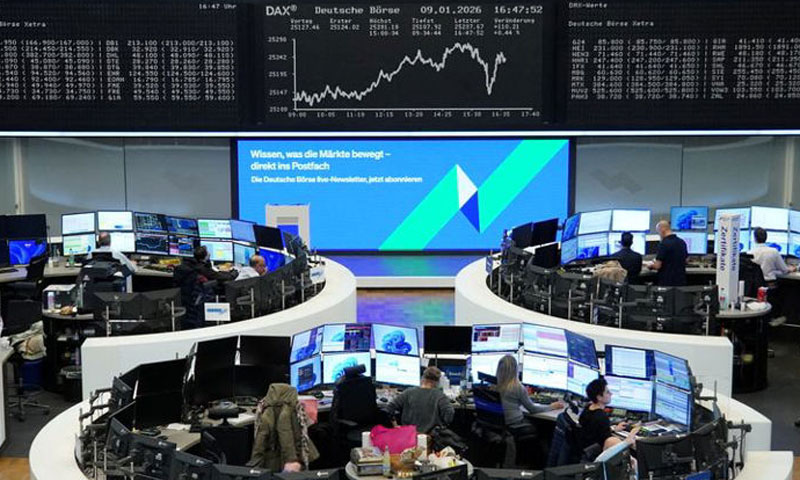
WASHINGTON/LONDON: US and UK financial stocks fell sharply on Monday after President Donald Trump called for a one-year cap on credit card interest rates, threatening a major revenue stream for lenders.
Trump proposed a 10 per cent cap on credit card interest starting January 20, without specifying how companies would be forced to comply. The announcement renewed investor concerns over interest-rate uncertainty and cast a shadow over the sector’s performance.
Shares of U.S. lenders JPMorgan Chase and Bank of America dropped 2.5 per cent and 1.6 per cent respectively, while Citigroup fell 3.7 per cent and Wells Fargo slid 1.5 per cent. Analysts expressed skepticism that the plan could be implemented without Congressional approval.
“Such a rate cap would require an Act of Congress, given the legal hurdles an executive order would face,” said analysts at UBS Global.
UK-based Barclays shares hit their lowest in nearly a month, down 2.2 per cent. U.S. consumer finance companies, including Synchrony Financial, Bread Financial and Capital One, fell between 8 and 11 per cent. American Express dropped 3.8 per cent, while Visa and Mastercard slipped 1.8 per cent each.
Risks to Credit Access
Trump’s move is seen as an attempt to address rising concerns over the cost-of-living, echoing his earlier campaign pledge.
“It is not surprising to see Trump revisit this idea, as affordability has become a key concern among voters,” said Bill Ryan, analyst at Seaport Research.
Analysts warned the plan could have unintended consequences, forcing lenders to reduce limits or close accounts for borrowers with lower credit scores. “This could push consumers toward more expensive debt options outside traditional banks,” said Vivek Juneja of JPMorgan.
Costly Credit Card Loans
Credit cards remain one of the most expensive forms of borrowing, with rates averaging 20.97 per cent in November, according to the Federal Reserve. Lenders cite the unsecured nature of the loans as the reason for high rates.
Investors will watch closely as major U.S. banks release fourth-quarter earnings this week, starting with JPMorgan on Tuesday, followed by Bank of America, Citigroup and Wells Fargo.
You May Also Like