
- Web
- Feb 15, 2026
First coronary bypass surgery performed without opening the chest
-

- Web Desk
- Jan 16, 2026
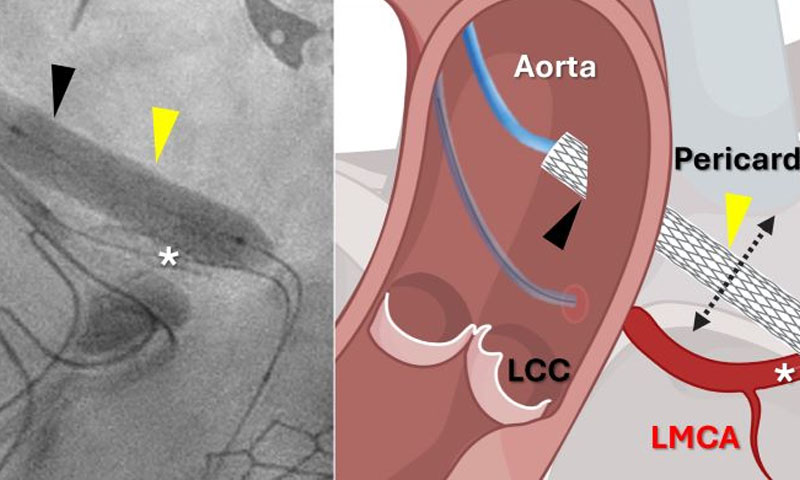
MARYLAND: For the first time in a human patient, doctors have successfully performed coronary artery bypass grafting (CABG) without cutting through the chest, marking a potential breakthrough in heart surgery.
According to a report published in *Circulation: Cardiovascular Interventions*, surgeons rerouted blood around a blocked heart artery by inserting surgical tools through a blood vessel in the patient’s leg — a technique similar to minimally invasive procedures now commonly used for aortic valve replacement.
CABG is typically carried out through open-heart surgery, requiring the chest to be opened. Researchers said the new approach could pave the way for a less invasive alternative for patients at risk of coronary artery disease.
“Achieving this required some out-of-the-box thinking, but I believe we developed a highly practical solution,” said Dr Christopher Bruce of the US National Heart, Lung, and Blood Institute and Emory School of Medicine, who led the team.
The technique, known as ventriculo-coronary transcatheter outward navigation and re-entry (VECTOR), was used on a patient who was not suitable for traditional open-chest surgery due to heart failure and poorly functioning artificial heart valves.
Six months after the procedure, the patient showed no signs of coronary artery obstruction, indicating the surgery was successful. Researchers said further trials are needed before the technique can be used more widely, but described the first case as a major step forward.
“It was incredibly gratifying to see this project progress from concept to animal studies and finally to clinical application,” Bruce said.
Researchers identify new markers to track aggressive breast cancer cells
In a separate study, researchers said they have identified new characteristics that could improve the tracking of some of the most aggressive breast cancer cells as they spread through the bloodstream.
Triple-negative breast cancer (TNBC) is among the hardest cancers to treat because its cells lack hormone receptors targeted by standard therapies. These tumors are also more likely to spread to other organs, but tracking the circulating cancer cells has proven difficult.
Researchers reported in *Cancer Research Communications* that they have identified four new cell-surface proteins that significantly improve detection of TNBC cells in the blood. The findings were first observed in mouse models and later confirmed in patient samples.
“We were excited by the results from blood samples of patients with metastatic TNBC,” said study leader Dr Chonghui Cheng of Baylor College of Medicine. “Tumour cells were often undetectable using standard markers but became clearly visible with the new marker combination.”
The ability to reliably detect circulating TNBC cells could help doctors better monitor disease progression and response to treatment. Cheng added that the newly identified markers are also present in other cancer types, suggesting broader applications.
Smoking cessation drug shows promise for cannabis use disorder
A drug commonly used to help smokers quit may also reduce cannabis use, particularly in men, according to a mid-stage clinical trial.
Researchers tested varenicline, sold under the brand name Chantix, in 174 participants diagnosed with cannabis use disorder. The condition is marked by continued cannabis use despite significant social, occupational or psychological harm.
Participants were randomly assigned to receive either varenicline or a placebo for 12 weeks, along with brief weekly medical management sessions. The findings, published in *Addiction*, showed that men receiving varenicline reduced their cannabis use significantly compared with those given a placebo.
Men in the treatment group averaged 7.9 cannabis-use sessions per week during the study and 5.7 sessions in the week after it ended, compared with more than 12 sessions per week in the placebo group.
However, women who received varenicline reported higher anxiety levels and did not reduce cannabis use compared with women in the placebo group.
“Our next step is to study varenicline in a larger group of women to better understand this difference in treatment outcomes,” said study leader Aimee McRae-Clark of the Medical University of South Carolina.
Researchers noted that women are more likely to use cannabis as a coping mechanism for stress and anxiety, suggesting future trials should include psychological support to address anxiety-related triggers.
You May Also Like