- Web Desk
- 1 Hour ago
First solar eclipse of 2026: ‘Ring of Fire’ to light up the skies in one week
-

- Web Desk
- Feb 10, 2026
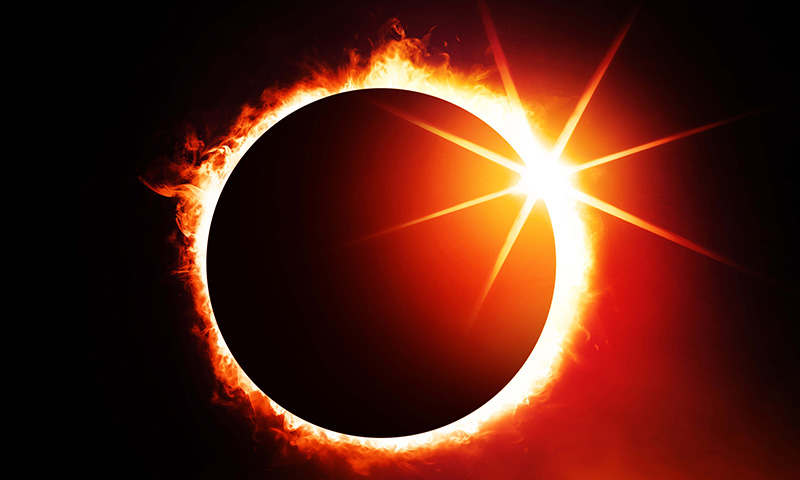
Astronomy enthusiasts will have reason to look skyward on February 17, when the first solar eclipse of the year takes place in the form of an annular, or “ring of fire,” eclipse. While the celestial spectacle promises a striking display, it will unfortunately remain out of sight for most Asian countries, including Pakistan.
According to astronomers, the eclipse will occur when the moon moves directly in front of the sun. However, as the moon will be positioned farther away from Earth at the time, it will not completely cover the sun. Instead, a bright ring of sunlight will remain visible around the moon – a phenomenon famously referred to as the “ring of fire.”
Astronomical institutions report that the eclipse will begin at approximately 09:56 Universal Time (UTC) and conclude around 14:27 UTC, with the maximum phase occurring at about 12:12 pm UTC. Pakistan is five hours ahead, so it will translate into an afternoon event for the denizens here.
However, experts say the complete ring of fire will be visible only from remote regions of Antarctica, making it a rare and exclusive sight. A partial solar eclipse, however, will be observable in certain parts of South Africa, South America, and surrounding oceanic regions.
Science websites note that during the peak of the eclipse, the moon will cover nearly 96 per cent of the sun, with the most dramatic view lasting for up to two minutes.
Meanwhile, residents of Pakistan, India, and much of Asia will miss out on a direct view of the event. Nevertheless, astronomy lovers around the world will still be able to witness the eclipse through live-streamed broadcasts provided by scientific organizations.
Experts have also reiterated the importance of eye safety, warning that viewing a solar eclipse without proper protective glasses can cause serious eye damage. Only certified solar viewing equipment should be used to observe the phenomenon safely.
Even for those watching from behind screens, the February 17 eclipse promises to be a fascinating reminder of the wonders, and precise timing, of the cosmos.
You May Also Like