First time in almost six decades: Al-Aqsa sealed for Palestinians on Eid
-

- Web Desk
- 2 Minutes ago
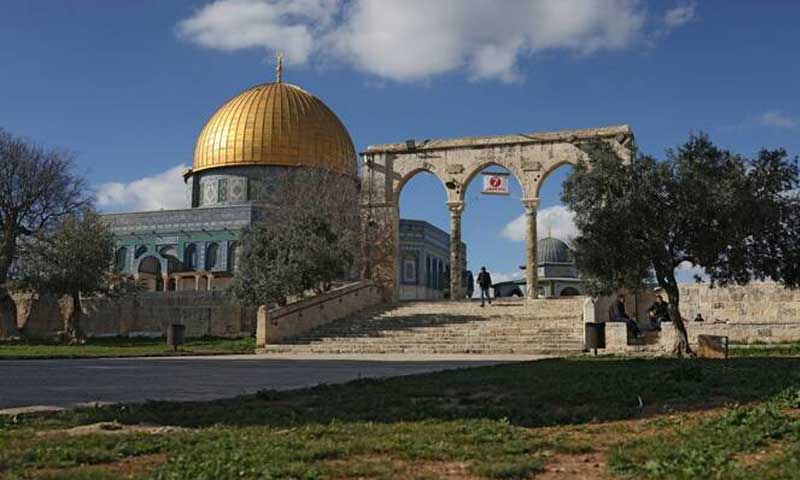
For generations of Palestinian Muslims, Eid at Al-Aqsa has marked one of the most sacred and emotionally resonant mornings of the year. This time, however, the compound stood shut after at least six-decades. Israeli authorities kept Al-Aqsa Mosque closed on Eid, a move widely described as unprecedented in the modern era and one that forced worshippers to gather outside Jerusalem’s Old City instead of inside one of Islam’s holiest sites. Israel has linked the restrictions to security concerns tied to the ongoing war involving Iran, but Palestinians say the closure is part of a broader pattern of tightening control over the compound and limiting Muslim access at a moment of exceptional religious significance.
Worshippers pushed outside the gates
On Friday morning, Palestinians who would normally fill the mosque compound for Eid prayers instead found entrances blocked and access heavily restricted. Many prayed in the streets and open areas outside the Old City, as Israeli police maintained barricades around the site. The closure follows weeks of limitations that began on February 28, when Israeli authorities effectively sealed off the compound to most Muslim worshippers during Ramadan, citing security conditions linked to the regional conflict.
The significance of the closure goes far beyond logistics. Al-Aqsa, known to Muslims as Al-Haram Al-Sharif, is the third-holiest site in Islam and a central symbol of Palestinian religious and national life. For Jews, the same elevated compound is known as the Temple Mount and is revered as the site of the First and Second Temples. Because of its religious and political sensitivity, even small changes to access or prayer arrangements there can trigger wider unrest.
As per Guardian, Palestinians say the pain of this Eid lies not only in being turned away, but in the precedent the closure may set. Reports from Jerusalem describe an unusually subdued atmosphere in and around the Old City, which is normally crowded in the final days of Ramadan and at Eid. Instead, there was a heavy security presence, restricted movement, and a sense among many residents that one of the holiest days in the Islamic calendar had been stripped of its spiritual centre.
Palestinians see a wider campaign of restrictions
Many Palestinians and regional observers do not view the closure as an isolated security decision. They argue it fits into a longer pattern of escalating restrictions at the mosque compound since the war in Gaza and the broader regional escalation that followed. Recent weeks have seen increased arrests of Palestinian worshippers and religious staff, repeated limits on entry, and growing alarm over incursions into the site by Israeli settlers and far-right activists. Analysts and coverage in recent weeks have warned that the longstanding status quo governing worship and access at the compound is under growing strain.
The shutdown has also hit daily life in Jerusalem’s Old City. Reports say many Palestinian shopkeepers were prevented from opening, with only pharmacies and essential food stores allowed to operate in some areas. For traders who rely on Ramadan and Eid footfall, the restrictions have deepened economic pressure alongside the emotional and religious loss.
Religious leaders urged worshippers to pray as close to Al-Aqsa as possible if they could not enter the compound itself. That call reflected both devotion and defiance: even if barred from the mosque, Palestinians were being encouraged not to let Eid pass without publicly marking their attachment to the site.
Condemnation grows as Gaza endures a bleak Eid
The closure has drawn strong condemnation from regional and Islamic organisations. The Arab League has denounced the move as a violation of international law and warned that it threatens freedom of worship while inflaming an already volatile region. The Organisation of Islamic Cooperation has likewise criticised the continued closure of Al-Aqsa during Ramadan, and multiple Arab and Muslim-majority states have called for unrestricted access to the site and respect for the historical and legal status quo in Jerusalem’s holy places.
The sense of grief around Eid has not been confined to Jerusalem. In Gaza, where bombardment and displacement continue to shape daily life, families have been trying to observe the holiday amid loss, shortages and deep uncertainty. The contrast is stark but connected: in Jerusalem, worshippers were kept from one of Islam’s holiest mosques; in Gaza, many are marking Eid in destroyed neighbourhoods or makeshift shelters. Across both places, the holiday has unfolded under the shadow of war.
For Palestinians, the closure of Al-Aqsa on Eid is not just a security development. It is being experienced as a profound symbolic rupture — one that touches faith, identity and the future of Jerusalem itself.
You May Also Like