- WEB DESK
- October 25, 2026
FO says 10 Pakistanis held in Somalia still in captivity
-

- Sadia Basharat
- June 4, 2026
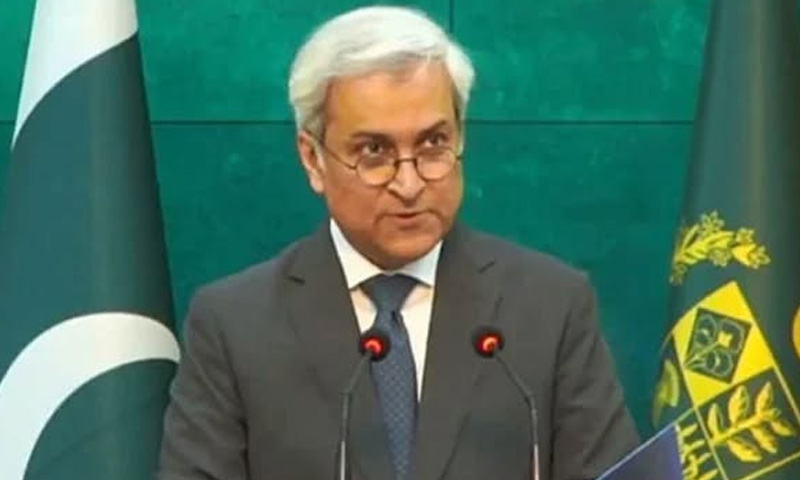
ISLAMABAD: Pakistan said on Thursday it was working to secure the release of 10 of its citizens held in Somalia through contacts with relevant parties, including the Chinese owner of a vessel linked to the incident.
At a weekly briefing, Foreign Office spokesperson Tahir Andrabi said efforts were under way to resolve the matter but acknowledged that the Pakistani nationals had not yet been released.
“Unfortunately, the release of Pakistani citizens has not yet been possible,” Andrabi said during his weekly press briefing, adding that Pakistan was engaged in communications aimed at ensuring the safety and eventual recovery of its nationals.
He said Pakistan was in contact with the relevant parties through facilitation channels linked to the Chinese owner of the ship, and noted that Pakistan’s ambassador in Djibouti had also held discussions with the vessel’s owner.
“We do not want the lives of our citizens to be put at risk in any way,” the spokesperson said, adding that Islamabad wanted negotiations to ensure that essential supplies could be delivered to the crew during the standoff.
Andrabi said the Somali government had been kept informed of Pakistan’s diplomatic efforts, adding that Islamabad would continue to act as a facilitator and would not be discouraged by obstacles in the negotiation process.
The spokesperson said Pakistan condemned attacks on Kuwait and Bahrain and reiterated support for state sovereignty and regional stability.
He also said Pakistan was facing “terrorism emanating from Afghan soil” and maintained that it retained the right to take lawful measures to protect its citizens.
On labour rights, Andrabi said Pakistan had a “clean record” and that labour laws were being fully implemented to protect workers across the country.
The spokesperson reiterated Pakistan’s support for the Palestinian cause and a two-state solution, while also raising concerns over reported Indian water diversion from the Chenab River and developments related to the Salal Dam.
He said such Indian measures were inconsistent with existing agreements and the Indus Waters Treaty, warning that the use of water as a political tool could have implications for regional stability and Pakistan’s food security.
He said that any unilateral activity regarding river management without prior intimation to Pakistan constituted a violation of established arrangements, while reiterating that Jammu and Kashmir remains an internationally recognised dispute.
Pakistan’s diplomatic engagements over the past weeks had been “particularly active,” including high-level visits to China, meetings in the United States and engagements with the European Union, he added.
He noted that Prime Minister Shehbaz Sharif’s recent visit to China included meetings with Chinese leadership and participation in a Pakistan–China business forum aimed at strengthening economic cooperation.
He also said Pakistan and eight other Muslim countries had jointly condemned Israel’s actions in Palestine and occupied Jerusalem, terming them a violation of international law.
Andrabi said the foreign ministers of the participating countries issued a joint statement expressing strong concern over developments in the occupied territories.
Pakistan, he added, would continue to extend full political and diplomatic support to the Palestinian cause and reiterated its backing for a two-state solution as the only viable path to lasting peace in the Middle East.
Separately, he said, Deputy Prime Minister and Foreign Minister Ishaq Dar attended engagements in Beijing and New York, including a United Nations Security Council session and meetings with international counterparts.
The spokesperson said that a recent meeting between Ishaq Dar and US Secretary of State Marco Rubio covered bilateral ties, counter-terrorism cooperation, and regional security issues, with Washington acknowledging Pakistan’s efforts for stability in the region.
He further highlighted continued diplomatic outreach in the Middle East, including high-level telephone conversations with leaders of Iran, Kuwait, and Malaysia, as well as Pakistan’s ongoing engagement with the European Union following the visit of the EU High Representative for Foreign Affairs and Security Policy.
The 8th round of the Pakistan–EU Strategic Dialogue, he said, had been co-chaired during the visit and focused on expanding cooperation and addressing regional developments.
You May Also Like