- Web
- 1 Hour ago
Former Punjab CM Hanif Ramay remembered on his 20th death anniversary
-

- Web Desk
- Jan 01, 2026
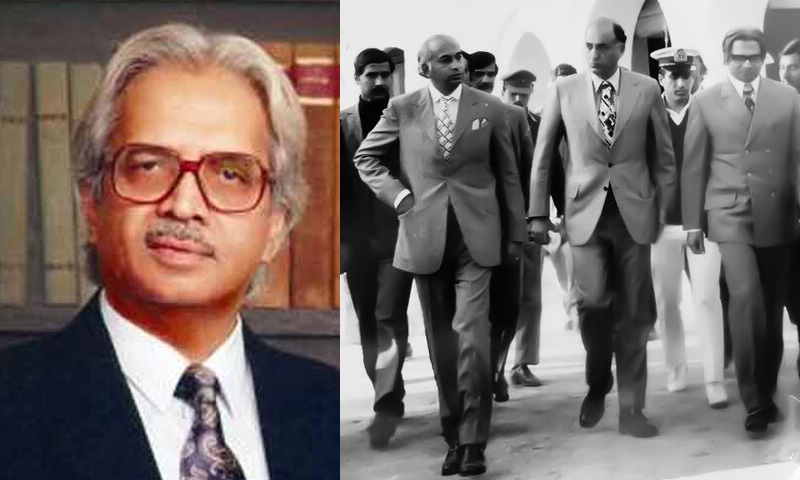
The 20th death anniversary of Muhammad Hanif Ramay, a distinguished politician, intellectual, journalist, and artist, is being observed today across Pakistan.
Born in 1930, Hanif Ramay emerged as a multifaceted personality who left a lasting imprint on the country’s political, cultural, and intellectual landscape. He played a key role in public life during the 1970s, serving as Punjab’s Finance Minister from 1972 to 1973, Governor of Punjab from February 1973 to March 1974, and Chief Minister of Punjab from March 15, 1974, to July 15, 1975 under the leadership of former prime minister Zulfikar Ali Bhutto.
A founding member of the Pakistan Peoples Party (PPP), Ramay was a strong advocate of Islamic socialism, seeking to blend egalitarian principles with Islamic values. He later parted ways with the PPP and formed his own political platform, the Mussawat Party, while also serving in roles such as Speaker of the Punjab Assembly.
Beyond politics, Hanif Ramay was widely respected for his contributions to journalism, literature, and the arts. He founded the left-leaning newspaper Masawaat and edited Swera Digest, using both platforms to promote social justice and progressive thought. As an artist, he gained recognition for his innovative calligraphic paintings and maintained a close association with the Lahore Museum.
An accomplished scholar, Ramay studied at Government College Lahore and Punjab University, earning master’s degrees in Economics and Philosophy. He later spent time in academia abroad, including an association with the University of California, Berkeley in the early 1980s. Among his literary works, Punjab Ka Muqaddama [The case for Punjab] remains particularly influential for its exploration of Punjab’s history, identity, and political consciousness.
Hanif Ramay passed away on January 1, 2006, in Lahore after a prolonged illness. Two decades on, he is remembered as a rare blend of politician and thinker whose legacy continues to resonate in Pakistan’s political discourse and cultural heritage.
You May Also Like