- Aasiya Niaz
- 1 Hour ago
From bench to bar: former SC justice Mansoor Ali Shah returns to the courtroom
-

- Web Desk
- Jan 15, 2026
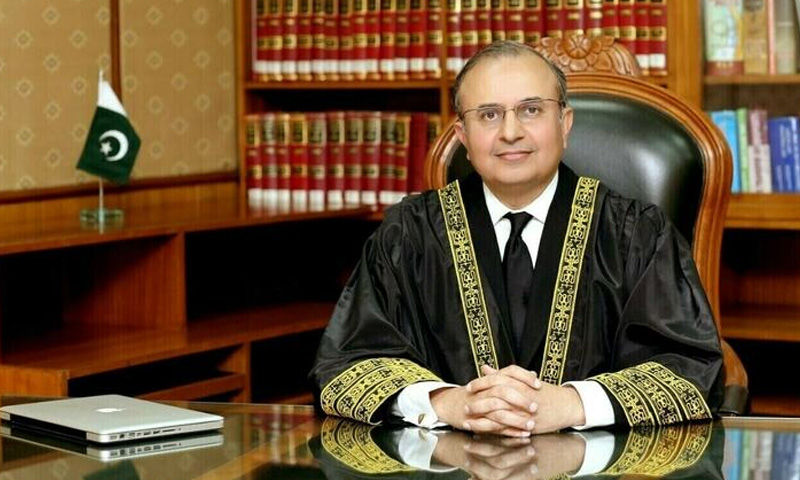
ISLAMABAD: Former Supreme Court judge Justice Syed Mansoor Ali Shah has officially resumed work in the legal field, announcing a focus on international and domestic arbitration, mediation, and strategic legal consulting, alongside continued involvement in teaching and academic engagement.
Justice Shah, who resigned from the Supreme Court on November 13, 2025, cited a matter of constitutional principle, reiterating his enduring commitment to judicial independence, constitutional supremacy, and the rule of law.
In a statement shared on LinkedIn, he said his resignation reflected a dedication to institutional integrity and independent decision-making, values that will continue to guide him in arbitration, consultancy, and academia.
Although Justice Shah was in line to assume office as the 45th Chief Justice of Pakistan, he was superseded through the 26th Constitutional Amendment, which altered the seniority structure of the Supreme Court, a move that remains under judicial scrutiny. Despite this, he continued to serve as the senior puisne judge, advocating for judicial independence until his eventual resignation following the 27th Constitutional Amendment.
Over his 16-year tenure on the bench, Justice Shah authored over 450 reported judgments and decided more than 5,000 cases, shaping key areas of commercial, constitutional, and rights-based jurisprudence. He was also a driving force behind reforms in the district judiciary as Chief Justice of the Lahore High Court and became a leading voice on arbitration, mediation, judicial innovation, and the principled use of technology in law.
Following his resignation, Justice Shah has embraced academia and global legal education. He is currently a Distinguished Professor of Practice at LUMS, will teach at Yale Law School in 2026, and is slated to serve as a Bok Professor at the University of Pennsylvania Carey Law School in 2027. He affirmed that his commitment to integrity, transparency, and the rule of law remains unchanged, even as he pursues arbitration and consultancy work.
His decision to return to practice has sparked divergent reactions within the legal community. Some lawyers praised his choice, noting that his expertise will now benefit global legal education and international arbitration, while others expressed concern that stepping away from domestic judicial advocacy during a politically turbulent period represented a missed opportunity to defend constitutional order.
You May Also Like