- Web Desk
- 57 Minutes ago
From exile to centre stage: The reinvention of Tarique Rahman
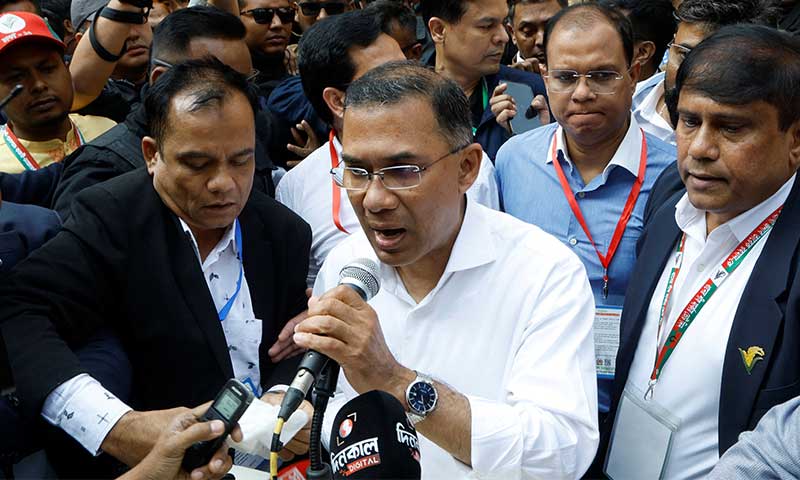
For nearly two decades, Tarique Rahman existed in Bangladeshi politics as both presence and absence, a central figure in rhetoric, yet physically removed from the arena. From London, where he went into self-imposed exile in 2008 after detention under a military-backed caretaker administration, Rahman watched his party struggle, fracture and endure. Court cases mounted. Convictions followed. His name became shorthand for controversy.
Now, at 60, he stands on the cusp of becoming prime minister.
Less than two months after returning to Dhaka, Rahman has led a coalition spearheaded by the Bangladesh Nationalist Party (BNP) past the halfway mark in parliamentary elections, according to local projections. The moment marks a dramatic reversal of fortune, and a striking political comeback in a country long defined by rivalry between two dynasties.
Rahman is the elder son of Khaleda Zia and Ziaur Rahman, the BNP founder and former president assassinated in 1981. For decades, Bangladeshi politics orbited around his mother and her arch-rival, Sheikh Hasina of the Awami League. When Hasina was ousted in 2024 after a youth-driven uprising and later went into exile, the political landscape shifted almost overnight, clearing a path for Rahman’s return last Christmas to what supporters described as a hero’s welcome.
Years in the wilderness
Rahman’s earlier political life was marked by turbulence. During the BNP’s 2001–2006 tenure, critics accused him of operating a parallel power centre despite holding no formal government office, a charge he has consistently denied. His detention in 2008 amid a sweeping anti-corruption crackdown forced his departure for London, where exile became both refuge and reckoning.
From abroad, he watched as the BNP faced mounting pressure at home: senior leaders jailed, party offices shuttered, activists reportedly disappearing. Meanwhile, legal cases against him multiplied, including corruption charges and a life sentence handed down in absentia over a 2004 grenade attack targeting Hasina. Rahman insisted the allegations were politically motivated. Following Hasina’s removal from power, he was acquitted in all cases.
Exile, by many accounts, reshaped him. The once combative political heir returned with a noticeably tempered tone, softer in delivery, sharper in strategy.
A recalibrated pitch for power
Since his return, Rahman has carefully rebranded himself as a statesman-in-waiting rather than an aggrieved rival. Public speeches emphasise reconciliation over retaliation. “What does revenge bring?” he has asked, arguing that Bangladesh needs peace and institutional repair rather than another cycle of vendettas.
Party insiders say he has personally overseen candidate selection, electoral strategy and alliance-building — this time from Dhaka rather than London. But his message signals broader change. He speaks of restoring “people’s ownership of the state” and strengthening democratic accountability, proposing a constitutional two-term, 10-year cap for prime ministers as a safeguard against authoritarian drift.
On foreign policy, Rahman has pledged to rebalance Bangladesh’s global partnerships, attracting investment without aligning too closely with any single power. Economically, he aims to reduce reliance on garment exports by promoting sectors such as leather goods and toys, alongside expanding financial aid for low-income families.
The speed of his resurgence has left little time for reflection. “I don’t know how we have passed every minute since we landed,” he remarked in a recent interview, seated beside his barrister daughter. Even lighter glimpses of his personal life, including social media’s fascination with Jebu, the family’s Siberian cat, have softened an image once dominated by legal battles and political acrimony.
Dynasty may have shaped his origins, but Rahman insists democracy will define his leadership. Whether exile has truly transformed the political heir into a reformer will now be tested not in rhetoric, but in governance.
You May Also Like