
- Reuters
- October 27, 2026
G7 pushes strategy to cut dependence on China for critical minerals
-

- Zoya Anwer
- June 17, 2026
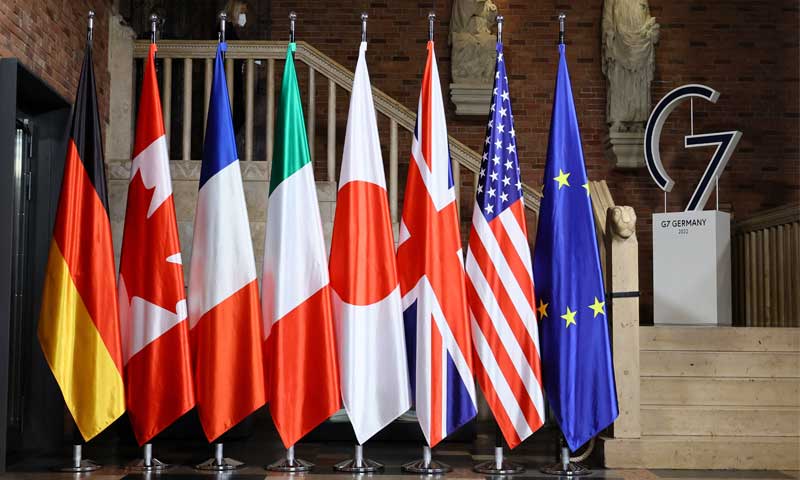
EVIAN-LES-BAINS: G7 leaders are expected to advance discussions on reducing reliance on China for critical minerals on the final day of their summit in France on Wednesday, with host nation France pushing for a joint statement outlining steps to strengthen supply chain resilience and protect Western economies from potential market disruptions.
The talks, held in Evian-les-Bains from June 15 to 17, come amid growing concern over vulnerabilities exposed in global supply chains, particularly in sectors such as defence, energy and advanced technology. French officials said negotiations were underway on language that would emphasise economic sovereignty and coordinated action among member states.
A senior official from the French presidency said discussions were focused on “critical minerals and economic independence,” describing the issue as central to France’s G7 agenda.
Supply chain concerns linked to China export controls
The urgency of the debate was heightened after China imposed export restrictions on certain rare earth products in 2025, including permanent magnets used in high-tech manufacturing. The move disrupted global industries and underscored the extent of Western dependence on Chinese-controlled supply chains.
Beijing has also tightened export rules on other strategic materials such as tungsten and antimony in recent years, reinforcing concerns among Western economies over long-term supply security.
In response, G7 countries have been exploring a range of measures, including investment incentives, pricing mechanisms, subsidies and guaranteed procurement schemes aimed at boosting mining, processing and recycling capacity outside China. However, officials acknowledge that most initiatives remain at an early stage and will take years to produce meaningful alternatives.
Efforts to build alternative supply networks
Western governments are accelerating efforts to diversify sourcing through partnerships with mining countries and increased domestic production. The United States has also proposed the creation of a critical minerals trading bloc, though differences persist among allies over how such a framework would function, particularly given Washington’s “America First” trade approach.
Despite growing coordination, analysts say China continues to dominate global refining and processing capacity, a position built over several decades that will be difficult to challenge in the short term.
Concerns over global trade imbalances
Beyond minerals, G7 leaders are also expected to address broader concerns over global economic imbalances, particularly China’s expanding industrial surplus and its growing influence in advanced manufacturing.
European officials have described the situation as a “second China shock,” following an earlier wave of Chinese dominance in low-cost manufacturing in the 2000s. France has characterised the imbalance as one in which China overproduces, the United States consumes excessively, and Europe underinvests.
EU leaders are increasingly debating stronger trade defence measures in response to rising imports from China. The European Union recorded a record trade deficit of more than €360 billion with China last year, intensifying calls for policy action.
European Commission President Ursula von der Leyen said the situation was “not sustainable,” reiterating the EU’s strategy of “de-risking rather than decoupling” from China.
China, meanwhile, has rejected allegations of unfair subsidies and warned of countermeasures in response to European initiatives aimed at strengthening industrial sovereignty.
AI governance also on agenda
In addition to trade and minerals, G7 leaders are expected to discuss artificial intelligence over lunch on Wednesday, focusing on issues such as accountability for AI systems and distinguishing between real and synthetic content.
Prominent tech executives, including OpenAI founder Sam Altman and Anthropic CEO Dario Amodei, are expected to attend the discussions, highlighting the growing intersection between global governance and emerging technologies.
You May Also Like


- WEB DESK
- October 27, 2026
Punjab govt moves to provide life insurance cover to employees
- AFP
- October 27, 2026