- Web Desk
- 27 Minutes ago
Gaza: between ceasefire and escalation
-

- Web Desk
- 1 Minute ago
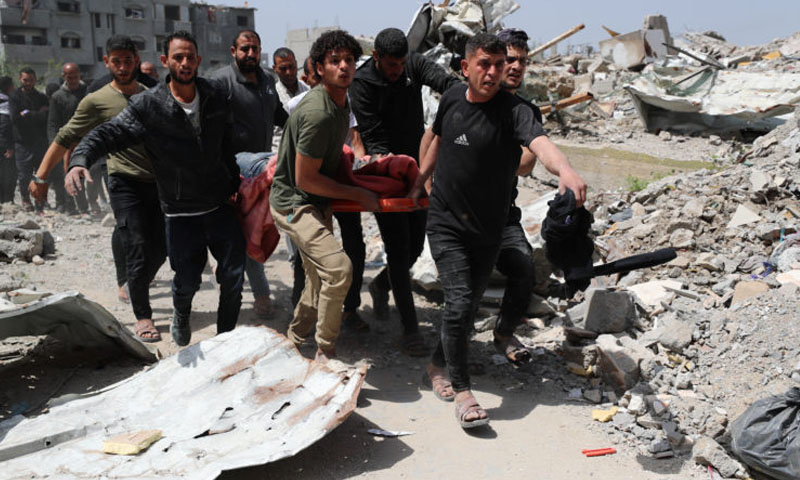
Six months after the October 2025 ceasefire, Gaza remains stuck in a fragile reality often described as “neither war nor peace.” While large-scale fighting has decreased, violence has not ended, and daily life for civilians continues to be marked by insecurity and hardship.
The agreement, reached after a devastating two-year war between Israel and Hamas, was intended to fully halt military operations, ensure Israeli withdrawal from populated areas, and allow sustained humanitarian aid into the Gaza Strip. It also included plans for reconstruction, prisoner exchanges, and international monitoring.
In practice, much of this has not been fully implemented, Al Jazeera reported. Israeli forces have not completely withdrawn, aid deliveries remain inconsistent and below agreed levels, and border crossings continue to operate under tight restrictions. As a result, shortages of food, medicine, and basic supplies persist, while large parts of Gaza remain damaged and unrecovered.
Violations of the ceasefire have also continued, including airstrikes and ground incursions that have caused hundreds of deaths since the agreement took effect. Humanitarian conditions remain severe, with rising food insecurity, limited medical access, and stalled reconstruction efforts. Overall, the ceasefire has slowed the scale of war, but has not delivered stability or recovery.
SINCE IRAN WAR STARTED (FEB 28, 2026)
A new phase of instability began on February 28, when the United States and Iran entered into direct conflict, later agreeing to a temporary two-week ceasefire with talks set to take place in Islamabad. Despite this diplomatic development, violence across the wider region has continued.
Since the start of the Iran conflict, Israel has carried out near-daily strikes across Gaza, Lebanon, and the occupied West Bank. In Gaza alone, attacks were recorded on 36 out of 40 days, underscoring the persistence of violence despite ongoing ceasefire frameworks.
Casualties have continued to mount. More than 100 people were killed in Gaza during this 40-day period, while the total since the October ceasefire has surpassed 700 deaths, with thousands more injured. The broader war’s toll remains immense, with tens of thousands killed overall.
Humanitarian conditions have worsened further during this period. The closure of the Rafah crossing at the onset of the Iran conflict halted medical evacuations and restricted the movement of critically injured patients. Although limited evacuations later resumed, only a small percentage of those in urgent need have been able to leave.
Aid access has also been heavily constrained, with only a fraction of agreed humanitarian deliveries entering Gaza. This has intensified food shortages, driven up prices, and deepened hunger across the population.
As diplomatic efforts move forward in Islamabad, the situation highlights a stark contrast: while negotiations continue at the international level, conditions on the ground in Gaza remain dire, with no meaningful relief for civilians.
You May Also Like