- Web
- 25 Minutes ago
Gaza’s future: 180 skyscrapers, no Plan B —Kushner’s grand Board of Peace gamble
-

- Web Desk
- Jan 23, 2026
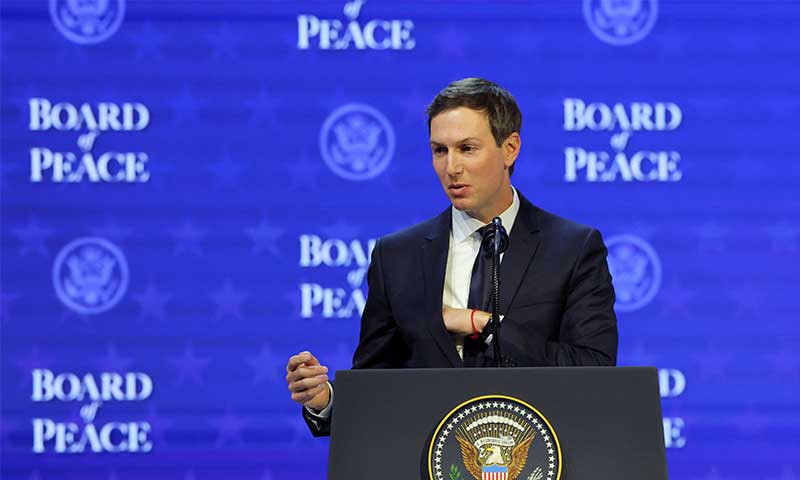
WEB DESK: The son-in-law of US President Donald Trump, Jared Kushner, has presented an ambitious blueprint for rebuilding Gaza, framing it as a once-in-a-generation opportunity to reshape the war-battered enclave. Speaking at the World Economic Forum (WEF) in Davos, Kushner declared the proposal a definitive roadmap rather than a tentative idea. Failure, he suggested, would not stem from the plan itself but from political and security obstacles on the ground, particularly the issue of armed groups retaining weapons.
The presentation followed the signing of the charter for Trump’s newly formed “Board of Peace,” an initiative linked to the ceasefire agreement reached between Israel and Hamas in October. Kushner, who played a central role in those negotiations, struck an optimistic tone, even as major questions about feasibility and enforcement remained unanswered.
Tourism, ports and a new skyline
At the heart of the plan is a dramatic reimagining of Gaza’s coastline. Kushner displayed maps showing a long stretch of seafront earmarked for a tourism corridor capable of accommodating up to 180 high-rise buildings, many envisioned as hotels. The proposal also includes a commercial port near Gaza’s southwestern border with Egypt, with an airport zone planned just inland.
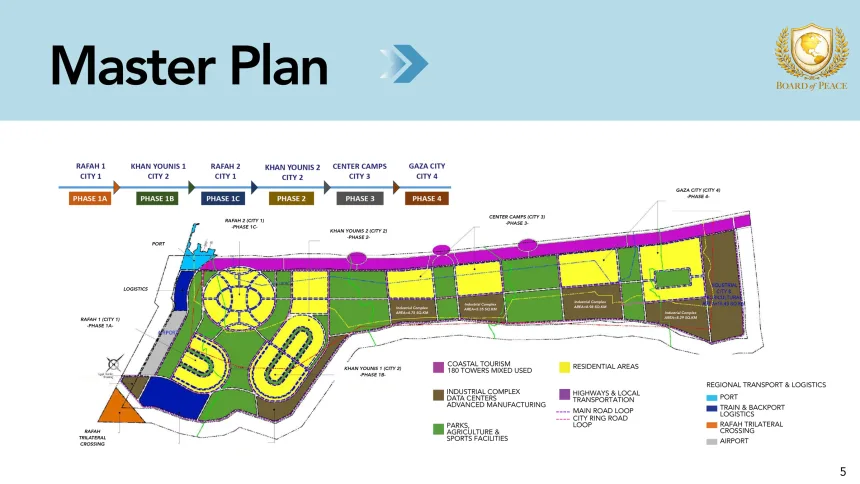
The imagery projected a future Gaza integrated into global trade and travel networks, a sharp contrast to the blockade and isolation that have defined the territory for years. Notably absent, however, were details on how security around such infrastructure would be guaranteed in a postwar environment.
Two ‘new’ cities
The plan outlines the construction of two major urban developments: New Rafah and New Gaza. New Rafah is described as a large-scale residential hub, with more than 100,000 permanent housing units, hundreds of schools and dozens of health facilities. Kushner said rubble removal had already begun and suggested the bulk of construction could be completed within two to three years.
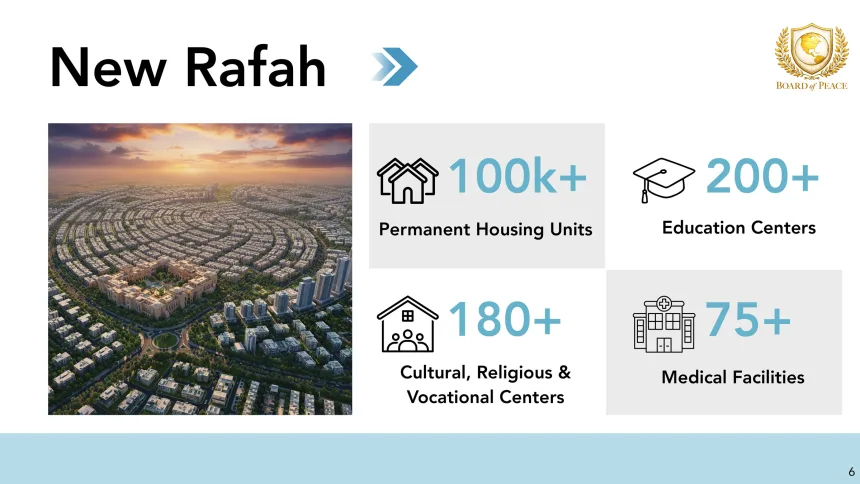
New Gaza, by contrast, is pitched as an industrial and commercial centre aimed at achieving full employment. Concept images depict glass-fronted towers, waterfront offices and dense business districts reminiscent of Gulf cities such as Doha or Dubai.
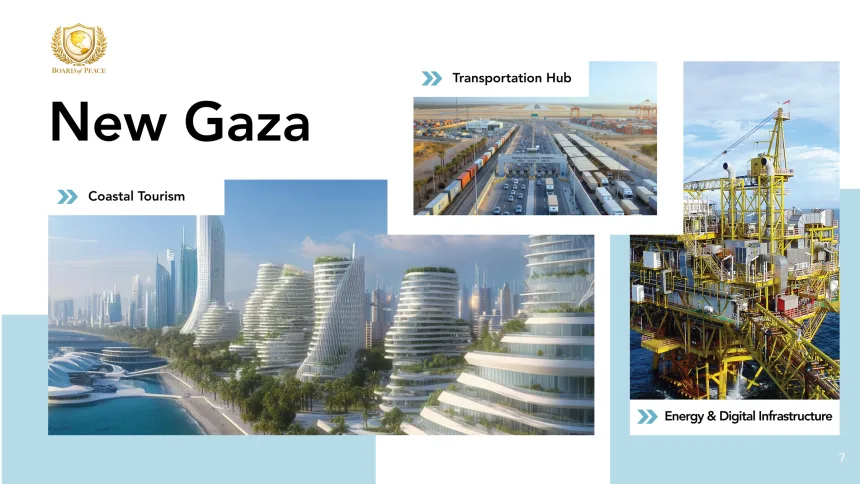
Critics note that while the visuals are striking, the presentation offered little clarity on governance, labour markets or long-term sustainability.
Paying the bill
Kushner said initial funding would come from governments, with pledges expected at an upcoming conference in Washington. He also made a direct appeal to private investors, acknowledging the risks but promising substantial returns if stability can be ensured. The scale of destruction poses a daunting challenge: after more than two years of Israeli bombardment following the October 7, 2023 attacks, over four-fifths of Gaza’s buildings are believed to be damaged or destroyed.
Human rights advocates have voiced concern that the financial narrative sidelines Palestinian agency, warning that reconstruction without genuine political empowerment could entrench dependency rather than deliver dignity.
Security gaps and unanswered questions
One of the most striking omissions was the absence of any reference to an international stabilization force, a component included in earlier ceasefire frameworks to enable a full Israeli military withdrawal. Israeli forces remain deployed across large parts of Gaza, including Rafah. In Kushner’s slides, withdrawal was contingent on “Gaza-wide demilitarization,” with no explanation of how that process would be enforced.
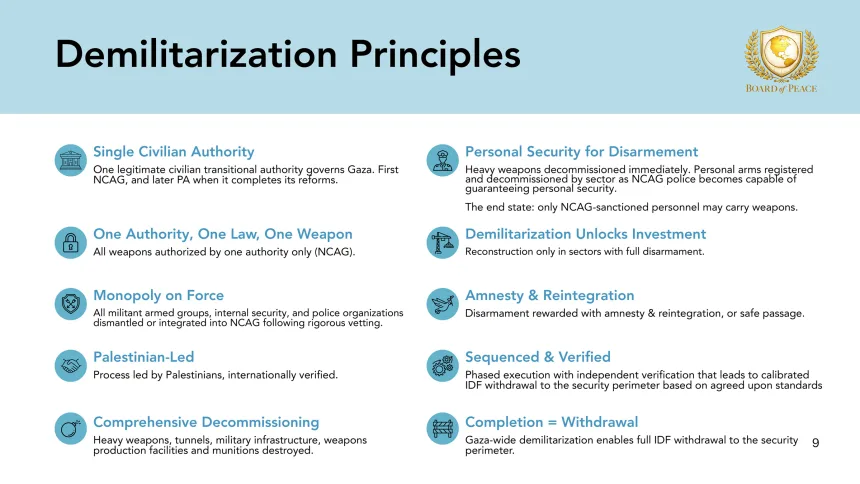
Oversight of disarmament would fall to a new technocratic committee composed of Palestinian appointees. The plan calls for the destruction of heavy weapons, tunnels and military infrastructure, but stops short of detailing who would carry this out or under what authority. Hamas has previously said it would only relinquish arms to a sovereign Palestinian state, complicating the proposal.
The PA, UNRWA and echoes of the past
The Palestinian Authority has quietly signalled unease, viewing the technocratic committee as a potential rival to its political role. While the PA is mentioned as a future civilian authority once reforms are completed, UNRWA appears largely excluded from the vision, raising concerns given its central role in education and healthcare for refugees.
For many observers, the plan recalls Kushner’s 2019 “Peace to Prosperity” initiative, which also promised economic transformation without resolving core political disputes. That effort stalled amid a lack of buy-in. This time, Gaza’s proposed interim leadership insists momentum must be maintained, pointing to the announced reopening of the Rafah crossing as a first step toward reconnecting the enclave with the world.
You May Also Like