- Web Desk
- Mar 31, 2026
Gilgit-Baltistan gets dedicated forest and wildlife force
-

- Hum News Tanveer Abbas
- Mar 09, 2024
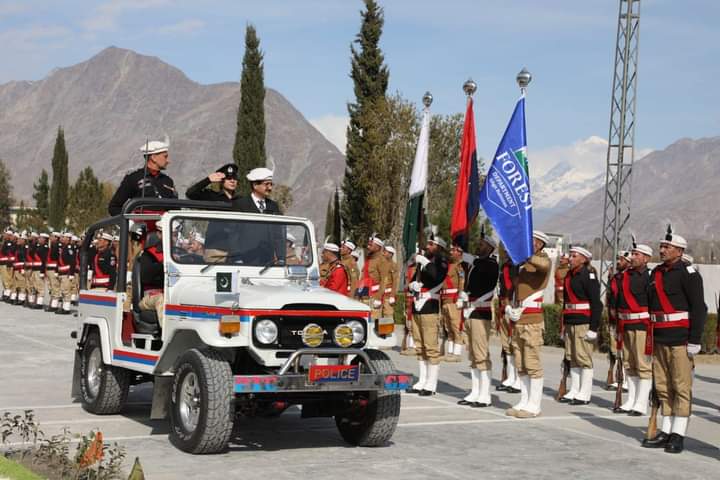
GILGIT: In a significant step towards preserving its rich biodiversity, Gilgit-Baltistan has officially inaugurated its first unit of the Forest & Wildlife Force, with 49 men graduating to become the first members of this specialised force.
The formation of the specialized force was celebrated with a passing out parade at the Police Training College in Gilgit, attended by the Secretary of Forest, Wildlife and Parks, Zafar Waqar Taj, alongside high-ranking police officials. The Forest & Wildlife Force is tasked with a vital mission to enforce wildlife protection laws, perform routine patrols, and engage with communities to spread awareness about the importance of conservation.
In his address during the parade, Zafar Waqar Taj underscored the importance of the Forest & Wildlife Force in combating threats like illegal logging and poaching that jeopardize the unique ecosystems of Gilgit-Baltistan. The forest secretary said there were serious difficulties in protecting forests, illegal logging, theft, and illegal wildlife hunting.
Read more: Scattered rains predicted for Sindh, thunderstorms expected in Balochistan
He said establishing the Forest & Wildlife Force was a key milestone in Gilgit-Baltistan’s ongoing environmental conservation efforts. Taj called for a united front involving government bodies, local communities, and conservation groups to effectively manage and preserve the region’s forests and wildlife.
Earlier, in a symbolic gesture of commitment to environmental conservation, Mr Zafar Waqar Taj, alongside SSP Tahira Yasub, Commandant of the Police Training College, inspected the first batch’s passing out parade. Taj also participated in a tree planting campaign within the college premises, reinforcing the message of commitment to the environment.
It is pertinent to mention here a study by a group of Chinese and Pakistani researchers published in 2020, which points to a host of factors behind forest losses in Gilgit-Baltistan. These factors include population growth, unchecked cattle grazing, poor forest management, and the use of wood as fuel. The study warns that deforestation has led to soil erosion, rising air pollution, and higher temperatures in the region, while also degrading some of Pakistan’s prime tourist areas.
You May Also Like