- Web Desk
- 1 Minute ago
Global powers condemn escalation after US-Israel strikes on Iran
-

- Web Desk
- Feb 28, 2026
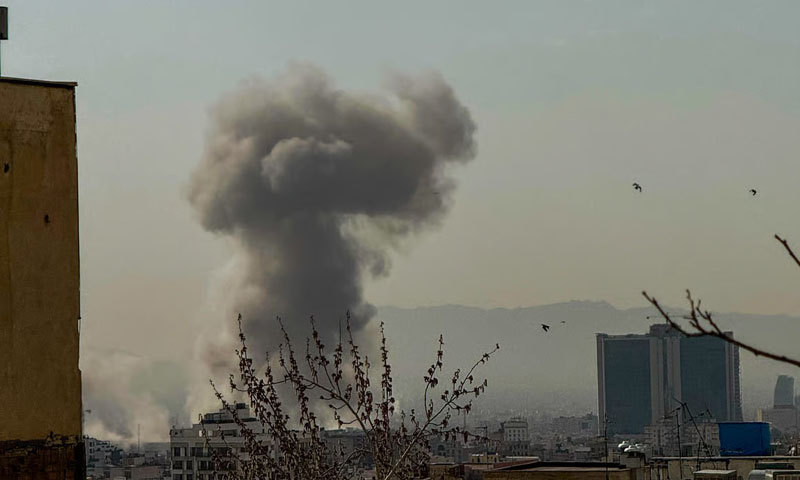
BEIJING/MOSCOW: The world reacted with alarm after the United States and Israel launched a series of military strikes against Iran on Saturday, targeting key military and political sites across the country. The attacks, described by US President Donald Trump as “major combat operations,” triggered retaliatory missile strikes from Tehran on Israel and US military bases in the Gulf, sparking fears of a wider regional conflict.
China and Russia led international calls for restraint, stressing the need to respect Iran’s sovereignty and avoid further escalation.
China Calls for Immediate Halt
A spokesperson for China’s Foreign Ministry expressed “grave concern” over the strikes and urged an immediate cessation of military actions.
“Iran’s national sovereignty, security, and territorial integrity must be respected,” the spokesperson said. “We call for no further escalation, resumption of dialogue and negotiation, and efforts to uphold peace and stability in the Middle East.”
The statement, issued on China’s official social media platform X, came as explosions rocked Tehran and Israeli officials confirmed preemptive strikes on Iranian targets.
Russia Condemns US Actions
Russia’s Deputy Security Council Chairman Dmitry Medvedev accused Washington of using ongoing nuclear negotiations with Iran as a cover for military action. Russia’s Foreign Ministry called on the international community to deliver an objective assessment of what it termed “irresponsible actions” that risk destabilising the region further.
Middle Eastern Reactions
Iran condemned the strikes as a violation of its sovereignty and a breach of Article 2(4) of the UN Charter, vowing a “decisive and powerful” response to defend its homeland. Tehran said it had prioritised diplomacy to avoid conflict, but warned that military retaliation was now necessary.
Lebanon’s Hezbollah denounced the US-Israel strikes as a “blatant violation of international law and the UN Charter,” calling them an attempt to destabilise the region and enforce foreign domination. Hezbollah declared solidarity with Iran and urged the regional population to recognise and confront the “aggressive plan.”
UN and European Response
UN Secretary-General Antonio Guterres called for an “immediate cessation of hostilities” and warned that the escalation endangered civilians and regional stability. He announced that the UN Security Council would hold an emergency session on Saturday.
European leaders also expressed concern. European Commission President Ursula von der Leyen and European Council President Antonio Costa urged all parties to exercise maximum restraint, protect civilians, and uphold international law.
French President Emmanuel Macron called for an urgent UN Security Council meeting, warning that the current escalation posed “serious consequences for international peace and security.”
UK Prime Minister Keir Starmer said British forces were participating in coordinated defensive operations and called on Iran to halt its weapons programmes and end violence against its people.
The International Committee of the Red Cross (ICRC) also urged restraint. ICRC President Mirjana Spoljaric warned of a “dangerous chain reaction” of military escalation across the Middle East with potentially devastating consequences for civilians.
Gulf States Voice Strong Condemnation
Oman, acting as a key mediator in US-Iran negotiations, expressed disappointment over the outbreak of violence. Foreign Minister Badr Albusaidi called on Washington to “not get sucked in further” and urged an immediate ceasefire, calling for an emergency UN Security Council meeting.
Qatar condemned Iranian missile attacks on its territory, home to the Al Udeid Air Base hosting US troops, describing the strikes as a “flagrant violation” of its sovereignty and reserving the right to respond under international law.
The United Arab Emirates said its air defences intercepted several missiles and called Iran’s actions “a dangerous escalation” that threatened civilian safety.
Bahrain reported that Iranian missiles targeted the US Navy’s 5th Fleet headquarters, terming the attack “treacherous.” Kuwait also condemned attacks on its soil and warned that further escalation would worsen regional instability.
Saudi Arabia issued a statement condemning Iranian strikes in the “strongest terms” and warned of “dire consequences” for continued aggression. Turkey’s Foreign Ministry called for an end to the spiral of violence, noting that the crisis began with US-Israel strikes on Iran.
Pakistan and India Urge Restraint
Pakistan’s Foreign Minister Ishaq Dar strongly condemned the attacks and called for an immediate halt to escalation, urging urgent resumption of diplomacy for a peaceful resolution.
India’s Ministry of External Affairs also called for restraint, emphasizing dialogue and diplomacy while stressing respect for the sovereignty and territorial integrity of all nations. The statement came shortly after Prime Minister Narendra Modi visited Israel and highlighted the “vital” partnership between the two countries.
Ukraine, Norway, Belgium Speak Out
Ukraine’s Foreign Ministry blamed Iran’s crackdown on protesters earlier this year as a factor behind the current escalation.
Norway’s Foreign Minister Espen Barth Eide said Israel’s initial attack did not meet international law standards, noting that preventive strikes require an “immediately imminent threat.”
Belgium’s Foreign Minister Maxime Prevot urged that the Iranian people “must not pay the price for their government’s choices” and expressed regret that diplomatic solutions had failed.
Rising Global Tensions
Saturday’s events have drawn sharp international attention, with world powers urging restraint while acknowledging the risk of a wider regional war. The coordinated US-Israel strikes, Iran’s retaliatory missile launches, and the involvement of Gulf states hosting American forces have intensified fears of a prolonged conflict.
Analysts warn that continued escalation could threaten global energy supplies and destabilise international trade, with potential economic consequences far beyond the Middle East.
Diplomats worldwide are calling for renewed negotiations and emergency talks at the UN to prevent further civilian casualties and regional instability.
As the Middle East braces for further developments, Beijing and Moscow have emerged as leading voices urging dialogue, while Europe, the Gulf, and South Asia have highlighted both the risks to civilians and the importance of upholding international law.
The coming days are expected to test the effectiveness of international diplomacy and the willingness of all parties to contain a crisis that could reshape regional security for years to come.
You May Also Like