
- Web Desk
- 15 Minutes ago
Govt moves to replace net metering with net billing policy
-

- Web Desk
- Jan 21, 2026
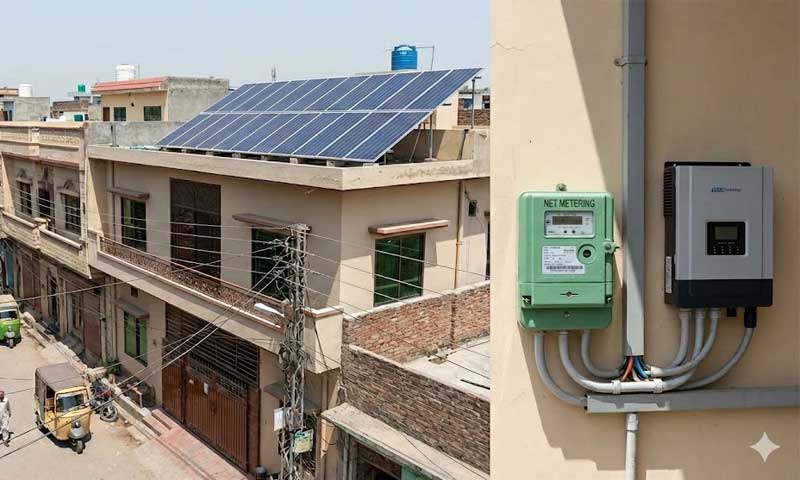
WEB DESK: The federal government is set to overhaul Pakistan’s rooftop solar electricity framework, replacing the existing net metering system with a net billing policy, a move that could significantly alter electricity costs for solar consumers.
Under the outgoing net metering system, households and businesses with solar panels could offset the electricity they consumed from the grid with the power they exported, effectively balancing imports and exports unit-for-unit at comparable retail rates.
Full tariff charges for grid use, lower credit for solar exports
Under the new net billing policy, electricity drawn from the national grid will be charged at full retail tariffs, while solar power exported back to the grid will be credited at a lower, differential rate. Analysts estimate that a consumer who both imports and exports 300 units could now face a bill of around Rs10,000, a sharp rise from the near-zero charges under the previous system.
The government and power distribution companies (Discos) have defended the change, citing the need to cover grid infrastructure costs and reduce alleged revenue shortfalls. Critics, however, argue the policy penalises consumers who invested in solar systems to contribute to national energy capacity.
The transition follows systemic challenges, including a backlog of pending net-metering applications and thousands of installed solar systems remaining unconnected or unmetered. Distribution companies, such as Lesco, have halted new solar meter installations pending directives from the federal ministry.
NEPRA’s gross metering proposal
Last month, the National Electric Power Regulatory Authority (NEPRA) recommended moving to a gross metering model for rooftop solar users. Under the proposed framework, electricity exported to the grid would be purchased at a fixed feed-in tariff, proposed at Rs11.30 per unit, while all electricity drawn from the grid would be billed separately at retail rates. Existing net metering customers with valid seven-year agreements would continue to receive Rs22 per unit for surplus electricity until their contracts expire. NEPRA is seeking public feedback over 30 days before finalising the regulations.
This policy shift signals a major realignment in Pakistan’s solar energy sector, balancing consumer incentives with the financial sustainability of the national grid.
You May Also Like