- Web Desk
- 1 Hour ago
Govt says TTAP/PTI strike flopped; witness reports show mixed response across country
-

- Web Desk
- Feb 09, 2026
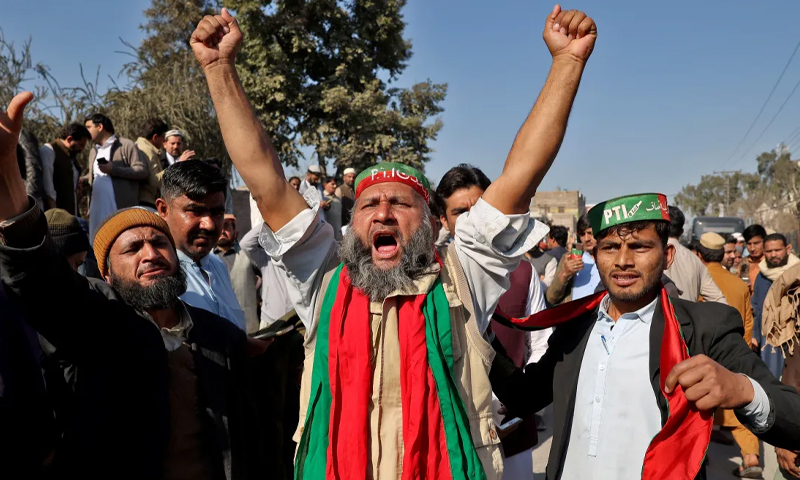
The federal government on Sunday claimed that the opposition alliance Tehreek-e-Tahafuz Ayeen-e-Pakistan’s (TTAP) call for a shutter-down and wheel-jam strike failed to gain nationwide traction, as commercial activity continued as usual in large parts of the country, particularly in Punjab and the federal capital.
Information Minister Attaullah Tarar said the public largely ignored the protest call, noting that markets remained busy even though it was a weekly holiday. Speaking to reporters, he remarked that for the first time a wheel-jam strike had “come to a standstill itself,” adding that people were weary of what he described as politics rooted in disruption and division.
Minister for States and Frontier Regions Amir Muqam echoed the assessment, stating that the public had rejected the strike outright. Punjab Chief Minister Maryam Nawaz also reinforced the government’s stance in a post on X, asserting that there was “zero protest, zero strike and zero shutter-down” anywhere in Punjab.
The Pakistan Peoples Party (PPP) also distanced itself from the protest. Party Secretary General Muhammad Humaiyun Khan said the strike call had collapsed and that business and trade activities continued uninterrupted. He said the country needed economic stability and public welfare rather than confrontational politics, adding that the PPP would continue to play a constructive democratic role.
The TTAP strike was announced to mark the second anniversary of the February 8, 2024 general elections, which the opposition alleges were manipulated. The Pakistan Tehreek-i-Insaf (PTI), a key component of the alliance, also said the protest coincided with a day of mourning following a recent suicide bombing at an imambargah in Islamabad.
MIXED PICTURE ON THE GROUND
Despite government claims of a complete failure, the response varied across regions.
Most markets in Lahore, Islamabad and Rawalpindi remained open, with routine traffic observed. In the capital, weekly bazaars, including the H-9 Sunday market, saw a steady flow of shoppers. Traders in these cities largely disregarded the strike call.
In Khyber Pakhtunkhwa, however, a partial shutdown was reported in Peshawar. Some markets in the interior city closed, while others remained open. PTI workers held a rally at Chowk Yadgar after gathering in Hashtnagri Bazaar, where party leaders addressed supporters. PTI leaders also claimed shutter-downs and transport disruptions in some districts, including Haripur.
Sindh saw little disruption to daily life, though police blocked several roads in Karachi as a preventive measure. Trader groups said most markets were closed because Sunday is typically a holiday, not due to the strike, though PTI leaders shared images of some bazaars shut in the city, a news report by Dawn said on Monday.
The strongest response was reported from Balochistan, where a complete shutter-down and wheel-jam strike was observed in Quetta. Markets remained closed, traffic was thin, and mobile internet services were suspended. Protests were held in several areas, and clashes between police and demonstrators were reported at some locations. The PTI claimed dozens of its workers were detained, though police did not issue a formal confirmation. Smaller demonstrations were also reported from multiple districts across the province.
In Islamabad, the TTAP failed to hold a planned torch-bearing rally near Faisal Mosque, with alliance leaders citing road closures and arrests of party workers. Despite this, several opposition figures managed to reach the area and vowed that the movement would continue beyond a single day.
OPPOSITION, GOVERNMENT TRADE CLAIMS
While the government and its allies portrayed the strike as a clear rejection of opposition politics, TTAP and PTI leaders described the protest as a success in several regions. PTI Secretary General Salman Akram Raja said strikes were a constitutional means of expressing public anger, while KP Chief Minister Sohail Afridi and other PTI leaders congratulated supporters for what they termed a successful observance of February 8 as a “black day.”
The contrasting claims highlighted the deeply polarised political landscape, with Sunday’s events underscoring both the opposition’s ability to mobilise in certain areas and the government’s insistence that public appetite for disruptive protest is waning.
You May Also Like