- WEB DESK
- October 22, 2026
Gulf tensions surge as Iran retaliates against US targets
-

- Sadia Basharat
- June 3, 2026
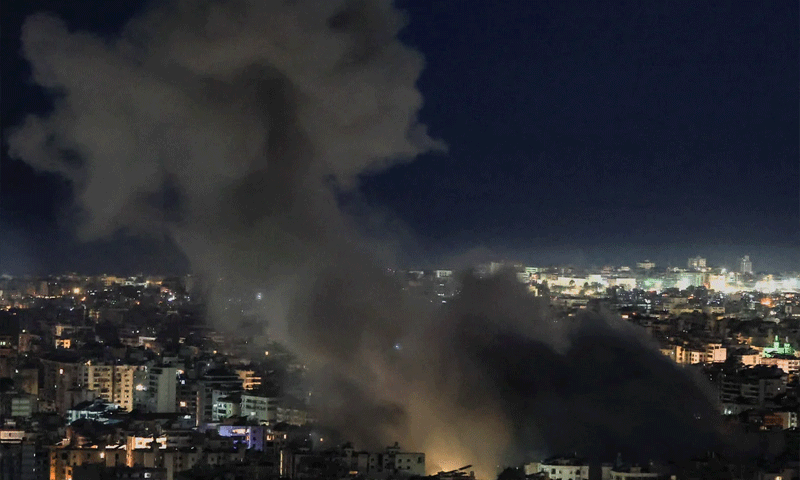
WEB DESK: Hostilities in the Gulf flared anew on Wednesday as Iran launched missile and drone attacks on US military positions in the region, prompting swift responses from American forces that reportedly thwarted most of the assaults.
US Central Command said Iranian missiles targeting Bahrain were intercepted, while two fired at Kuwait fell short or broke apart in flight. Several other ballistic missiles aimed at regional targets also failed, according to the US military, according to Dawn News.
Washington further reported downing Iranian drones threatening vessels and US personnel in Kuwait, and conducting strikes on Iran’s Qeshm Island near the Strait of Hormuz in retaliation for attempted Iranian actions.
Competing narratives fuel escalation
Iran’s Revolutionary Guards Corps (IRGC) presented a markedly different account, claiming successful strikes on the US Fifth Fleet headquarters in Bahrain and an airbase in an unspecified regional country.
In a strongly worded statement, the IRGC said the attacks were in response to a US strike on an Iranian oil tanker near the Strait of Hormuz and a subsequent assault on a communications tower on Qeshm Island.
The Guards described the operations as a “lesson” for the US, warning that any further aggression or disruption to the strategic waterway would invite a “severe and crushing” response.
The latest exchanges come more than three months after the conflict erupted in late February with US-Israeli strikes on a girls’ school in Minab, southern Iran.
The war has since settled into a tense stalemate under a fragile ceasefire, severely disrupting maritime traffic through the Strait of Hormuz, a critical chokepoint for global oil supplies.
Oil prices rose by more than one percent in early trading on Wednesday amid the renewed uncertainty.
Diplomatic track remains active despite clashes
Despite the military flare-up, diplomatic channels between Washington and Tehran have continued, albeit with limited progress.
US President Donald Trump insisted that talks were ongoing “continuously,” while Iranian media reported a pause in direct communication. Last week, both sides indicated a tentative initial agreement to halt the fighting, though it has yet to be formalised.
US Secretary of State Marco Rubio told US lawmakers that sanctions relief would only come if Iran abandoned its nuclear activities, a demand Tehran has long rejected, insisting its atomic programme is for peaceful purposes.
The broader conflict has also intensified fighting between Israel and Hezbollah in Lebanon, with Israeli strikes continuing despite a partial ceasefire, causing significant civilian casualties and displacement.
The crisis is having far-reaching humanitarian consequences, with the UN warning of disruptions to aid deliveries across multiple conflict zones.
Regional diplomacy continued on Tuesday with a phone call between Iranian Foreign Minister Abbas Araghchi and his Saudi counterpart, focusing on de-escalation efforts.
You May Also Like
- WEB DESK
- October 22, 2026