- Web Desk
- 2 Hours ago
Heaviest US-Israeli strikes hit Tehran; B-2 bombers hit ballistic missile launchers
-

- Web Desk
- 4 Minutes ago
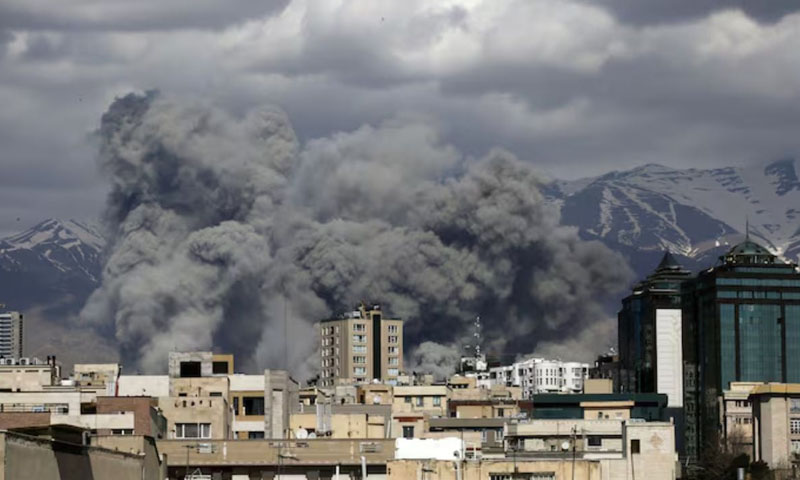
TEHRAN/DUBAI: Heavy air strikes hit the Iranian capital as the war between the United States, Israel and Iran entered seventh day, with media reports describing the bombardment of Tehran as one of the most intense attacks since hostilities began.
According to media reports, powerful explosions were heard across several areas of Tehran overnight, with plumes of smoke seen rising from multiple locations. Blasts were also reported near residential areas and around Tehran University.
The US military said B-2 Spirit stealth bombers targeted deeply buried Iranian ballistic missile launchers, dropping dozens of powerful bunker-penetrating bombs.
Reports said the strikes were not limited to Tehran. Explosions were also reported near Shiraz, Kermanshah and Isfahan, areas where several Iranian missile bases are believed to be located.
US Defence Secretary Pete Hegseth warned that the intensity of strikes on Iran could increase further in the coming days.
Iranian state media said at least 1,230 people have been killed since the start of the war, including 181 children.
According to reports, a large number of children were also killed in an attack on a girls’ school in the southern Iranian city of Minab. Investigations into the incident are ongoing.
US says it carried out 200 strikes, destroyed 30 naval vessels
The US military said it struck nearly 200 targets in Iran over the past 72 hours.
Speaking during a briefing, the commander of US Central Command, Brad Cooper, said B-2 bombers were used in the attacks, dropping dozens of bunker-buster bombs to destroy deeply buried ballistic missile launchers.
He said Iranian ballistic missile attacks had dropped by about 90 per cent since the first day of the war. He also claimed that more than 30 Iranian naval vessels had been sunk.
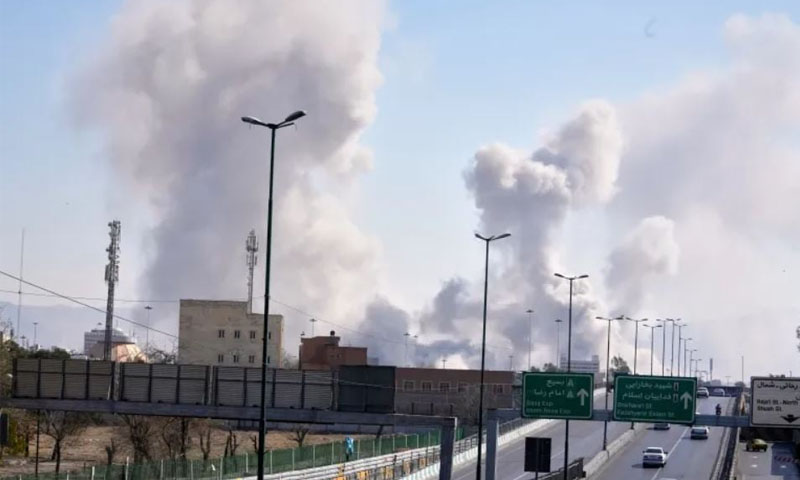
CENTCOM said the next phase of the military operation would focus on targeting Iran’s missile production capabilities.
The US military said the operations were aimed at limiting Iran’s military and defensive power and reducing potential threats in the future.
Death toll from US-Israeli strikes on Iran rises to 1,230
The number of casualties from US and Israeli strikes on Iran has increased as tensions continue to escalate in the Middle East.
Arab media reported that at least 1,230 people have been killed in Iran so far as a result of the attacks.
At the same time, Israeli strikes on Lebanon have reportedly killed 77 people. Reports said Iranian attacks on Israel have killed 11 people, including six US soldiers.
Elsewhere in the region, three people were killed in Iranian attacks in the United Arab Emirates.
In Bahrain, one person was killed after a missile was intercepted and a fire broke out in an industrial area.
In Kuwait, four people, including two Kuwaiti soldiers, were killed in Iranian attacks. In Oman, one person was reportedly killed in a projectile strike targeting an oil tanker at a port.
Iran claims missile strike on Tel Aviv using Kheibar-Shekan missiles
Iran’s Islamic Revolutionary Guard Corps said it launched an attack on Tel Aviv using Kheibar-Shekan missiles equipped with cluster munitions.
Russian media reported that Iran fired dozens of drones and missiles simultaneously toward Israel, although it was not immediately clear how much damage or casualties resulted from the attacks.
According to reports, a live camera showing Tel Aviv’s skyline was suddenly redirected toward the street during the attack to prevent the broadcast of images of incoming Iranian missiles. Sirens also reportedly did not sound during the strike.
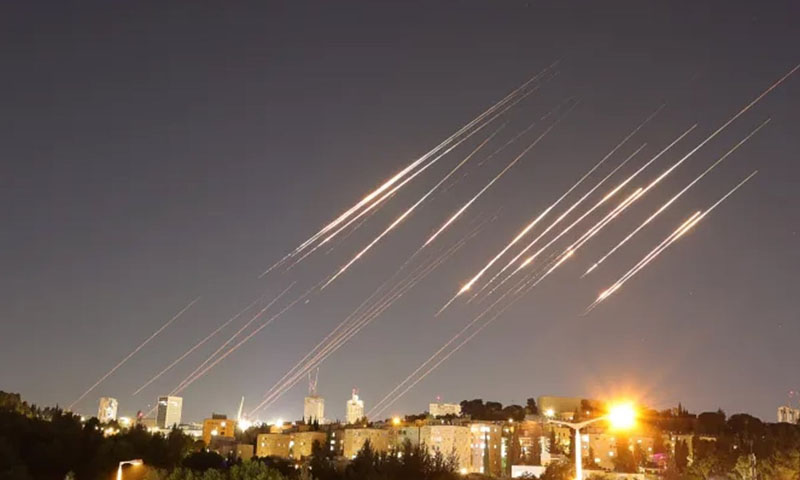
Iranian drones also attempted to target the US aircraft carrier Abraham Lincoln in the Gulf of Oman, according to Russian media.
The aircraft carrier reportedly moved away from the Gulf region after the attack.
Meanwhile, two hotels and a residential building in Manama were targeted in a drone strike, although no casualties were reported.
Trump says sending US ground troops to Iran would be a waste of time
US President Donald Trump said sending American ground troops to Iran would be a waste of time at this stage.
In an interview with US television, Trump said there were currently no plans under consideration to deploy American troops to Iran.
He said it was unnecessary to think about a ground operation against Iran under the current circumstances.
Trump claimed Iran had suffered heavy losses in the war and had lost much of its naval capability.
He said Iranian Foreign Minister’s statement that Iran was prepared for a potential US ground invasion was baseless.
Speaking at the White House, Trump said the United States was more serious about the conflict than Iran and wanted to eliminate the threat posed by Iran.
He said Washington had no choice but to attack Iran and claimed that Iran’s navy had been completely destroyed and that its missile and drone capabilities were being steadily degraded.
“We are reducing Iran’s missile and drone capability every hour,” Trump said.
He also claimed Iran no longer had an effective air force or air defence system and that its aircraft had been destroyed.
Trump said the United States would ensure that whoever leads Iran in the future would not threaten the United States or Israel.
He also claimed Iran had contacted Washington seeking a deal but the United States had responded that it was too late.
The US president called on commanders of Iran’s Revolutionary Guards and Iranian diplomats stationed around the world to distance themselves from the government.
Trump urged Iranian diplomats to seek asylum and help build what he described as a “new and better Iran.”
He added that if commanders of the Revolutionary Guards stepped down from their posts they would be granted full immunity, otherwise they would be killed.
Trump also announced steps to reduce pressure on oil prices.
CNN report says Iran destroyed advanced US defence system
A new investigative report by CNN has claimed that Iran targeted several key defence systems in the region during the early phase of the war.
According to the report, satellite image analysis suggests that Iran destroyed the radar of an advanced US THAAD missile defence system deployed in Jordan at the start of the conflict.
The report also said radar systems of THAAD batteries were targeted at two separate locations in the United Arab Emirates.
It added that it was difficult to assess the full extent of damage to the radar in the UAE because it was installed inside a building.
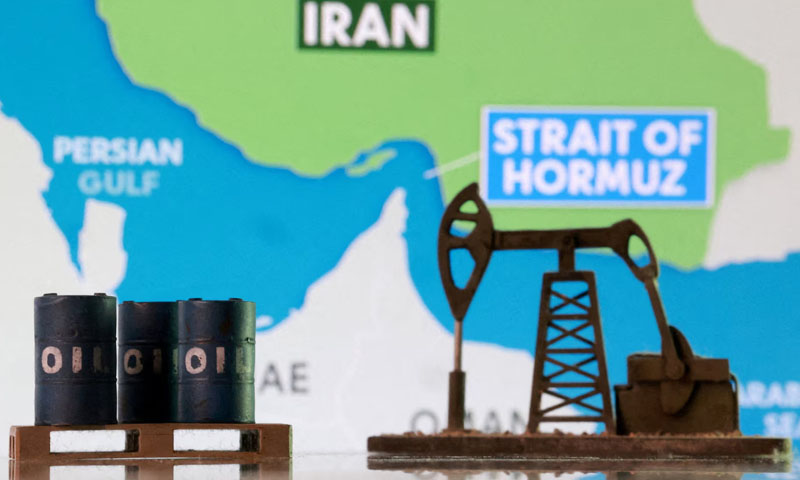
The report further stated that an early warning radar system in Qatar had also been destroyed.
According to the analysis, Iran adopted a strategy aimed at weakening air defence systems by targeting communication networks, radar installations and surveillance equipment.
More than 200,000 Americans stranded in Middle East amid conflict
The evacuation of US citizens from the Middle East has emerged as a major challenge for Washington amid ongoing attacks on Iran and Iranian retaliatory strikes.
Foreign media reports cited the U.S. State Department as saying that more than 200,000 American citizens are currently present in the region, with around 18,000 having returned to the United States so far.
Reports said about 50,000 Americans are residing in the United Arab Emirates, 15,000 in Qatar, 30,000 in Kuwait and about 80,000 in Saudi Arabia.
The U.S. government has advised its citizens living in these countries to leave the region, but the evacuation process has been complicated due to limited flights.
Meanwhile, activities at the U.S. embassy in Kuwait have also been temporarily suspended.
Pentagon says begin to gain control of air and sea
US Defence Secretary Pete Hegseth said American military operations in Iran were entering a new and significant phase, with US forces gaining a clear advantage on the battlefield.
Speaking during a press briefing at the Pentagon, Hegseth said the military campaign in Iran was progressing successfully according to plan and that US forces were gradually gaining control of Iranian airspace and maritime areas.
He said Iran’s Revolutionary Guards had severely miscalculated US military power and believed Washington would not be able to sustain the conflict, but events had proven otherwise.
Hegseth said the U.S. military possessed a vast stockpile of advanced weapons and ammunition, giving it the capability to continue operations if necessary.
The defence secretary rejected Iran’s claim that the United States had become trapped in the conflict.
He said Washington would determine the pace and duration of the war.
“This conflict could last four weeks, eight weeks, or even longer,” he said.
Meanwhile, a US military commander said recent operations had led to an approximately 83 per cent reduction in Iranian drone attacks, which he said demonstrated the effectiveness of U.S. military action.
You May Also Like