- WEB DESK
- October 6, 2026
Hormuz blockade holds as Iran rejects talks, Trump defends rising fuel costs
-

- Reuters
- August 15, 2026
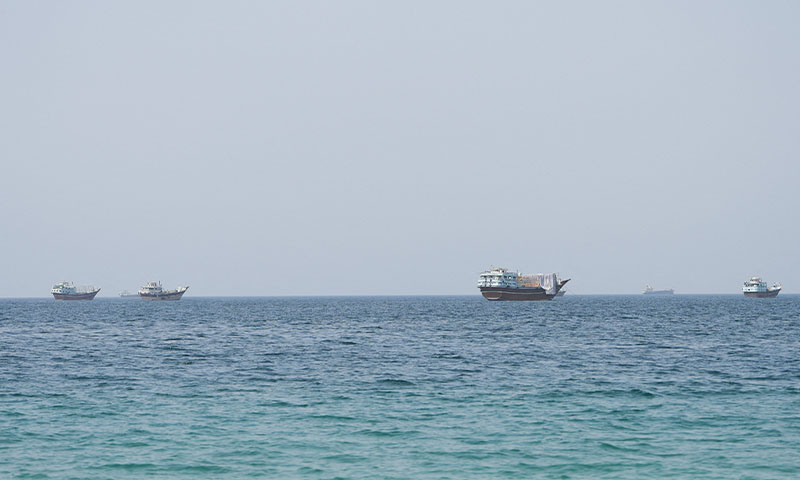
DUBAI/CAIRO/NEW YORK: Iran showed no sign of easing its blockade of the Strait of Hormuz on Saturday, while US President Donald Trump defended higher fuel prices at home as a consequence of Washington’s war with Tehran.
Nearly six months after the United States and Israel launched attacks on Iran on February 28, tanker movements through the strategically important waterway remain halted and there has been little indication that the opposing sides are close to restarting peace negotiations.
Iranian Deputy Foreign Minister Kazem Gharibabadi said Tehran would determine when the strait reopened, arguing that the blockade would remain in place until Washington accepted what he described as its defeat and abandoned its current position.
The Strait of Hormuz was responsible for carrying around a fifth of global oil supplies before the conflict, making the disruption one of the war’s most significant consequences for international energy markets.
Tehran sets conditions for reopening Hormuz
Iranian Foreign Minister Abbas Araqchi said Tehran had yet to make a decision on returning to negotiations with the United States.
In an interview with Iranian outlet Shahrara News published on Saturday, Araqchi said Washington would have to meet Tehran’s conditions concerning the Strait of Hormuz before normal shipping could resume.
The impasse has left both diplomatic efforts and commercial tanker traffic effectively frozen, with neither side signalling an imminent breakthrough.
Trump tells Americans higher fuel prices are worth the cost
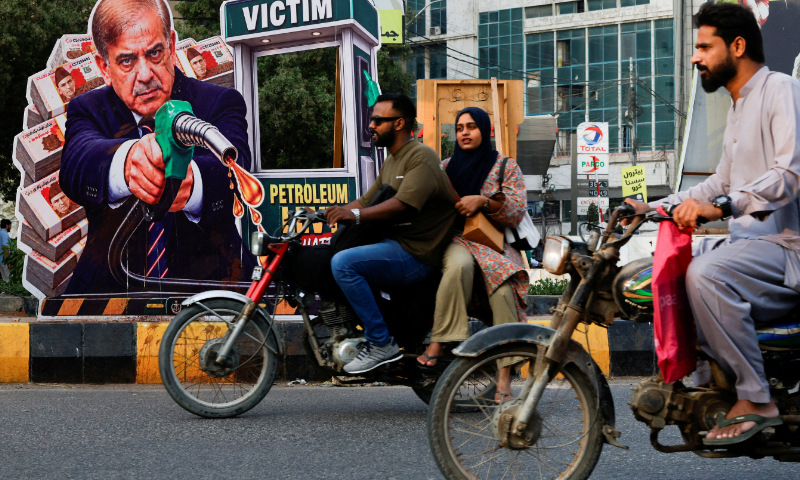
Trump, meanwhile, sought to defend the economic consequences of the conflict as US motorists continued to face sharply higher petrol prices.
Addressing a political rally in Garden City, New York, on Friday, the US president said Americans should be prepared to pay somewhat more at the pump if that was the price of preventing Iran from acquiring a nuclear weapon.
He also renewed his criticism of Tehran, describing Iran in strongly condemnatory terms while presenting its nuclear programme as one of Washington’s principal reasons for entering the conflict.
US petrol prices have risen considerably since last year. The nationwide average stood at about $4.08 per gallon on Friday, around 29 per cent higher than a year earlier, according to the American Automobile Association.
The increase has contributed to inflationary pressures and growing public frustration as the economic repercussions of the war continue to be felt beyond the Middle East.
Trump, a Republican, campaigned for reelection on a promise to lower energy costs, and Democrats are seeking to make the war’s fallout an issue in November congressional elections.
Crude oil futures rose $1 a barrel on Friday. Benchmark Brent LCOc1 futures were on track for a weekly rise of 6.0% and West Texas Intermediate CLc1 5.4%.
“The Strait of Hormuz cannot be seized by a tweet or an aircraft carrier, by issuing an order or by delivering an election speech,” Gharibabadi said.
Despite Iran’s defiant tone, though, there were signs of an economic toll there too.
President Masoud Pezeshkian, in remarks on state television, blamed high inflation on a U.S. blockade of Iranian ports and sanctions on Iran’s oil exports.
No crude oil vessels transitioning strait
Trump and Treasury Secretary Scott Bessent each pledged to inflict more financial damage on Iran. Bessent told Newsmax’s “Rob Schmitt Tonight” program on Thursday that announcements of more measures against Iran were coming next week.
Tehran calls its enforcement of strait traffic a blockade – the term Washington uses for its threat against Iranian vessels leaving their ports.
“What we’re doing is a great service for the world, not only for ourselves … and we’re really doing a great job,” Trump said, adding that a 260-day deployment by a U.S. aircraft carrier supporting the war effort was “not nearly long enough.”
Only two vessels passed through the Strait of Hormuz on Friday with no crude oil shipments visible, according to analysis from ship-tracking firm Kpler. Some ships may cross the strait undetected with their transponders off, but the figures are nowhere near the more than 130 ships that traversed it daily before the war.
Vessels that dare navigate the strait without Iranian permission risk missile or drone strikes. The United Arab Emirates’ Abu Dhabi National Oil Company said two of its vessels were attacked transiting the strait on Thursday evening, and the Emirati state news agency WAM reported another vessel came under attack on Friday.
A bulk carrier was struck in the hull by an unknown projectile in the Strait of Hormuz on Friday, the United Kingdom Maritime Trade Operations Centre said on Saturday, adding that the crew were safe, no damage assessment had been reported and that the environmental impact was unknown.
A tentative June deal to end the war is in tatters.
“We did not have a ceasefire in the first place that we would now want to extend,” Araqchi said. “We had ‘the end of the war,’ and now there is a new situation.”
Attacks by Iran-backed Houthis in Yemen renewed concerns about a widening regional war. Yemen’s internationally recognised government said the Houthis fired six ballistic missiles at the Red Sea port of Mocha on Friday, killing four civilians.
The Houthi-run SABA news agency cited a military source as saying the group had targeted an Aramco facility in the Saudi city of Najran with a drone.