
- Reuters
- September 7, 2026
Hormuz shipping traffic falls to lowest level since May after US, Iran attacks
-

- Reuters
- September 7, 2026
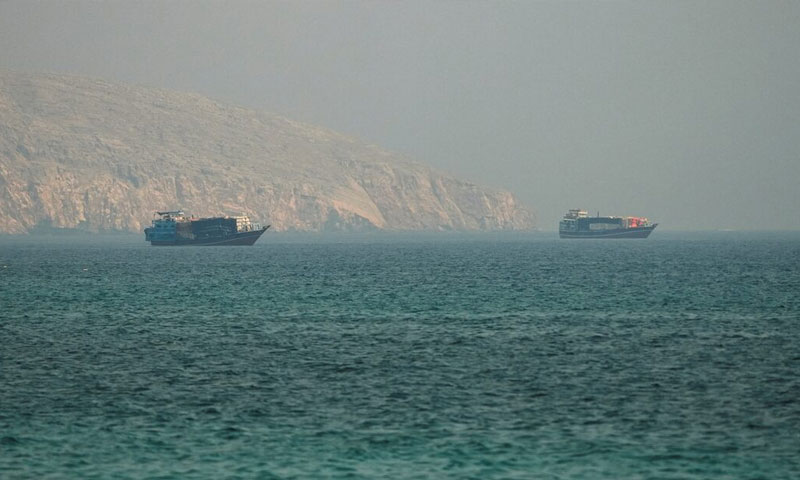
SINGAPORE: Commercial traffic through the Strait of Hormuz has dropped to its lowest level since May following a series of attacks involving US and Iranian forces, according to shipping data released Monday.
Data from maritime analytics firm Kpler showed that an average of 10 commodity-carrying vessels crossed the strategic waterway each day over the past 10 days. The figure fell from more than 15 vessels on Friday and nearly 13 on Saturday.
Traffic was particularly light over the weekend, with only two vessels crossing on Saturday and six on Sunday. Most of the vessels that passed on Sunday used the Iranian side of the strait.
The decline followed US strikes on three Iranian oil tankers on Saturday, according to US Central Command. One of the attacks took place near Kharg Island, a major Iranian oil-export hub, after Iran’s Islamic Revolutionary Guard Corps attacked US warships in the region.
Iran’s IRGC Navy later said it had targeted three oil tankers that were using routes it deemed unauthorized, along with three other US vessels elsewhere in the region.
Maritime intelligence firm Marisks identified the Iranian tankers involved as Downy, Stark I and Kylo, also known as Noxen.
Marisks described Saturday’s incidents as a major escalation in the ongoing maritime confrontation, raising concerns over further disruption to commercial shipping through the strategically important strait.
“Commercial tankers are now being deliberately used as instruments of reciprocal economic pressure, substantially weakening the previous distinction between military confrontation and commercial shipping,” it added.
“Risk is therefore assessed as extreme for Iranian/Iran-linked tonnage and materially elevated for U.S.-linked or U.S.-escorted shipping throughout the Strait of Hormuz and Gulf of Oman.”
There have been 27 projectile strike incidents since July 6, resulting in damage to vessels operating in and around the Strait of Hormuz, the United Kingdom Maritime Trade Operations (UKMTO) said in its weekly report.
On Sunday, one very large crude carrier and three bulk carriers laden with metals, grains or oilseeds entered the strait, Kpler data showed.
A tanker carrying refined products loaded from a Saudi port attempted to exit but was turned back, data from LSEG showed.
There has been no VLCC exiting the strait since Wednesday, according to Kpler data.
US, Iran trade attacks on ships as conflict intensifies
The United States and Iran exchanged attacks on commercial and military-linked vessels on Saturday, marking another escalation in a conflict that has intensified after weeks of relative calm.
US Central Command (Centcom) said American forces disabled two Iran-linked oil tankers and destroyed another during operations in the region. One of the targeted vessels was struck near Kharg Island, Iran’s principal oil export terminal, while another attack took place in the Gulf of Oman.
Centcom said the strikes followed attacks by Iran’s Islamic Revolutionary Guard Corps (IRGC) on US naval assets. It said an aircraft carrier and a guided-missile destroyer came under attack but evaded the incoming strikes without any US military casualties.
The US military also accused the targeted tankers of being part of an extensive network that allegedly generates revenue for the IRGC and groups allied with it.
Iranian state media reported no deaths in the strike near Kharg Island. Crews from two vessels attacked in the Gulf of Oman were reportedly evacuated by lifeboats. One tanker was empty, while the other was carrying oil.
Iran retaliates
Iran’s IRGC later said it had launched its own strikes, targeting six vessels. Three oil tankers travelling through the Strait of Hormuz were among those targeted, along with three vessels Iran described as linked to the United States elsewhere in the region.
The IRGC said the three tankers in the strait had been using routes that Tehran considered unauthorised and warned other ships against following the same path.
The latest exchange comes after US Defence Secretary Pete Hegseth warned that attacks on American ships would trigger strikes against Iranian oil tankers.
Hormuz becomes key flashpoint
The Strait of Hormuz has emerged as a central pressure point in the conflict. The strategically important waterway normally handles around one-fifth of global oil and liquefied natural gas shipments but has faced severe disruption since fighting began.
Iran has sought to retain influence over shipping through the strait, while the US has helped commercial vessels use a southern route through Omani waters.
The disruption has already pushed up global energy costs. In the United States, diesel prices reached an average of $5.85 a gallon on Friday, compared with $3.71 a year earlier.
Conflict shows no sign of easing
The latest attacks follow the collapse of a 60-day ceasefire and months of intermittent fighting. The US and Israel began major strikes on Iran on February 28, prompting Iranian attacks on Israel, US forces and allied states across the Gulf.
Despite the renewed hostilities, President Donald Trump has played down the scale of the conflict, recently describing it as limited and saying it should not be viewed as a conventional war.
You May Also Like

- Reuters
- September 6, 2026
Arsenal beat Chelsea in biggest test of Premier League title defence

- Reuters
- September 6, 2026