
- WEB DESK
- October 27, 2026
Houthis impose total ban on Israeli shipping in Red Sea amid rising regional tensions.
-

- Sadia Basharat
- June 8, 2026
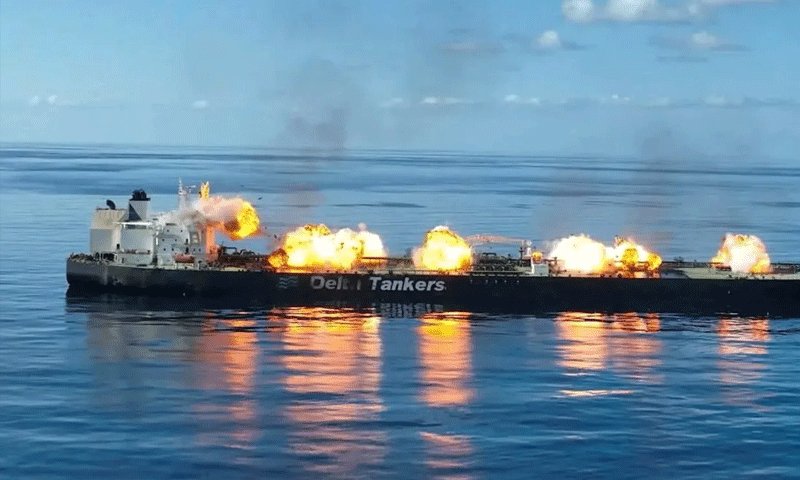
WEB DESK: Yemen’s Houthi movement has announced a “complete and total ban” on Israeli maritime navigation in the Red Sea, declaring that any vessel linked to Israel will be treated as a legitimate military target.
The announcement marks a significant escalation in regional maritime tensions, threatening to further disrupt one of the world’s most vital trade choke points, according to Arab News.
According to statements released by the group’s military wing, the blockade applies to all ships flying the Israeli flag, operated by Israeli companies, or owned by Israeli individuals.
The Yemeni armed forces warned international shipping companies against collaborating with Israel, urging them to steer clear of the designated zone to avoid putting their crews and vessels at risk.
The development comes amid heightened regional volatility and fears of a wider conflict breaking out in the Middle East.
Threat to global shipping
The Red Sea and the adjacent Bab al-Mandab Strait serve as a crucial conduit for global commerce, handling nearly 12 pc of international maritime trade, including vast shipments of crude oil and liquefied natural gas.
Security analysts warn that a protracted enforcement of this ban could force commercial fleets to bypass the Suez Canal entirely.
Routing ships around the Cape of Good Hope instead would significantly prolong voyage times and drive up freight costs.
Maritime security agencies have already issued advisories to commercial vessels operating in the region, urging heightened vigilance and the implementation of strict security protocols while transiting the area.
Rising regional anxieties
The stringent directive from Sanaa has drawn sharp reactions from the international community, with several Western maritime powers condemning the move as a direct violation of freedom of navigation laws.
Diplomatic sources suggest that back-channel discussions are underway to de-escalate the situation, though the Houthi leadership remains defiant, tying the maritime blockade directly to the ongoing geopolitical friction in the region.
As insurance premiums for commercial vessels navigating the Red Sea continue to surge, regional observers fear that a single miscalculation or kinetic strike on a civilian vessel could trigger a broader military confrontation, drawing in global superpowers and further destabilising the fragile Middle Eastern security architecture.
You May Also Like