
- Reuters
- September 15, 2026
IHC judges’ transfers trigger major seniority shake-up, new roster issued
-

- Farah Mehjabeen
- May 2, 2026
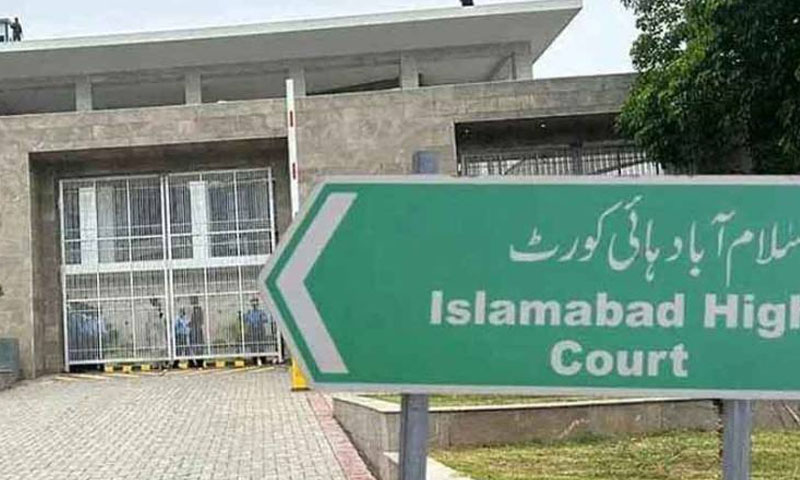
ISLAMABAD: The transfer of three judges from the Islamabad High Court has led to a significant reshaping of judicial seniority and administrative arrangements, with the court issuing a revised roster for the coming week.
The changes follow a decision by the Judicial Commission of Pakistan to transfer three sitting judges — Justice Mohsin Akhtar Kiani, Justice Babar Sattar and Justice Saman Rafat Imtiaz — to provincial high courts, a move that has already triggered legal and constitutional challenges from the legal fraternity.
Seniority order reshaped
With the departure of Justice Mohsin Akhtar Kiani, Justice Sardar Ejaz Ishaq Khan has now emerged as the senior-most judge in the Islamabad High Court after the chief justice.
According to court officials, Justice Ejaz Ishaq Khan will remain second in seniority until new appointments or further transfers are made to the court.
The revised seniority structure has also led to changes in administrative responsibilities and bench formations, particularly for division benches that hear major constitutional, criminal and tax matters.
New judicial roster issued
The IHC registrar’s office has issued a new duty roster for the coming week, effective from April 4, under which seven single benches and four division benches will hear cases.
The updated roster reflects the reshuffled composition of judges following the transfers and will remain in force until further orders.
Court officials said the changes are aimed at ensuring continuity in judicial work despite the structural adjustments triggered by the transfers.
Division benches reconstituted
Under the new arrangement, four division benches have been constituted.
A key division bench comprising Chief Justice Sardar Muhammad Sarfraz Dogar and Justice Muhammad Asif will hear a broad range of cases.
A second division bench, headed by Justice Sardar Ejaz Ishaq Khan with Justice Arbab Muhammad Tahir, will specifically handle tax-related matters.
A third bench consisting of Justice Khadim Hussain Soomro and Justice Muhammad Asif will hear criminal cases.
A fourth division bench, comprising Justice Muhammad Azam Khan and Justice Raja Inam Amin Minhas, will hear cases of all categories.
Officials said Justice Muhammad Asif will also serve on multiple division benches, reflecting an expanded judicial workload under the revised schedule.
Background to transfers
The restructuring follows the Judicial Commission’s decision earlier this week to approve inter-high court transfers of judges by majority vote.
Under the decision, Justice Mohsin Akhtar Kiani was transferred to the Lahore High Court, Justice Babar Sattar to the Peshawar High Court, and Justice Saman Rafat Imtiaz to the Sindh High Court.
The commission also ruled that any vacancies created by such transfers would be filled through further transfers rather than treated as fresh vacancies for initial appointments — a move seen as significant in shaping future judicial postings.
Legal and constitutional questions
The decision has drawn scrutiny from the legal community. The Lahore High Court Bar Association has already challenged the transfers in the Supreme Court, raising concerns over transparency and constitutional compliance.
Petitioners have argued that the transfers lack stated reasons and may affect judicial independence, while also challenging recent constitutional amendments linked to judicial appointments and transfers.
Chief Justice Yahya Afridi had earlier expressed reservations during discussions on the proposal, warning that such transfers could raise constitutional questions and impact the balance between federal and provincial judiciaries.
Constitutional changes underpin move
The transfers come in the backdrop of amendments to Article 200, which now allow the Judicial Commission to recommend inter-high court transfers without the consent of the judges concerned — a departure from the previous requirement for consent.
Legal observers say the changes have introduced a new framework for judicial mobility, but also triggered debate over institutional independence and administrative control within the superior judiciary.
Ongoing impact
Court officials say the immediate priority is to maintain the functioning of the Islamabad High Court, which continues to hear constitutional, criminal and civil matters despite the reshuffle.
The revised roster, they added, ensures that both single and division benches remain operational as the court adjusts to its new composition following one of the most significant judicial reorganisations in recent years.
You May Also Like

- WEB DESK
- September 15, 2026
Petrol price rises by Rs4.10, diesel by Rs6.41 per litre
- Reuters
- September 15, 2026
Samson, Reddy lead India to series-clinching win over Afghanistan

- WEB DESK
- September 15, 2026