- Web
- 20 Minutes ago
IHC to hear Mazari, Chatha appeals tomorrow
-

- Web Desk Nadir Baloch
- Feb 18, 2026

ISLAMABAD: The Islamabad High Court will hear the appeals of human rights lawyer Iman Zainab Mazari‑Hazir and her husband, advocate Hadi Ali Chatha, against their convictions on Thursday in a high-profile case attracting national and international attention.
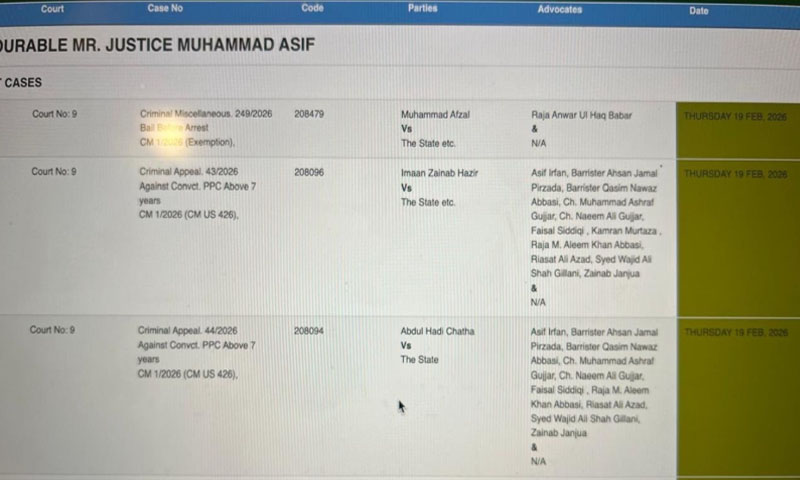
IHC Judge Justice Muhammad Asif will hear the case.
The couple’s legal team including advocates Zainab Janjua, Asif Irfan, Barristers Ahsan Jamal Pirzada and Qasim Nawaz Abbasi, Chhachh Muhammad Ashraf Gujar, Chaudhry Naeem Ali Gujar, Faisal Siddiqi, Riyasat Ali Azad and Syed Wajid Ali Shah Gilani, will represent them in the IHC.
The hearing comes weeks after a district and sessions court in Islamabad convicted Mazari and Chatha in a controversial case relating to social media posts, sentencing both to a total of 17 years in prison and imposing heavy fines under the Prevention of Electronic Crimes Act (PECA).
In January, Additional Sessions Judge Muhammad Afzal Majoka ruled that the couple’s posts and reposts on X (formerly Twitter) “promoted narratives aligned with hostile terrorist groups and proscribed organisations,” and undermined trust in state institutions. The court convicted them under Sections 9 (glorification of an offence), 10 (cyberterrorism), and 26‑A (false and fake information) of the PECA.
Under the judgment, both were sentenced to five years’ imprisonment with a fine under Section 9, 10 years under Section 10, and two years under Section 26‑A, with fines amounting to millions of rupees.
The sentences were ordered to run concurrently, and the time already spent in detention was to be counted toward their terms.
The couple was attending proceedings via video link from Adiala jail, where they were in judicial remand in a separate case.
During the verdict hearing, Mazari and Chatha boycotted the proceedings, and raised allegations of mistreatment and procedural issues.
Earlier, their lawyer Zainab Janjua said that both were being held in solitary confinement, with limited access to lawyers and family visits, despite orders from the High Court for such access.
The lawyer said prison authorities had not complied with the judge’s directive and claimed Mazari had been denied a notepad to prepare her legal case.
The convictions sparked criticism from civil society and bar associations, who say the case raises concerns about free speech and due process. Protests and lawyer strikes were reported after the sentencing, and prominent rights groups described the use of the PECA in the case as heavy‑handed.
Earlier, the IHC had issued a written order directing that Mazari and Chatha be allowed meetings with family members and lawyers.
IHC Judge Justice Arbab Muhammad Tahir had noted that although the couple was sentenced on January 24, prison authorities had not facilitated such meetings, and clarified that under prison rules such issues should first be addressed with the relevant administrative forum before seeking judicial intervention.
You May Also Like