- Web Desk
- 9 Minutes ago
Imaan Mazari, Hadi Ali Chatha in high spirits, says Shireen Mazari after jail meeting
-

- Web Desk Nadir Baloch
- Feb 09, 2026
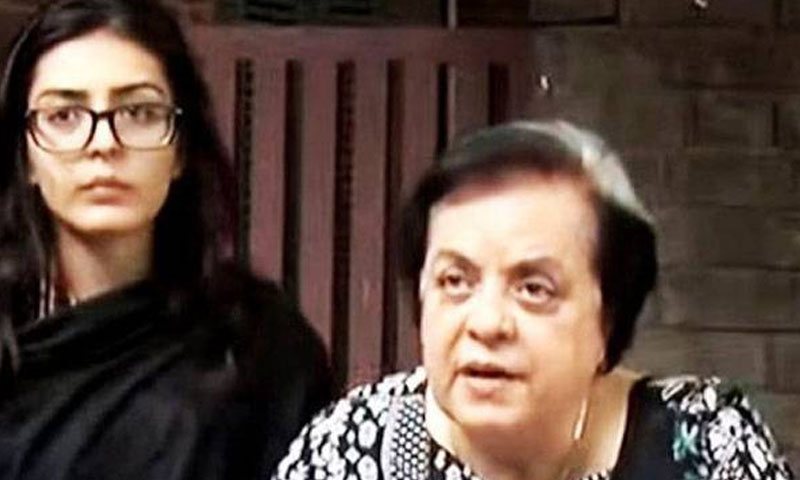
ISLAMABAD: Former federal minister Shireen Mazari said her daughter, human rights lawyer Iman Mazari, and son-in-law Hadi Ali Chatha were in good spirits 16 days after being sentenced in a social media tweets case.
Talking to HUM News English, Mazari said that both were in good health and in high spirits.
She said that lawyer Zainab Janjua was allowed to meet Iman Mazari, but a meeting with Hadi Ali Chatha could not take place despite their separate appeals.
The Islamabad High Court had previously issued a written order directing that the couple be allowed meetings with family and lawyers.
IHC Judge Justice Arbab Muhammad Tahir noted that although Iman Mazari and Hadi Ali Chatha were sentenced on January 24, facilities for meetings with family and counsel had not been provided.
The court had clarified that under prison rules, such matters should first be taken up with the relevant administrative forum before judicial proceedings.
Social media case and sentencing
An Islamabad court on January 24 sentenced Iman Mazari and Hadi Ali Chatha to 17 years of rigorous imprisonment each over social media posts that allegedly promoted the agenda of banned organisations and disseminated material against state institutions.
Additional District and Sessions Judge Afzal Majoka had delivered the verdict, holding the couple guilty under Sections 9 (glorification of an offence), 10 (cyberterrorism), and 26-A (false and fake information) of the Prevention of Electronic Crimes Act (Peca).
The court handed down separate sentences under each section:
Section 9: The court handed down 5 years imprisonment each with a fine of Rs5 million fine and in caser of non-payment, the convicts will undergo 1 year jail term.
Section 10: The court handed down 10 years imprisonment each with a fine of Rs30 million and additional imprisonment of two years on non-payment of the fine.
Section 26-A: The court handed down 2 years imprisonment each with a fine of Rs1 million fine; and In case of non-payment, the convicts will spent 6 more months in jail.
All sentences are to run concurrently.
The court observed that the accused, both lawyers by profession, deliberately propagated content portraying Pakistan as a “terrorist state,” glorifying banned organisations including the Balochistan Liberation Army (BLA) and Tehreek-i-Taliban Pakistan (TTP). Their posts also included support for activists such as Mahrang Baloch, Ali Wazir, and Manzoor Pashteen.
Five prosecution witnesses, including Imran Haider from the National Cyber Crime Investigation Agency (NCCIA) and Sub-Inspector Sharooz Riaz, testified that the accused disseminated anti-state content via social media, including tweets and retweets. The court rejected the defence argument that expressing views about proscribed individuals was harmless, stating that such posts undermined public trust in state institutions, particularly law enforcement and the armed forces.
The judgment also noted that during the inquiry, the accused were under judicial remand in another case and attended the proceedings via video link. The court allowed the time already spent in detention to be counted towards their sentence under Section 382-B of the Code of Criminal Procedure (CrPC).
Background
The case stems from a complaint filed in August 2025 by Sub-Inspector Sharooz Riaz, alleging that Iman Mazari “consistently disseminated highly offensive, misleading, and anti-state content on social media” with the involvement of her husband.
The Islamabad High Court had previously directed the completion of cross-examination of prosecution witnesses before issuing the verdict.
The trial highlighted Pakistan’s strict approach to online content under the Prevention of Electronic Crimes Act, which criminalises glorification of banned organisations, cyberterrorism, and dissemination of false information. Human rights and legal observers have noted that the case has drawn attention to the intersection of digital expression, national security, and freedom of speech in Pakistan.
Shireen Mazari’s meeting with her daughter and son-in-law comes amid ongoing debates over prisoner rights, access to legal counsel, and family visitation for high-profile detainees in jails.
You May Also Like