
- Reuters
- September 16, 2026
IMF warns Middle East war poses risk to Pakistan economy despite recovery
-

- Zafar Ali
- May 15, 2026
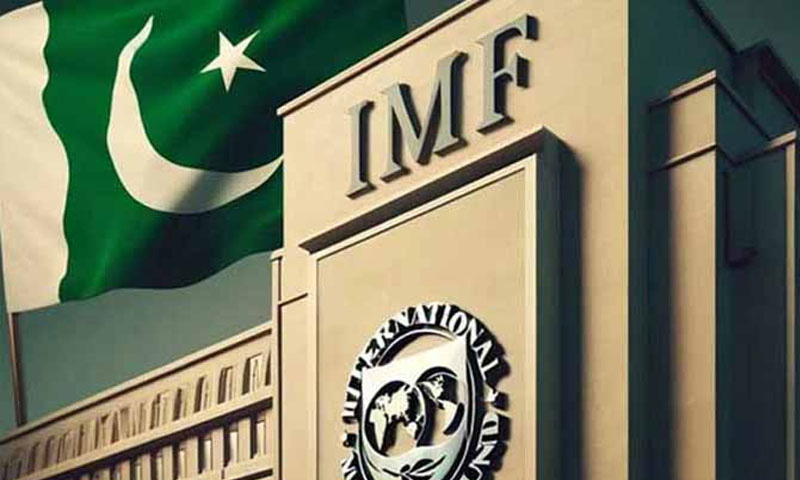
ISLAMABAD: The International Monetary Fund (IMF) on Friday acknowledged signs of recovery in Pakistan’s economy after approving the latest tranche under its loan programme, but warned that the ongoing conflict in the Middle East poses a major external risk to the country’s fragile economic outlook.
In its detailed review report released after clearing the latest disbursement, the IMF said that economic activity accelerated during the first half of fiscal year 2026, with growth showing signs of improvement amid tighter macroeconomic policies.
The lender projected Pakistan’s gross domestic product (GDP) growth at 3.6 per cent by the end of the current fiscal year, while average inflation was expected to remain around 7.2 per cent.
According to the report, the State Bank of Pakistan played a key role in containing inflation through timely and tight monetary policy measures.
The IMF said that Pakistan’s current account remained broadly balanced, while foreign exchange reserves improved more than expected.
Reserves had reached $16 billion by the end of December and could rise further to $17.5 billion in the coming months, the report said.
Despite the improving indicators, the IMF identified the Middle East war as one of the most significant external threats facing Pakistan’s economy.
“The war weighs on the near-term outlook as Pakistan is highly exposed to energy imports and remittances from the Gulf countries as well as to global financial conditions,” the IMF staff report said.
The lender noted that 81 per cent of Pakistan’s fuel imports originate from Gulf Cooperation Council (GCC) countries, while 55 per cent of remittances — equivalent to around nine per cent of GDP — come from the same region.
“A significant disruption to the GCC economies and, or return of migrant workers could weigh on these flows, a major source of financing for consumption and the balance of payments,” the report warned.
According to the IMF, the economic impact of the Iran war has now been formally incorporated into Pakistan’s macroeconomic projections.
Under the Fund’s baseline scenario, Pakistan’s GDP growth could slow by 0.2 percentage points in fiscal year 2026 and by 0.6 percentage points in FY27 due to the conflict, while inflation could rise by around half a percentage point this year and 1.5 percentage points next year.
The report said disruptions to global supply chains and higher oil prices had increased Pakistan’s import bill and added inflationary pressure, affecting consumers’ purchasing power.
Although the IMF described the direct impact under its baseline scenario as manageable, it said downside risks remained elevated because of continued geopolitical uncertainty.
On fiscal performance, the IMF said programme targets had broadly been met, though much of the improvement resulted from expenditure restraint rather than stronger revenue collection.
“The consolidation progress so far has relied primarily on increasing revenue from the formal sector,” the report stated.
The IMF noted that the Federal Board of Revenue missed its end-December indicative target by 0.3 per cent of GDP.
The report projected Pakistan’s public debt at 73.8 per cent of GDP during the current fiscal year, while forecasting a primary budget surplus equivalent to 1.6 per cent of GDP in FY26, describing it as a sign of improving fiscal discipline.
The IMF also stressed the need for Pakistan to boost competitiveness in business and productive sectors to support sustainable long-term economic growth.
It called for further reforms in the foreign exchange market, maintaining adequate bank capitalisation and ensuring continued rebuilding of foreign exchange reserves.
The lender also referred to Pakistan’s 28-month Resilience and Sustainability Facility (RSF) programme aimed at helping the country address climate-related risks and natural disasters.
According to the report, Pakistan would need to improve water management, strengthen climate monitoring systems and enhance coordination between federal and provincial governments to improve climate resilience.
The IMF further said Pakistan’s transition toward an interest-free banking system had now been formally incorporated into programme monitoring following court directives.
“The strategy should establish, without ambiguity, the implementation trajectory for financial institutions and the approach to addressing outstanding conventional liabilities,” the report said.
The government’s financial sector strategy outlining a roadmap toward a constitutionally mandated “riba-free” economy has been set as a structural benchmark for completion by the end of June 2026.
Overall, the IMF said consistent implementation of strong economic policies had helped stabilise Pakistan’s economy and improve investor confidence, but cautioned that continued reforms and prudent policymaking would remain essential amid an increasingly uncertain global environment.
You May Also Like

- Reuters
- September 15, 2026
Trump administration plans $2.8bn munitions sale to Israel, sources say
- WEB DESK
- September 15, 2026
Petrol price rises by Rs4.10, diesel by Rs6.41 per litre
- Reuters
- September 15, 2026