
- Talha Saeed
- November 24, 2026
Imran Khan seeks live broadcast of £190m case appeals, cites open justice and transparency
-

- Farah Mehjabeen
- November 24, 2026
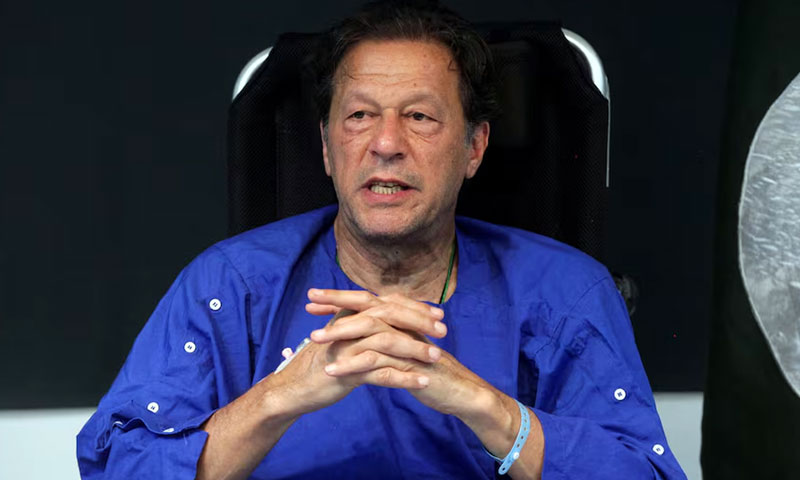
ISLAMABAD: Former prime minister Imran Khan has approached the Islamabad High Court (IHC), seeking live streaming of proceedings in his appeal against his conviction in the £190 million Al-Qadir Trust case, arguing that public access to the hearings would promote transparency, ensure a fair judicial process and strengthen confidence in the country’s justice system.
The Pakistan Tehreek-e-Insaf (PTI) founder filed a criminal miscellaneous application through his legal team, including Barrister Salman Safdar and Salman Akram Raja, on Tuesday requesting the court to order the live broadcast of proceedings in Criminal Appeal No. 63 of 2025.
The application comes a day before the IHC is scheduled to hear the main appeals filed by Khan and his wife Bushra Bibi against their convictions in the corruption case.
A two-member division bench comprising IHC Chief Justice Sardar Muhammad Sarfraz Dogar and Justice Muhammad Asif is scheduled to take up the appeals on November 25.
The petition argues that the proceedings involve a former elected prime minister and matters of considerable public importance, making judicial transparency particularly significant.
It asks the court to allow live broadcasting in keeping with the principles of open justice, fairness and public confidence in judicial institutions.
Petition raises concerns over judicial transparency
The application states that Khan’s counsel had requested live streaming during the previous hearing on November 18, but the submission was not recorded in the court’s interim order.
The fresh application has therefore been filed to formally place the request before the high court.
The petition argues that live coverage would allow the public to independently observe the proceedings, reduce speculation and ensure accurate reporting of arguments presented before the court.
It also refers to concerns raised by Khan about his treatment in custody, restrictions on meetings with his family and lawyers, and access to medical care.
According to the application, Khan has complained of deteriorating eyesight, fluctuating blood pressure and inadequate medical treatment while imprisoned at Adiala jail.
The petition further claims that several developments during the original trial, including repeated postponements of the verdict and reports concerning the anticipated sentence, raised questions about the confidentiality and transparency of the proceedings.
It argues that publicly accessible appellate hearings would help address those concerns and allow independent scrutiny of the prosecution’s evidence.
Defence cites previous live-streamed court proceedings
Khan’s legal team has also cited previous instances in which Pakistan’s superior courts permitted live broadcasts of cases involving matters of national importance.
These include Supreme Court proceedings concerning the trial of former prime minister Zulfikar Ali Bhutto and appeals relating to the high treason case against former military ruler Pervez Musharraf.
The application notes that the Islamabad High Court introduced live-streaming facilities in Courtroom No. 1 in 2022 and has previously allowed public broadcasts of certain proceedings.
It also invokes Article 19A of the Constitution, which guarantees citizens access to information in matters of public importance, subject to restrictions prescribed by law.
The defence argues that broadcasting the appeals would be consistent with constitutional principles of open justice and would not prejudice the prosecution or undermine courtroom proceedings.
The court has yet to decide whether to permit the requested live streaming.
Background of the £190m case
The Al-Qadir Trust case concerns allegations of corruption and misuse of authority involving £190 million recovered by the United Kingdom’s National Crime Agency and returned to Pakistan during Khan’s tenure as prime minister.
The National Accountability Bureau (NAB) alleged that Khan and Bushra Bibi received land and other benefits from a property developer in exchange for facilitating a settlement involving the recovered funds.
An accountability court convicted Khan and Bushra Bibi on January 17, 2025, sentencing the former prime minister to 14 years in prison and his wife to seven years.
Both subsequently challenged their convictions before the Islamabad High Court, denying wrongdoing.
During the previous hearing on November 18, Barrister Salman Safdar sought two weeks to prepare arguments, but the court granted one week.
The main appeals are now scheduled for November 25, when the defence is expected to continue challenging the trial court’s verdict.