- Web Desk
- 1 Hour ago
India approves USD39bn defence package, including 114 Rafale jets
-

- Web Desk
- Feb 13, 2026
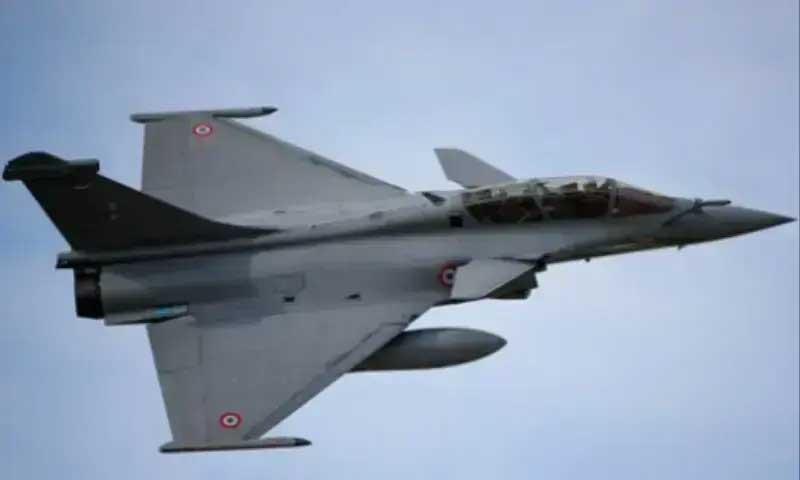
WEB DESK: India has approved a sweeping defence procurement package worth approximately INR3.6 tr (around $39–40 billion), with the proposed acquisition of 114 Rafale fighter jets forming the centrepiece of what could become one of the largest military deals in the country’s history.
New Delhi moves to expand air power
According to AFP, the decision was cleared by India’s Defence Acquisition Council (DAC), chaired by Defence Minister Rajnath Singh. The approval comes just days before French President Emmanuel Macron is due to visit India from 17 to 19 February, where he will hold talks with Prime Minister Narendra Modi.
At the heart of the package is the proposed purchase of 114 multi-role Rafale fighter aircraft from Dassault Aviation. The Indian Air Force (IAF) already operates 36 Rafale jets acquired under a 2016 agreement, while the navy is preparing to induct 26 Rafale-M variants for aircraft carrier operations.
Under the new proposal, 18 aircraft are expected to be delivered in fly-away condition, with the remaining 90 to 96 manufactured in India. Officials indicate that close to 50 per cent indigenous content is envisaged, in line with the government’s “Make in India” initiative aimed at strengthening domestic defence manufacturing and generating skilled employment.
India’s defence ministry said the procurement would “enhance the capability of undertaking air dominance roles across the spectrum of conflict and significantly boost the deterrence capabilities of the IAF with long-range offensive strikes”.
Wider procurement package
The Rafale deal forms part of a broader set of approvals granted under the “Acceptance of Necessity” (AoN) framework, which allows detailed technical and commercial negotiations to proceed, typically under a government-to-government arrangement.
The wider package includes additional air-to-air and surface-to-air missiles for the air force, anti-tank guided missiles for the army, and six P-8I long-range maritime reconnaissance aircraft for the navy. Other systems under consideration include SCALP deep-strike cruise missiles and high-altitude pseudo-satellites designed to enhance surveillance and strike capability.
Strategic significance
The move reflects New Delhi’s ongoing effort to modernise its armed forces amid regional security challenges, including tensions along its borders with China and Pakistan. It also reflects a broader strategic recalibration, as India gradually diversifies away from its historic dependence on Russian military equipment in favour of closer defence cooperation with Western partners.
France has emerged as a particularly significant partner, with the Rafale platform viewed favourably within the IAF for its operational performance and advanced capabilities.
The timing of the approval, ahead of Macron’s visit, signals the deepening of Indo-French strategic ties. Analysts suggest the agreement could be advanced further during the summit, potentially becoming one of the most consequential defence arrangements in India’s recent history.
Implications
If concluded, the acquisition would substantially bolster India’s air superiority, long-range strike capacity and overall deterrence posture. Much will now depend on negotiations over pricing, technology transfer and production timelines.
Should the deal proceed as envisaged, it is likely to shape the Indian Air Force’s operational capabilities for decades to come.
You May Also Like