- Web Desk
- 18 Minutes ago
India boosts military with $25b defence spend, including Russian S-400s”
-

- Web Desk
- Mar 28, 2026
WEB DESK: In a significant move to modernise its armed forces, the Indian government has green-lit a massive defence procurement package worth approximately $25b (£19.8b).
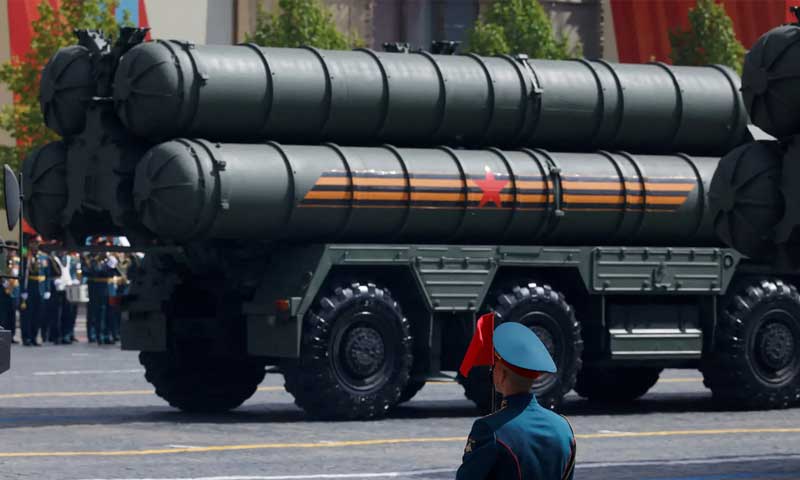
The decision, finalised during a high-level meeting of the Defence Acquisition Council (DAC) on Friday, includes the acquisition of additional Russian-made S-400 Triumf long-range missile systems, signaling that Moscow remains a cornerstone of India’s strategic defence despite growing ties with the West.
Russian resilience in India’s arsenal
Despite a decade of diversifying its suppliers increasingly turning to the United States, France, and Israel New Delhi’s latest approval for more S-400 units and extensive upgrades to its Su-30 fighter jet engines underscores a persistent reliance on Russian hardware.
The Ministry of Defence noted that the S-400 system is vital for countering “enemy long-range air” threats and protecting critical infrastructure.
This latest tranche is part of an aggressive spending spree. For the 2025-26 financial year, the ministry has cleared 55 proposals worth a staggering 6.73tr ($71b). Of this, capital procurement contracts worth 2.28tr rupees ($25b) have already been signed the highest ever recorded in a single fiscal year for the nation.
Modernising the Skies and the Frontline
The Air Force is set for a major overhaul, with the DAC approving the purchase of new medium transport aircraft to phase out the ageing Soviet-era AN-32 and IL-76 fleets.
The shopping list also features “Remotely Piloted Strike Aircraft” armed drones designed for both precision attacks and covert surveillance.
The Army has received approvals for air defence tracking systems for real-time battlefield monitoring, armour-piercing tank ammunition and advanced artillery, as well as new high-capacity radio relay systems to ensure fail-proof communication
The Ministry stated that these acquisitions are designed to meet “strategic, tactical, and operational requirements,” ensuring the forces remain “future-ready” in an increasingly volatile regional landscape.
It can be observed that India’s massive $25b procurement is less a sign of strength and more an admission of the widening “obsolescence gap” within its ageing Soviet-legacy inventory.
By doubling down on the S-400 a system whose efficacy has been repeatedly questioned in modern electronic warfare environments New Delhi is committing to a high-maintenance, “prestige” platform that offers diminishing returns against Pakistan’s increasingly sophisticated and indigenous cruise missile and drone capabilities.
Moreover, India’s continued reliance on Russian technology, despite Western pressure, creates a strategic patchwork that could lead to serious interoperability challenges for the Air Force.
In contrast, Pakistan’s emphasis on cost-effective, indigenous technological development ensures a credible and sustainable deterrent without dependence on external suppliers.
You May Also Like