
- Aasiya Niaz
- 29 Minutes ago
India’s $60bn River storage plans raise alarm in Islamabad over water security
-

- Web Desk
- 1 Minute ago
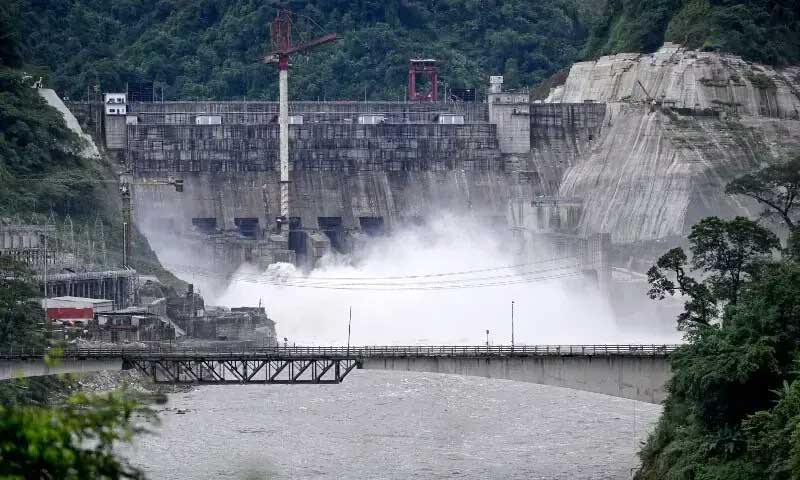
WEB DESK: Pakistan has voiced deep concern over India’s planned investment of approximately $60 billion in storage projects along the Jhelum and Chenab rivers two of the three western rivers allocated to Pakistan under the 1960 Indus Waters Treaty. Officials warn that expanded upstream storage could allow New Delhi to manipulate river flows, posing the dual threat of severe drought during critical cropping seasons and sudden flooding during the monsoon.
According to Dawn News, at a high-level federal–provincial dialogue on water storage held on 17 February, Water and Power Development Authority (WAPDA) Chairman, retired Lt Gen Muhammad Saeed, informed participants that India’s proposed projects would increase its storage capacity on the Jhelum and Chenab from the current level of roughly 15 days to an estimated 55–60 days.
A participant quoted in Dawn warned that such capacity would provide India with a window of nearly two months to halt or significantly reduce normal flows precisely when Pakistan’s downstream crops require water most urgently. This, the source cautioned, could create drought-like conditions across key agricultural regions.
The same official added that enlarged reservoirs would also enable India to release substantial volumes of stored water at short notice. “We have already seen flood-like situations triggered with only 15 days of storage. A fourfold increase would make deliberate or poorly timed releases far more dangerous during heavy rainfall or the monsoon,” the participant observed.
Federal–Provincial Divisions Emerge Over Dam Strategy
In response, Pakistani authorities are pressing for the accelerated construction of large-scale domestic reservoirs. These would serve a dual purpose: capturing surplus floodwaters that currently flow into the sea and providing a buffer against sudden upstream releases, while storing water for periods when flows are reduced.
The WAPDA chairman stressed the urgency of developing new flood-control reservoirs to conserve excess water and shield the country from potential upstream shocks. One official described India’s expanding storage footprint as risking the “weaponisation of river flows”, terming it an existential challenge to Pakistan’s water security and agricultural stability.
The 17 February meeting was chaired by Water Resources Minister Mian Moeen Wattoo and attended by the prime minister of Azad Jammu and Kashmir (AJK) and the chief minister of Gilgit-Baltistan (GB). Provincial chief ministers did not attend, although the prime minister had directed chief secretaries and irrigation secretaries to participate.
Sindh’s irrigation minister and secretary cautioned that Pakistan is already water-deficient and argued that present river flows do not justify the construction of large dams. They noted that lower-riparian areas are struggling to secure adequate drinking water even under current conditions, warning that additional upstream storage could aggravate shortages. They called for detailed feasibility and economic assessments before proceeding, cautioning that projects rushed in response to Indian actions might not prove financially viable an implicit reference to the technical and fiscal challenges that have beset the Neelum–Jhelum Hydropower Project.
Representatives from Gilgit-Baltistan urged that GB be granted membership, or at least observer status, in the Indus River System Authority to ensure the region has a formal voice in national water policymaking.
The AJK prime minister expressed support for further dams, storage facilities and hydropower projects in Kashmir, given its position as the source of the western rivers. However, he emphasised that local communities must receive tangible financial benefits to ensure that they both support and profit from their contribution to national water and energy security.
Punjab signalled full backing for new flood-storage projects and offered to engage directly with Sindh to address its concerns, proposing institutional guarantees to safeguard provincial interests.
Khyber Pakhtunkhwa pressed for early implementation of the Chashma Right Bank Canal lift-cum-gravity scheme, noting that delays have prevented the province from utilising its full water allocation. The WAPDA chairman assured participants that tenders had already been issued and that the project would be prioritised.
Separately, WAPDA has reportedly finalised plans for four medium-sized storage reservoirs on the Chenab near Jhang, Chiniot, Sargodha and Wazirabad. The combined cost is estimated at Rs300 billion, with a total storage capacity of approximately 4.5m acre-feet.
As upstream developments on the western rivers gather pace, the dialogue underscores mounting urgency within Pakistan to expand its domestic storage infrastructure and strengthen resilience against potential disruptions to flows governed by the Indus Waters Treaty.
You May Also Like