
- Web
- 6 Hours ago
Iran appoints Mojtaba Khamenei as supreme leader as conflict pushes oil above $100
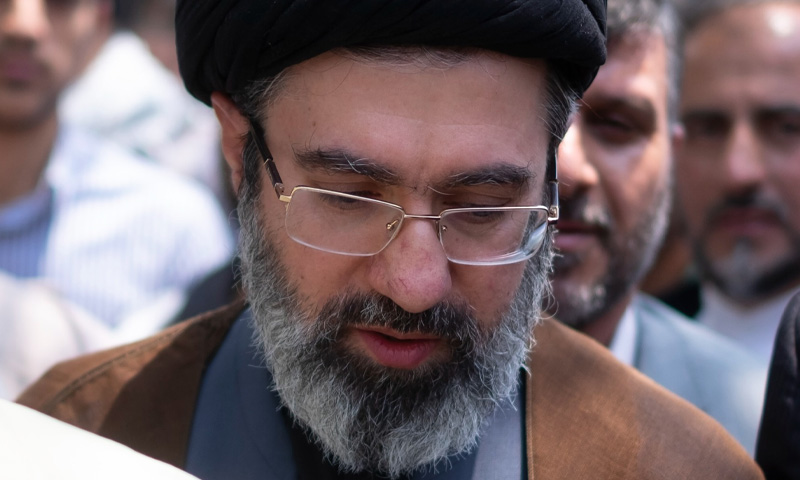
DUBAI/JERUSALEM: Iran has appointed Mojtaba Khamenei, the son of slain leader Ayatollah Ali Khamenei, as the country’s new supreme leader, signalling that hardline leadership will remain firmly in place as the conflict with the United States and Israel intensifies.
The decision was announced early Monday after a vote by Iran’s Assembly of Experts, an 88-member clerical body responsible for selecting the country’s supreme leader. The role carries sweeping authority over Iran’s political system, armed forces and key state institutions.
Mojtaba Khamenei, a cleric known for his influence within the Islamic Revolutionary Guard Corps and networks of political and economic power built during his father’s tenure, had long been considered a leading contender for the position.
His appointment comes days after Ayatollah Ali Khamenei was killed in strikes during the opening phase of the ongoing military confrontation involving the United States and Israel.
Leadership transition amid escalating conflict
Iranian state media reported that senior commanders of the country’s armed forces had pledged allegiance to Mojtaba Khamenei shortly after the announcement. The Islamic Revolutionary Guard Corps also declared its readiness to follow the new leader.
Iranian officials framed the appointment as a move aimed at maintaining unity during a period of heightened security threats. Authorities said the Assembly of Experts convened despite concerns that the gathering itself could be targeted.
The leadership change occurs against the backdrop of an expanding military campaign that has seen repeated strikes on Iranian territory and retaliatory attacks across the region.
U.S. officials said a seventh American service member had died from injuries sustained during Iran’s early retaliatory strikes following the initial attacks.
Oil markets react sharply
The escalating conflict has rattled global energy markets. Oil prices surged sharply on Monday, driven by fears of supply disruptions in the Middle East.
U.S. crude futures climbed more than 20 percent in early trading, reaching their highest level since mid-2022. Brent crude also jumped significantly, rising above $100 per barrel after already posting steep gains in the previous week.
The price spike triggered declines in stock market futures across Asia and the United States, as investors weighed the potential economic fallout from prolonged instability in a region responsible for a large share of global oil exports.
U.S. President Donald Trump said the rise in energy prices would be temporary, arguing that markets would stabilise once the perceived threat from Iran was eliminated.
Intensifying military exchanges
Fighting between Iran and Israel continued to escalate as strikes targeted energy infrastructure near Tehran, sending large plumes of smoke into the sky above the capital.
Iranian officials condemned the attacks, accusing Israel of targeting fuel storage sites and endangering civilians. The country’s foreign ministry described the strikes as a dangerous escalation and alleged they could release toxic substances into the air.
Israeli military officials said the facilities were linked to Iran’s military operations and missile production, calling them legitimate targets.
Israel has also continued strikes against senior Iranian figures, including military officials associated with the office of the supreme leader.
Despite international calls for de-escalation, both sides have signalled that the conflict is likely to continue, raising concerns of broader regional instability and further disruption to global energy markets.
You May Also Like