
- Reuters
- October 27, 2026
Iran closes Strait of Hormuz as US-Iran tensions escalate
-

- Zafar Ali
- June 11, 2026
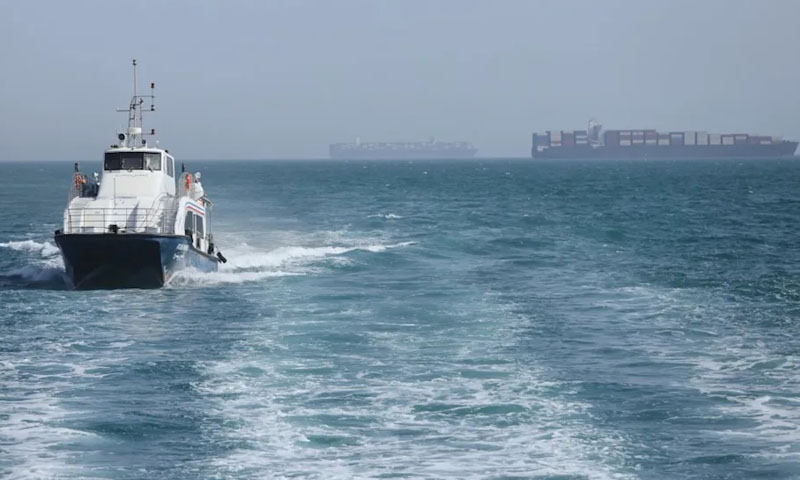
TEHRAN/WASHINGTON: Iran’s newly established Persian Gulf Strait Authority (PGSA) has announced the complete closure of the Strait of Hormuz, citing extreme tensions sparked by “aggressive US forces” and a recent directive from the Iranian Armed Forces.
The move has stranded numerous vessels, with the PGSA advising transit permit holders to remain patient and await further instructions.
The closure comes as the United States and Iran exchanged a series of heavy air attacks on Thursday.
US President Donald Trump has issued a stark ultimatum, threatening intensified strikes if Tehran refuses to sign an immediate peace deal. However, despite the military escalation, Iranian sources suggest that negotiations for a preliminary agreement have actually intensified behind the scenes.
Tit-for-Tat Attacks
The conflict, which escalated sharply after US and Israeli air raids on February 28, has already claimed thousands of lives across Iran and Lebanon and sent global oil prices soaring. Hostilities reached a breaking point this week following the downing of a US Apache helicopter near the Strait on Monday.
The United States Central Command (CENTCOM) said it conducted a four-hour operation targeting Iranian surveillance hubs, communication networks and air defence sites.
In response, Iran’s Islamic Revolutionary Guard Corps (IRGC) carried out counter-strikes on 18 US-linked targets in Kuwait and Bahrain, including positions associated with the US Navy’s Fifth Fleet.
The escalation also had wider regional impact. In Jordan, the al-Azraq air base was targeted for a second consecutive night with 12 ballistic missiles.
In Bahrain, debris from intercepted drones caused minor injuries to an 11-year-old girl and damaged residential houses in Manama.
Kuwait briefly closed its airspace amid the threat of incoming strikes.
The $12 Billion Stumbling Block
Diplomatic sources indicate that while a political understanding has been reached, the release of billions in frozen Iranian funds is yet to be worked out.
“This war is a dead end from a military standpoint. The Americans cannot achieve their goals through force,” an Iranian source stated, noting that progress is being made in indirect talks.
Iran is reportedly demanding the immediate release of $6 billion to $12 billion in frozen assets.
Washington, however, insists on a staggered release restricted to humanitarian goods. Tehran’s broader demands include the lifting of sanctions, an end to Israeli strikes in Lebanon, and formal recognition of its control over the Hormuz Strait.
US Denies Blockade Success
Despite the PGSA’s announcement, US Central Command has denied that the Strait of Hormuz is closed, maintaining that commercial traffic continues to flow. Washington has enforced its own blockade on Iranian ports, recently firing on a vessel in the Gulf of Oman for defying instructions.
This naval standoff turned deadly for third parties as Indian authorities confirmed the deaths of three Indian sailors during a US operation to halt a tanker off the coast of Oman.
Domestic Pressure on White House
The conflict has become a significant political liability for President Trump. With gasoline prices reaching record highs, his approval ratings have begun to slide. Republican strategists expressed concern that the unpopularity of the war could impact the party’s control of Congress in the upcoming November midterm elections.
As explosions are reported in major cities including Bandar Abbas and near the capital, the world watches the Strait of Hormuz, where the next move could either lead to a diplomatic breakthrough or a catastrophic regional war.
You May Also Like


- WEB DESK
- October 27, 2026
Punjab govt moves to provide life insurance cover to employees
- AFP
- October 27, 2026