- Web
- 5 Hours ago
Iran committed to ‘even strongly retaliate’ as Trump announces third wave of strikes
-

- Web
- Mar 03, 2026
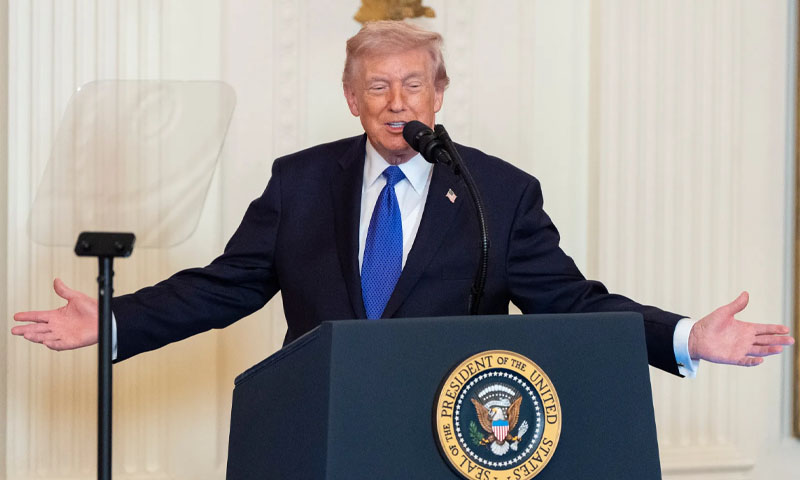
TEHRAN: Iran’s government has reaffirmed its commitment to even strongly retaliating, as US President Donald Trump said, Iran will soon see their third wave of massive attacks in key cities of the country. For Iran, differing defensive and offensive is nonsense, and those of other countries wanting to engage in the war against Iran will be treated as an act of war, the government has said.
US strikes third wave
The US president announced that the fresh strikes, coming soon, will hit even deeper into Iranian territory, with a special focus this time on key governmental centres, as previous aggression hit the presidential office and the Supreme National Security Council building in Tehran. President Trump warned of the administration’s attempt as a “big wave” of strikes that the people of Iran will see very soon.
Iran has said that, despite the fact of losing the top officials in the second wave, they are committed to continuing retaliation. The retaliation included threats to target US and Israeli bases, Gulf energy infrastructure, and allied positions across the region. Hezbollah and other militias are reported to be engaging in broader operations, heightening conflict in Lebanon, Iraq and across the Middle East. Following this, the United Arab Emirates (UAE) has announced that no country would be allowed to use their land amid the ongoing war imposed by the US-Israel jointly.
What remains to be seen is the heavy impact that the new wave, engaging both Iran and the US, may further intensify oil markets.
Recent wave
American forces continued strikes on Iran following the second wave announcement made by Trump that continued for two days (March 1-2). The heavy strikes in Iran destroyed “command and control” facilities, naval assets, missile launchers and ballistic sites, Trump said, and Iran witnessed.
However, Iran escalated its counterattacks by launching additional ballistic missiles and drones, targeting key bases in the Gulf region belonging to both Israel and the US. Broadening the fighting, Iran’s Revolutionary Guards issued warnings and said they accelerated operations against Israeli and US‑aligned targets.
This resulted in heavy losses to the US, as they lost at least six US service members by the end of the second wave, with part of the expanding casualty list yet to continue.
1st wave on Feb 28
The US and Israel begin a coordinated military strike against Iran in a major operation called Operation Epic Fury or Lions Roar on Feb 28, targeting Iranian leadership, military infrastructure, missile sites, air defence systems and command‑and‑control facilities. US and Israeli aircraft hit dozens of cities, including Tehran, and the assassinated citizens also included the country’s Supreme Leader, Ayatollah Khamenei.
Nonetheless, Tehran responded with retaliatory missile and drone launches at Israel and Gulf states hosting US forces. Iran said the strikes were unprovoked and illegal, and vowed a “crushing response”. Iranian citizens reported panic, fear, and efforts to seek safety in cities like Tehran as explosions rocked urban areas. During this operation, Khamenei and several senior commanders were assassinated in the initial phase, as confirmed later.
You May Also Like