- Reuters
- 5 Minutes ago
Iran condemns US-GCC statement as provocative amid regional tensions
-

- Web Desk
- Now
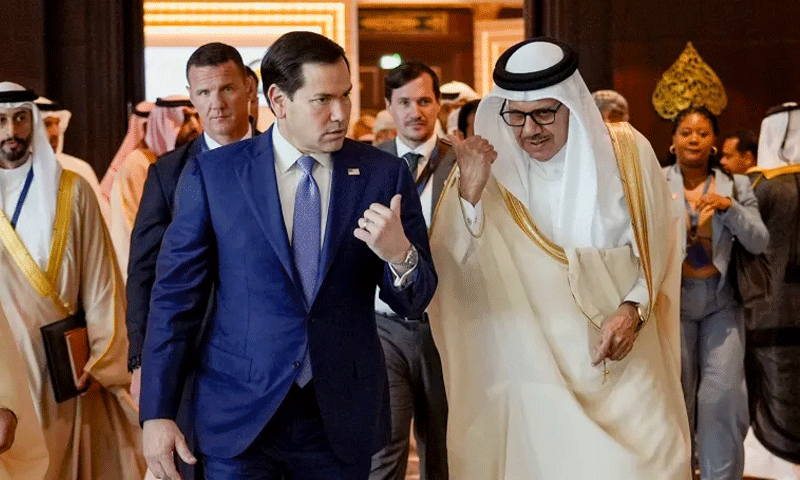
WEB DESK: Iran has strongly criticised a joint statement issued by the United States and the Gulf Cooperation Council (GCC) states, describing it as “interventionist, irresponsible and provocative” and accusing Washington and its allies of seeking to pressure Tehran following the recent US-Israeli conflict with the Islamic Republic.
In a statement released on Friday, Iran’s Foreign Ministry rejected the communique from the GCC-US ministerial meeting held in Bahrain on June 25, saying it distorted regional realities and echoed longstanding US and Israeli positions on Iran’s nuclear programme, missile capabilities, regional alliances and the strategic Strait of Hormuz.
US-GCC conditions on engagement
The statement, issued after talks in Manama co-chaired by US Secretary of State Marco Rubio and Bahraini Foreign Minister Abdullatif bin Rashid Al Zayani, welcomed a June 17 memorandum of understanding between Washington and Tehran.
However, it made clear that any future trade and investment with Iran would be “conditional and reversible”.
The ministers reaffirmed their shared goal of preventing Iran from developing or acquiring a nuclear weapon and called for addressing the “full spectrum” of Iranian threats, including its ballistic missiles, drones and support for proxy groups.
They also rejected any attempts to impose tolls or assert control over the Strait of Hormuz, stressing the importance of free navigation, and urged the full disarmament of non-state armed groups in Lebanon, in an apparent reference to Hezbollah.
Tehran defends sovereignty and security role
Iran’s Foreign Ministry spokesperson Esmaeil Baghaei pushed back firmly against the accusations, insisting that Iran’s nuclear programme is peaceful and calling on GCC states to cooperate in establishing a nuclear weapons-free zone in the Middle East.
He stressed Iran is “more committed to the collective security of the region than any other party” and warned Gulf states against relying on the United States, which he termed the “greatest violator of security”.
Tehran also defended its right to self-defence, stating that its missile and drone capabilities were non-negotiable. On the Strait of Hormuz, Iranian officials emphasised that any credible security framework must involve Tehran in line with the recent memorandum of understanding with Oman.
Senior adviser Ali Akbar Velayati asserted that regional stability has long depended on Iran’s management of the waterway rather than Western military presence.
The US maintains a significant military footprint in the Gulf, with troop numbers rising above 50,000 during the recent escalation. Iran has repeatedly warned that hosting US bases exposes these countries to risk in any confrontation.
You May Also Like
- Web Desk
- 12 Minutes ago
Eight militants killed in two Balochistan IBOs: ISPR

- Web Desk
- 24 Minutes ago
Government keeps petrol, diesel prices unchanged