
- WEB DESK
- October 27, 2026
Iran FM says Supreme Leader exercising ‘absolute authority’ over state affairs
-

- Zafar Ali
- June 5, 2026
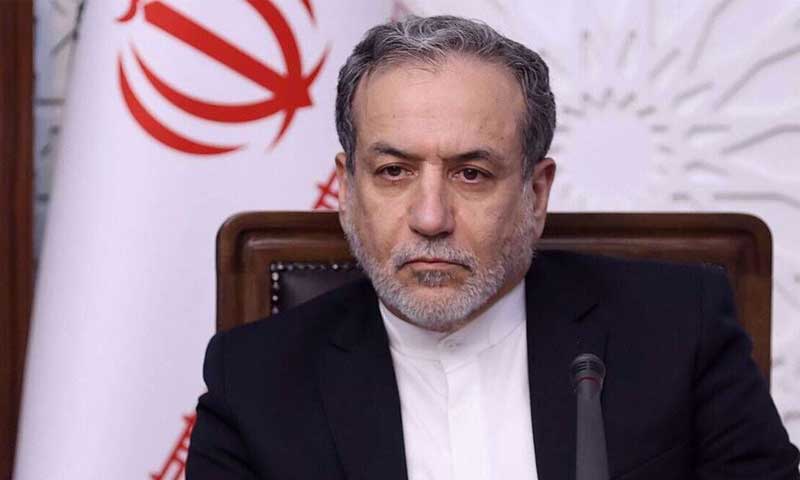
DUBAI: Iranian Foreign Minister Abbas Araghchi said on Friday that the current Supreme Leader Mojtaba Khamenei is in full command of state affairs with absolute authority, seeking to project stability following the death of Ayatollah Ali Khamenei earlier this year.
In an interview with a Lebanese television network, Araghchi detailed the tense hours during a series of military strikes on February 28, revealing that the late Supreme Leader had refused to move to a secure bunker despite imminent danger.
“We will never forget the grief of the former Supreme Leader’s martyrdom,” Araghchi said, using a term of high honoor.
“On February 28, during the attacks, I was present at the Supreme Leader’s office. At that moment, we were more concerned for his life than our own. Yet, despite repeated advice to relocate to a secure location, Ayatollah Ali Khamenei refused to leave.”
Command and regional continuity
Addressing concerns over Iran’s transition of power, Araghchi emphasized that the new leadership is firmly established and operating seamlessly.
The foreign minister stated that he maintains continuous contact with the new Supreme Leader, whose directives are relayed immediately to state officials and commanders.
Regional de-escalation policy
Araghchi reiterated that Tehran does not seek a broader regional war but warned that any fresh aggression would face a “decisive response.”
Comprehensive ceasefire
The foreign minister stressed that any potential ceasefire agreement in regional conflicts must be applied universally across all active fronts.
Araghchi directed sharp criticism at Washington’s military footprint in the Middle East, arguing that the presence of US troops exacerbates regional volatility rather than securing America’s allies.
“If American military bases were not present in neighbouring countries, these attacks would never have occurred,” Araghchi said.
“Instead of providing security to the Gulf states, the United States has left them vulnerable to insecurity.”
He said that Tehran had delivered an explicit diplomatic warning to neighbouring Gulf Cooperation Countries during the crisis, stating clearly that any foreign military installation used to launch strikes against Iran would be treated as a legitimate target.
“The US president and the Israeli prime minister completely miscalculated Iran’s resilience and power,” Araghchi said.
You May Also Like
- WEB DESK
- October 27, 2026
Pakistan opposes new permanent seats on UN Security Council
- WEB DESK
- October 27, 2026