- Web Desk
- 9 Hours ago
Iran Guards challenge Trump over Hormuz oil tanker escort
-

- Web Desk
- 2 Minutes ago
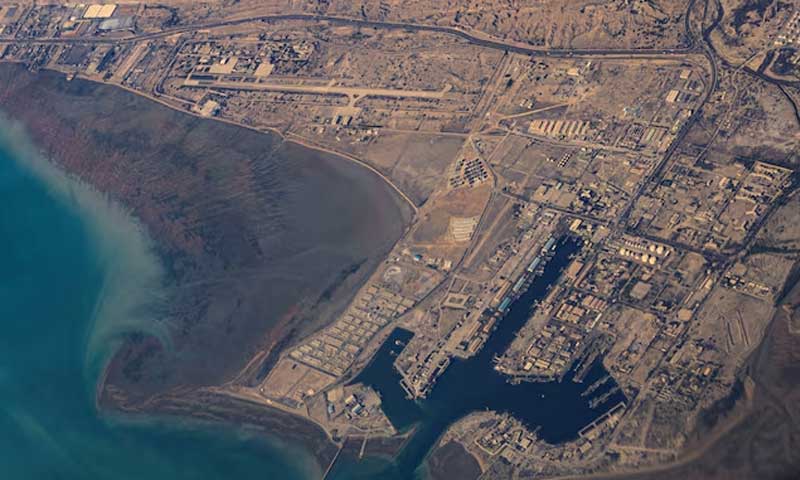
Iran’s Islamic Revolutionary Guard Corps (IRGC) has challenged US President Donald Trump to attempt escorting oil tankers through the strategically vital Strait of Hormuz using the American navy.
In a statement, the Islamic Revolutionary Guard Corps said the United States should demonstrate its ability by ensuring oil tankers pass through the waterway under the protection of the United States Navy.
The group said it was waiting to see whether tankers could successfully transit the strait with American naval protection. The IRGC also warned Washington to remember the events of the 1987 Persian Gulf supertanker attacks before making any decision.
It further said the United States should keep in mind the recent attacks on oil tankers in the region as tensions continue to rise in the Gulf.
Iranians rally in defiance as US-Israeli strikes kill over 1,200
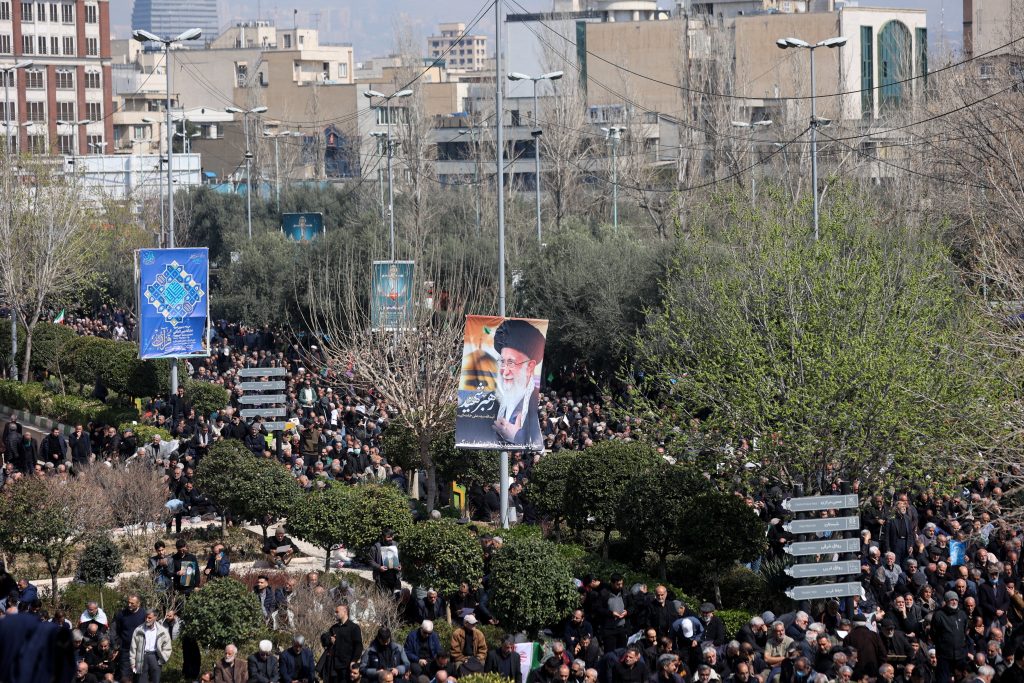
Thousands of Iranians gathered in Tehran after Friday prayers in a show of defiance as intense bombing by the United States and Israel continued across the country, leaving more than 1,200 people dead.
Footage aired by Iranian state media showed large crowds dressed in black assembling near the Grand Mosque of Imam Khomeini in the capital, carrying Iranian flags and mourning the country’s slain supreme leader while condemning the ongoing attacks.
The conflict, now entering its seventh day, has drawn in several regional actors and rattled global energy and financial markets.
According to the Iranian Red Crescent Society, at least 1,230 people have been killed in Iran since the United States and Israel launched their offensive on Feb 28.
Iranian President Masoud Pezeshkian said on X that several countries had initiated mediation efforts aimed at de-escalating the crisis, though he did not identify them.
“We remain committed to lasting peace in the region,” he said, adding that Iran would defend its sovereignty and dignity.
Separately, Pakistan’s Deputy Prime Minister and Foreign Minister Ishaq Dar held a phone call with Iranian Foreign Minister Abbas Araghchi to discuss the rapidly evolving regional situation. Pakistan’s foreign office said both sides agreed to remain in contact as developments unfold.
Mediation hopes amid deep mistrust
Despite indications that mediation efforts may be underway, Iranian officials signalled deep mistrust toward Washington. Deputy Foreign Minister Majid Takht‑Ravanchi said the conflict had been “imposed” on Iran by the United States and Israel.
In an interview with France 24, he said Tehran had been negotiating in good faith before the situation deteriorated.
“We do not trust the Americans,” he said, accusing Washington of undermining diplomatic efforts.
Trump demands ‘unconditional surrender’
Meanwhile, US President Donald Trump demanded Iran’s “unconditional surrender”, saying Washington and its allies would help rebuild the country after a leadership change.
However, he ruled out sending US ground troops, calling such a move a “waste of time”.
White House Press Secretary Karoline Leavitt said the US had sufficient weapons stockpiles to sustain its campaign and estimated operations could continue for “four to six weeks”.
She also said US intelligence agencies were assessing potential leadership figures in Iran but declined to provide details.
Trump’s comments unsettled global financial markets, with European stocks dropping sharply and major US indices such as the Dow Jones Industrial Average and S&P 500 sliding to more than three-month lows.
At the same time, António Guterres, secretary-general of the United Nations, warned that unlawful attacks across the Middle East risk pushing the region toward a broader conflict.
Strikes spread across the region
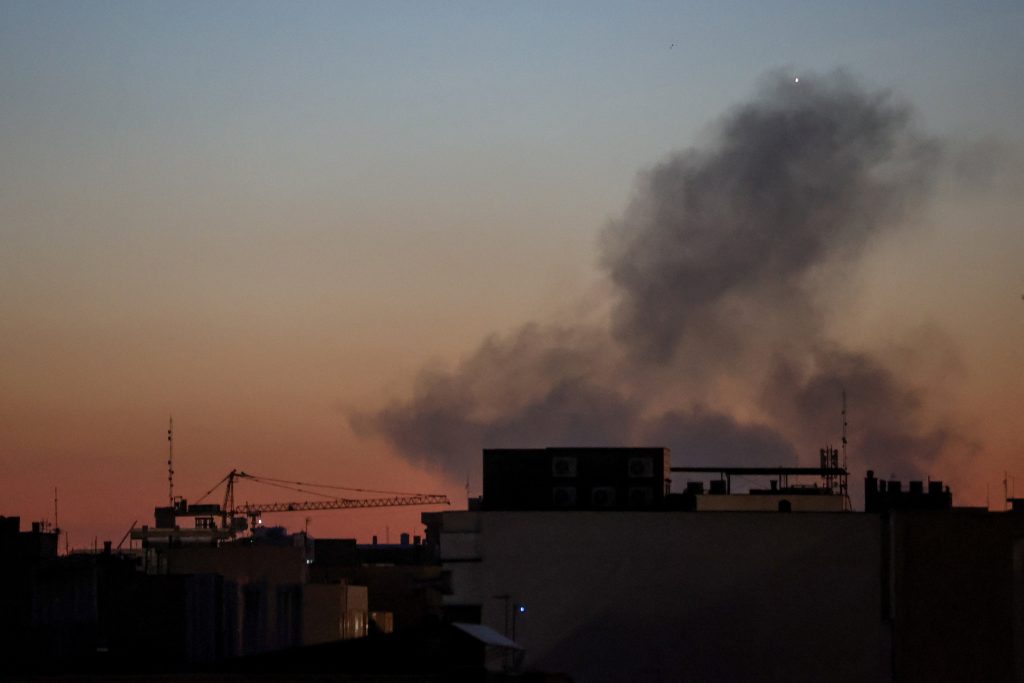
The Israeli military said it had struck more than 400 targets in Iran, with large explosions reported in Tehran, including areas near the landmark Azadi Tower.
Iranian media also reported an attack on a residential building in the holy city of Qom that killed at least two people, while officials shared footage showing a school in Tehran damaged by the strikes.
In response, Iran said it had launched a fresh wave of drones and missiles targeting Israel and US military facilities in the region.
Explosions were heard in Jerusalem as Israeli air defences intercepted incoming projectiles.
Across the Gulf, countries including the United Arab Emirates, Kuwait, Qatar, Bahrain and Saudi Arabia reported drone and missile activity.
Iran’s Islamic Revolutionary Guard Corps said it targeted the US-operated Al Dhafra Air Base in the UAE using drones and precision missiles.
Iranian forces also said they struck US bases in Kuwait and vowed further retaliation.
Explosions were reported near Erbil International Airport in Iraq’s Kurdistan region, while drone attacks targeted facilities near Baghdad and Basra, disrupting operations at several oil installations.
Elsewhere, Azerbaijan said it had thwarted attempted Iranian drone strikes a day after accusing Tehran of targeting civilian infrastructure near the border.
Amid the escalating conflict, Iran’s ambassador to Saudi Arabia Alireza Enayati thanked Riyadh for pledging not to allow its territory or airspace to be used for attacks against Iran, calling the position a positive step toward preventing further escalation.
You May Also Like