

- Reuters
- October 26, 2026
Talks begin as Iran hosts Makkah defence pact states amidst Houthis attacks
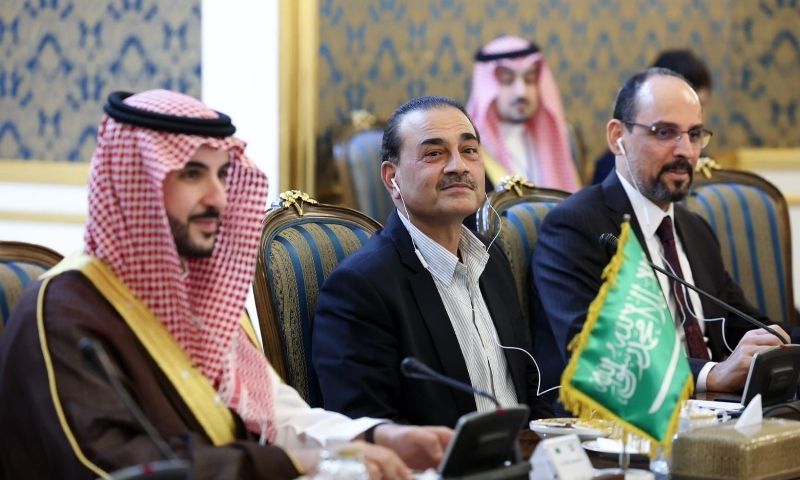
DOHA/KARACHI/CAIRO: Top officials from Saudi Arabia, Türkiye and Pakistan began meeting in Iran in a push to de-escalate the regional conflict now afflicting the Gulf kingdom, as Yemen’s Houthis launched further attacks on Riyadh’s airport and Saudi oil facilities.
The meeting brings together Iran, Pakistan, Saudi Arabia and Turkiye to discuss regional cooperation, the US-Israeli war against Iran and its consequences, among other issues, Iran’s state broadcaster said.
The talks were the first high-level contact between Iran and the three nations — which signed the Makkah mutual defence pact in August — since a war that began with US and Israeli strikes on Iran also spread to Saudi Arabia and Yemen.
The Saudi Foreign Ministry said the visit was part of efforts to “de-escalate” and “promote dialogue and diplomatic solutions”. It stressed the need to open negotiating channels to “prevent the return of military escalation”.
Earlier, the Inter-Services Public Relations (ISPR) said in a statement that Munir, who is also chief of the army staff, was visiting the Iranian capital for an official visit.
Saudi Arabia was being represented by Defence Minister Prince Khalid bin Salman, younger brother of Crown Prince Mohammed bin Salman; Pakistan by Chief of Defence Forces Field Marshal Asim Munir and Türkiye by intelligence chief Ibrahim Kalin, Saudi and Iranian officials said.
They were due to consultations with Iran’s Supreme National Security Council, its deputy secretary Ali Baqeri-Kani told state TV.
Pakistan and Qatar have led mediation efforts in the war. On Sunday, Qatari mediators were in Tehran, an official told Reuters.
Iran’s IRIB has shared a video showing the start of the four-way meeting on “regional security and stability”.
The footage shows CDF Field Marshal Asim Munir and Interior Minister Mohsin Naqvi seated alongside Iranian President Masoud Pezeshkian, Foreign Minister Abbas Araghchi and security chief Mohsen Rezaei.
Earlier efforts helped produce an interim peace agreement in June but fighting between Iran and the United States soon resumed. Conflict then flared between the Iran-aligned Houthis and US ally Saudi Arabia, opening a new front.
US and Iran threaten new attacks
The wider fighting has restricted shipping through the energy chokepoint of the Strait of Hormuz, pushed up global oil and gas prices, left Gulf states facing missile and drone attacks, and caused a new humanitarian crisis in Yemen.
Tensions between Washington and Tehran have sharpened in recent days. President Donald Trump said on Friday the US may carry out another military operation against Iran. Iranian security officials have told Reuters that Tehran has drawn up detailed plans to attack Gulf undersea cables if the United States and Israel attack again.
The war, which earlier in the year also reignited fighting between Israel and the Iran-backed Lebanese armed groupHezbollah, has weighed on President Donald Trump’s approval ratings ahead of the midterm elections that decide control of Congress.
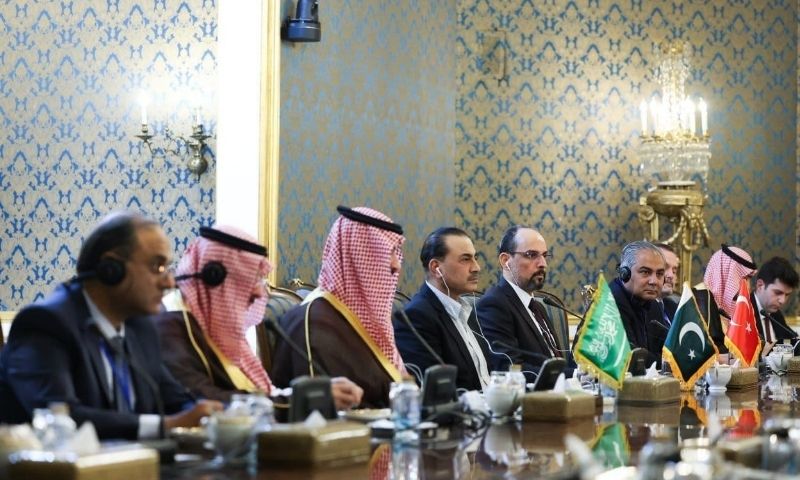
Iranian Foreign Ministry spokesperson Esmaeil Baghaei said Monday’s discussions would include “Israel’s expansionist policies, developments in the Palestinian territories and Lebanon, and the repercussions of US and Israeli military action against Iran”.
Baghaei said the meeting, proposed when Munir visited Tehran last week, could be a first step towards establishing regional security mechanisms. A senior Pakistani security official said the focus of Monday’s meeting was to build a regional non-aggression network. The agenda also included US-Iran talks, Houthi attacks on Saudi Arabia, the Strait of Hormuz and a US blockade of Iranian ports, the official said.
Iranian officials told Munir during that visit that there would be no talks with Washington until Tehran’s demands — which include ending the US blockade and lifting sanctions on Iranian its oil exports — were met, according to Iranian media.
Pakistan’s military media wing and Türkiye’s Foreign Ministry did not immediately respond to requests for comment.
Houthi strikes
Saudi Arabia has intensified strikes against the Houthis since they captured strategic areas along Yemen’s Red Sea coast last month, advancing against Saudi-backed government forces. Houthi attacks have targeted Saudi airports, ports and oil installations.
On Monday, the Houthis said they had attacked East-West crude oil pumping stations in Saudi Arabia as well as Riyadh airport, which said it had resumed operations at two terminals a day earlier. There was no immediate Saudi confirmation of the Houthi attacks.
The Mecca Joint Defence Agreement says signatories shall use “all necessary means” to eliminate threats to one another’s territorial integrity, sovereignty or internationally recognised borders, according to a text seen by Reuters.
The pact’s members held an emergency meeting in Riyadh this month and agreed to ensure the “rapid deployment” of military forces and capabilities in Saudi Arabia.
Efforts by Turkiye’s parliament to ratify the agreement began last week and are still under way, while Pakistan approved the pact last week.
You May Also Like
- Reuters
- October 26, 2026
