- Reuters
- October 7, 2026
Iran says Lebanon truce violations, frozen assets top agenda in Switzerland talks
-

- Zafar Ali
- June 21, 2026
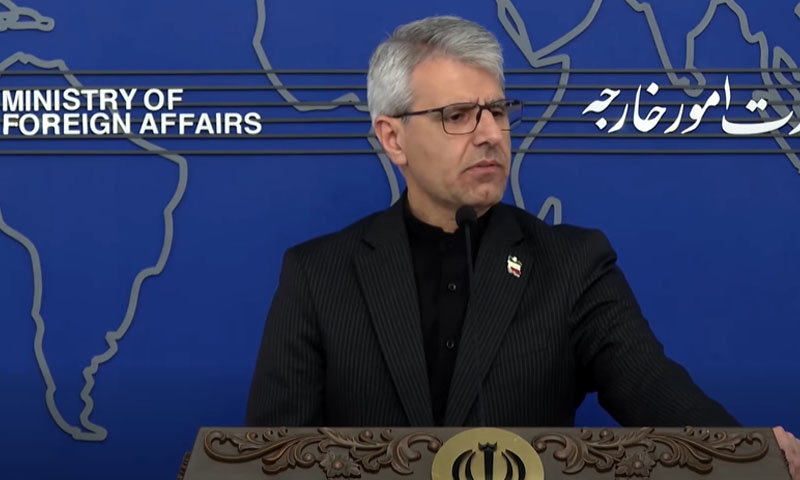
TEHRAN: Iran said on Sunday that ongoing tensions in Lebanon, Israeli truce violations, and the release of frozen financial assets will be the primary focus of its technical-level negotiations with the United States in Switzerland.
The statement came as Iranian President Masoud Pezeshkian strongly defended the preliminary peace framework brokered by Islamabad earlier this week, saying that the terms of the memorandum of understanding (MoU) heavily favour Tehran’s national interests.
Iranian Foreign Ministry spokesperson Esmaeil Baghaei told a news conference that Tehran harbors deep concerns over the fragile security situation between Israel and Hezbollah in Lebanon.
“The Zionist regime is continuously violating its commitments and obligations in Lebanon, which is why this matter will be the central theme of today’s discussions,” Baghaei said, adding that regional de-escalation remains Iran’s top priority for the Swiss summit.
Beyond the Lebanon crisis, Baghaei said that the repatriation of restricted Iranian financial assets held abroad and the lifting of barriers on oil exports are firmly on the agenda. Tehran is demanding the immediate restoration of access to its overseas funds and the issuance of necessary permits and licenses to resume normalized oil sales to stabilize its domestic economy.
Pezeshkian Defends Pacts
In a separate address carried by the semi-official Tasnim news agency, President Pezeshkian provided further operational details of the interim agreement, claiming significant diplomatic victory for the Islamic Republic.
“The results of these negotiations will soon become apparent to the public, and it will be clear that Iran has vigorously defended its national interests,” Pezeshkian said.
The Iranian president confirmed that under the signed framework, $6 billion in Iranian funds currently frozen in Qatar will be fully released to Tehran. Pezeshkian noted the shifting geopolitical landscape, pointing out that US President Donald Trump, who historically spearheaded Washington’s “maximum pressure” sanctions campaign against Iran, is now overseeing a process that recognizes these financial and economic adjustments as legitimate rights of the Iranian people.
Pezeshkian also used the address to take a swipe at Israeli Prime Minister Benjamin Netanyahu, who has long opposed any diplomatic rapprochement between Washington and Tehran.
“The individual most displeased with the negotiations in Switzerland will be Netanyahu,” Pezeshkian remarked.
Nuclear Red Lines
Addressing Washington’s primary core security concern, Pezeshkian reiterated that the fundamental US condition for the pact remains a verified commitment that Iran will not pursue nuclear weapons. He stressed that this aligns with Iran’s long-standing state policy.
“Iran has never intended to build an atomic bomb,” Pezeshkian said, citing the definitive religious decree (fatwa) issued by the late Iranian Supreme Leader Ayatollah Ali Khamenei, which explicitly bans the production, stockpiling, and use of weapons of mass destruction as contrary to Islamic principles.
According to Pezeshkian, the US delegation requested that Iran’s position be formally codified into writing, after which both parties signed the formal implementation document now being finalized by technical teams in Bürgenstock.