- Web
- Mar 18, 2026
Iran shuts down internet as protests spread, buildings set ablaze
-

- Web Desk
- Jan 09, 2026
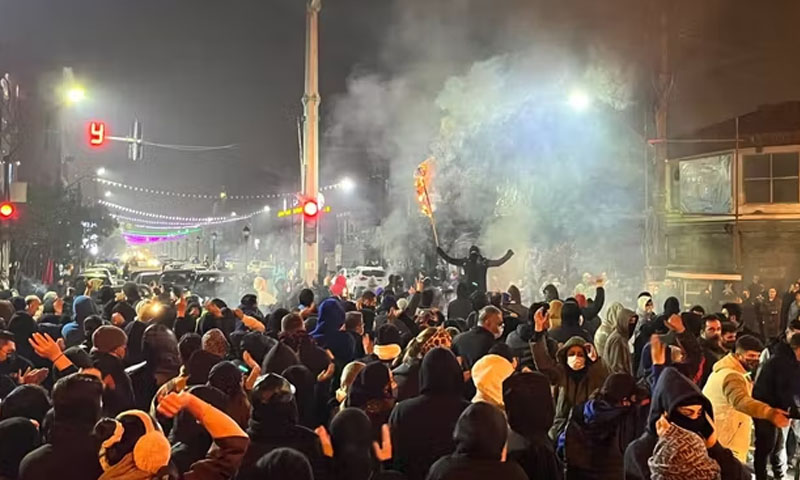
TEHRAN: Iran was largely cut off from the outside world on Friday after authorities shut down internet and phone services to curb widening anti-government protests, as videos showed buildings and vehicles set on fire in several cities.
Flights between Iran and the United Arab Emirates were cancelled, while phone calls into the country failed to connect, adding to signs of Iran’s growing isolation as unrest spread nationwide.
In a televised address, Supreme Leader Ayatollah Ali Khamenei vowed not to back down, accusing protesters of acting at the behest of exiled opposition groups and the United States. Rights groups, meanwhile, reported that security forces opened fire on demonstrators in southern parts of the country.
Although the current unrest has not mobilised as many segments of society as previous protest movements over the past 15 years, dozens of people are reported to have been killed. Analysts say the authorities appear more vulnerable due to a worsening economic crisis and the fallout from last year’s war with Israel and the United States.
The protests initially erupted over economic grievances, including soaring inflation — which crossed 40 per cent in December — and the sharp depreciation of the rial, which lost about half its value against the dollar last year. However, the demonstrations have since evolved into open political dissent, with slogans directly targeting the ruling establishment.
Buildings and vehicles torched
The internet blackout has significantly restricted the flow of information from inside Iran. Dubai airport data showed that at least 17 flights between Dubai and Iran were cancelled.
The protests began late last month, led by shopkeepers and bazaar traders angered by rising prices and currency weakness. They later spread to universities and provincial cities, where clashes between young protesters and security forces intensified.
State television aired footage overnight of what it said were burning buses, cars and motorcycles, along with fires at metro stations and banks. Authorities blamed the unrest on the People’s Mujahedin Organisation, also known as the MKO, an opposition group based abroad that broke away after the 1979 Islamic Revolution.
A state TV reporter standing amid fires on Shariati Street in the northern port city of Rasht described the scene as resembling a “war zone”, saying shops had been destroyed.
Videos verified by Reuters showed hundreds of people marching through the streets of Tehran. In one clip, a woman could be heard chanting slogans against Supreme Leader Khamenei.
The Iran-based human rights group Hengaw said that a protest march following Friday prayers in the southeastern city of Zahedan, home to a large ethnic Baluch population, was met with gunfire, leaving several people injured.
Authorities have adopted a dual approach, acknowledging that economic grievances are legitimate while branding violent protesters as rioters and deploying security forces to quell demonstrations.
In his speech, Khamenei used strong language, saying the Islamic Republic — founded through the sacrifices of hundreds of thousands — would not retreat in the face of what he described as vandalism. He accused protesters of trying to please former US president Donald Trump.
Judiciary chief Gholamhossein Mohseni Ejei, quoted by state media, warned that those involved in violence would face “decisive and maximum” punishment, with no legal leniency.
Fragmented opposition
Iran’s fragmented opposition groups abroad have called for continued protests, while demonstrators inside the country have chanted slogans such as “Death to the dictator” and, in some cases, expressed support for the monarchy overthrown in 1979.
Reza Pahlavi, the exiled son of the late shah, urged Iranians in a social media message to take to the streets, saying the world was watching.
However, the level of support within Iran for monarchists or the MKO remains unclear and contested.
Trump, who ordered strikes on Iran last summer and warned Tehran last week that Washington could support protesters, said on Friday he would not meet Pahlavi and questioned whether backing him would be appropriate.
Germany condemned violence against protesters, stressing that the right to peaceful assembly must be upheld and that Iranian media should be allowed to report freely.
You May Also Like