
- WEB DESK
- October 6, 2026
Iran vows resistance as Strait of Hormuz tensions escalate
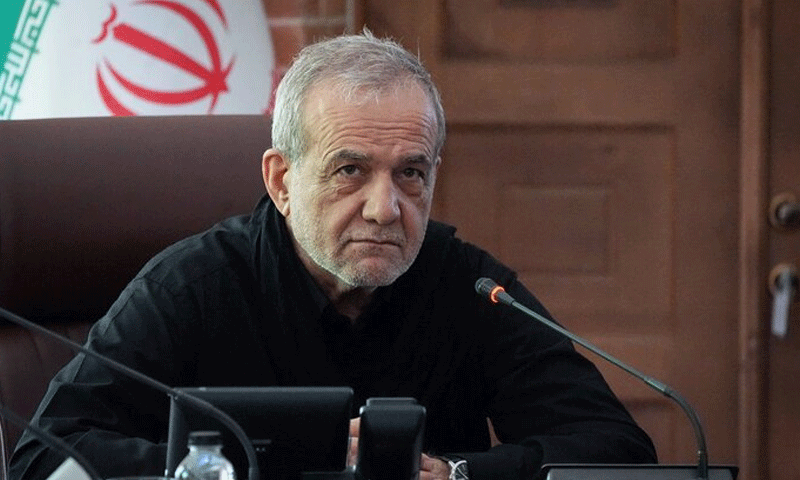
WEB DESK: Iranian President Masoud Pezeshkian has vowed that Iran will continue to defend itself against US aggression, as tensions over the strategically vital Strait of Hormuz continue to escalate.
Taking to social media platform X, Pezeshkian said Iran would continue resisting what it faced from the “aggressors”, with the aim of protecting the interests of the Iranian people and regional security.
The Iranian president said Tehran would remain the guardian of the rights of the “great Iranian nation”.
“It will continue this resistance with full strength until the aggressors are brought to complete regret,” he said.
The latest statement comes amid heightened tensions between the United States and Iran, particularly over the Strait of Hormuz, a key route for global oil and gas supplies.
جمهوری اسلامی ایران همواره با جنگ مخالف بوده و حفظ منافع مردم و امنیت منطقه را در پرهیز از آتش افروزی دانسته است. اما چنانکه تا امروز در برابر تجاوز، دلیرانه به دفاع برخاسته است این مقاومت را تا پشیمانی کامل متجاوزان با قوت ادامه خواهد داد و پاسدار حقوق ملت بزرگ ایران خواهد بود.
— Masoud Pezeshkian (@drpezeshkian) September 8, 2026
Iran threatens US with new missiles
According to Reuters, Iran threatened the United States with “economic warfare” on Tuesday and said it had fired an advanced missile at US warships, underscoring the risk of further escalation.
The six-month-old conflict has been marked by a cycle of pauses followed by periodic flare-ups, with the US last reporting attacks on Iranian targets on Saturday, when its forces struck three Iranian oil tankers.
Despite US efforts to reopen the Strait of Hormuz, Iran has continued to disrupt shipping through the critical waterway, Reuters cited.
There has been no sign of progress towards a diplomatic breakthrough that could end the conflict, which began with US and Israeli strikes on February 28.
Hormuz shipping traffic falls
Commercial traffic through the Strait has dropped to its lowest level since May following a series of attacks involving US and Iranian forces, according to shipping data released Monday.
Data from maritime analytics firm Kpler showed that an average of 10 commodity-carrying vessels crossed the strategic waterway each day over the past 10 days.
The figure fell from more than 15 vessels on Friday and nearly 13 on Saturday.
Traffic was particularly light over the weekend, with only two vessels crossing on Saturday and six on Sunday. Most of the vessels that passed through on Sunday used the Iranian side of the strait.
The decline followed US strikes on three Iranian oil tankers on Saturday, according to US Central Command.
A U.S. Air Force F-35A stealth fighter jet patrols over regional waters as CENTCOM forces continue to enforce the maritime blockade against Iran. As of Sept. 6, U.S. forces have redirected 92 commercial vessels, disabled 3 and boarded 2 to ensure strict compliance. pic.twitter.com/oXNN5zKx1t
— U.S. Central Command (@CENTCOM) September 6, 2026
One of the attacks took place near Kharg Island, a major Iranian oil-export hub, after Iran’s Islamic Revolutionary Guard Corps attacked US warships in the region.
According to Reuters, the US military diverted 92 commercial vessels during enforcement of Iran’s naval blockade.
Nuclear programme remains key dispute
Alongside the confrontation over Hormuz, Iran’s nuclear programme remains a major point of disagreement between Tehran and Washington.
US President Donald Trump reaffirmed in late August that preventing Iran from acquiring a nuclear weapon remained Washington’s top priority.
In a post on his Truth Social account, Trump said, “The number one Goal is, and always will be, that Iran cannot have, in any way, shape, or form, a Nuclear Weapon.”
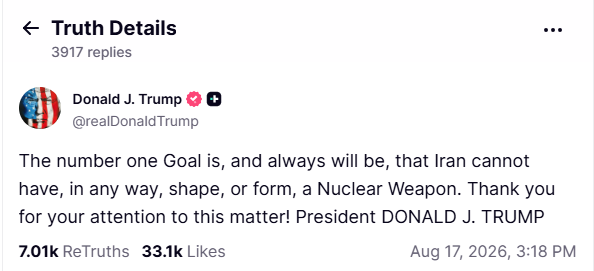
Iran, meanwhile, has maintained that it has the right to a peaceful nuclear programme, while disputes over uranium enrichment, inspections and sanctions relief continue to complicate diplomatic efforts.
Sanctions add to tensions
The dispute has also been fuelled by disagreements over US sanctions and Iran’s demand for economic relief.
Iran has sought the lifting of sanctions and access to frozen assets held abroad, while Washington has linked sanctions relief to concessions over Tehran’s nuclear programme and other security concerns.
Earlier in the day (Tuesday), Britain also published legislation introducing tougher sanctions on Iran, expanding trade restrictions and powers to target ships as part of what it described as a wider effort to curb Tehran’s nuclear programme and other hostile activities.
The British government said, as cited by Reuters, that the measures would restrict Iran’s access to the UK financial system, broaden trade bans to cover additional goods, technology and services, and prohibit Iranian aircraft from landing in Britain unless exemptions apply.
The measures form part of plans announced by the government last year following the reimposition of UN sanctions on Iran under the so-called snapback mechanism.
You May Also Like

- Reuters
- October 6, 2026
India among seven countries vying for 2036 Olympics, IOC says
- Waqas Buneri
- October 6, 2026