
- WEB DESK
- September 10, 2026
Iranian arms, guidance helped Houthis seize key Red Sea city, sources say
-

- Reuters
- September 10, 2026
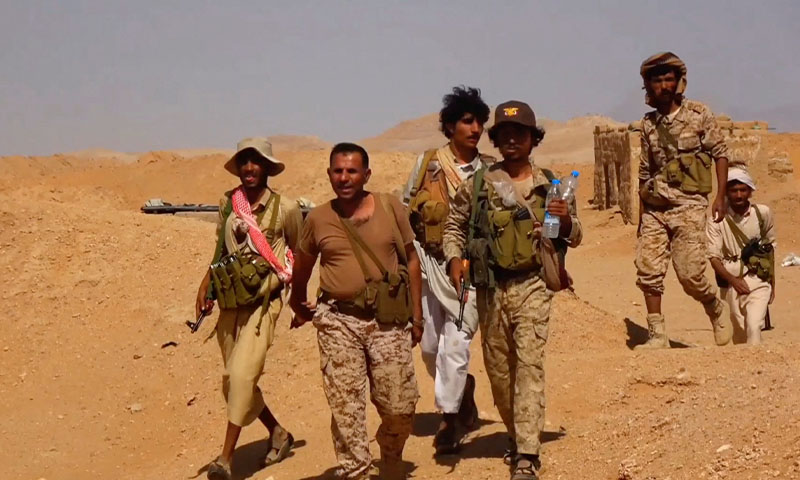
The Houthis’ rapid advance along Yemen’s Red Sea coast this week was aided by weapons and direct guidance from Iran’s Islamic Revolutionary Guard Corps (IRGC), according to Yemeni government, Iranian and regional sources. The support was aimed at opening a new front in Iran’s conflict with the United States, the sources said.
By seizing the southwestern port city of Mocha, the Houthis have strengthened their chokehold on the Bab el-Mandeb Strait, a key waterway whose disruption further constricts global energy supplies after Iran’s blockade of the Strait of Hormuz.
Six months into the wider regional conflict between the Houthis’ Iranian allies and the United States, the group now looks focused on consolidating that grip on the strait even as opposing government forces backed by Saudi Arabia focus on an offensive in the north.
Iran told the Houthis last week to escalate their attacks on Saudi Arabia, a close U.S. ally, and promised more funding, weapons and senior officers to help them do so, two Iranian sources said.
While Iran describes the Houthis as an ally, it publicly denies giving them military direction, saying they are “not a proxy”.
Several senior Revolutionary Guards commanders had already travelled to Yemen to oversee and command Houthi attacks directed against Saudi Arabia after weeks of discussions over military strategy, a regional diplomat briefed by Tehran said.
A third Iranian source, an official, said Iran had held several meetings with allies including the Houthis and that the move on Mocha was a Houthi rather than Iranian decision. However, it had helped Iran by putting upward pressure on oil prices and hurting the United States and Saudi Arabia, the official added.
Inside Yemen, five military sources from the Saudi-backed and internationally recognised government said the Revolutionary Guards had directed the new Houthi campaign along the Red Sea coast, a flat, narrow plain known as the Tihama, starting with a blitz of rocket fire.
Citing communications intercepts and the accounts of captured Houthi prisoners, the Yemeni military sources said they believed the Iranian effort was being directed by Abdolreza Shahlaei, a top Revolutionary Guards commander.
Iranian sources were not immediately able to confirm that, though they had previously described Shahlaei, who is in the Guards’ specialist Qods Force unit, as having spent time in Yemen in recent years.
The Guards were still able to move weapons and personnel in and out of Yemen despite an aerial and maritime blockade of Houthi areas, the Iranian sources said without elaborating on how they did so.
“If we look at their offensive on the west coast, it’s not something prepared just last week or last month,” said Ahmed Nagi, Yemen analyst at International Crisis Group, describing the seizure of Mocha as a significant milestone in the war.
“The evolution of the Houthis was basically because of the new weapons they gained, either through the Iranians directly or through the different smuggling networks that they are counting on,” Nagi said, pointing specifically at their use of drones in the latest offensive.
Uncertain military situation
As the Houthis began an advance towards Mocha last week, Yemen’s government requested more air support and other help from the Saudis, two more Yemeni officials said.
It was seeking a Saudi air campaign against Houthi targets in the Houthi heartland including Sanaa and key strategic assets such as oil depots, they said.
However, the kingdom stuck to providing logistical, armament and intelligence support with only limited air strikes that were focused on northern battlefronts in Jawf and Marib provinces, areas the government regarded as less important.
The officials’ own assessment was that Riyadh was anxious to avoid a major escalation with the Houthis for fear of provoking heavier drone strikes on Saudi territory.
Saudi officials did not immediately respond to Reuters requests for comment on Riyadh’s military focus on the northern front rather than the Red Sea coast and other big Houthi targets.
The overall military situation in Yemen is hard to gauge after a years-long pause in major warfare since a ceasefire was agreed in 2022. Both Iran and Saudi Arabia have invested in forces they back there. But the pro-government coalition has suffered from internal splits.
Although previous rounds of warfare in the Tihama had produced sudden advances and retreats, it remains unclear if Saudi-backed forces can easily dislodge the Houthis this time, Nagi said.
“Maybe we can see some advances from the government if they get the necessary support from the Saudis. But that could be a bit difficult this time,” he said.
You May Also Like

- WEB DESK
- September 10, 2026
Govt announces parliamentary debate on creation of new provinces
- WEB DESK
- September 10, 2026
England pile on 453, take 320-run lead over Pakistan in Birmingham Test
- WEB DESK
- September 10, 2026